Why Losing a Dog Hurts So Much: The Science of Grief
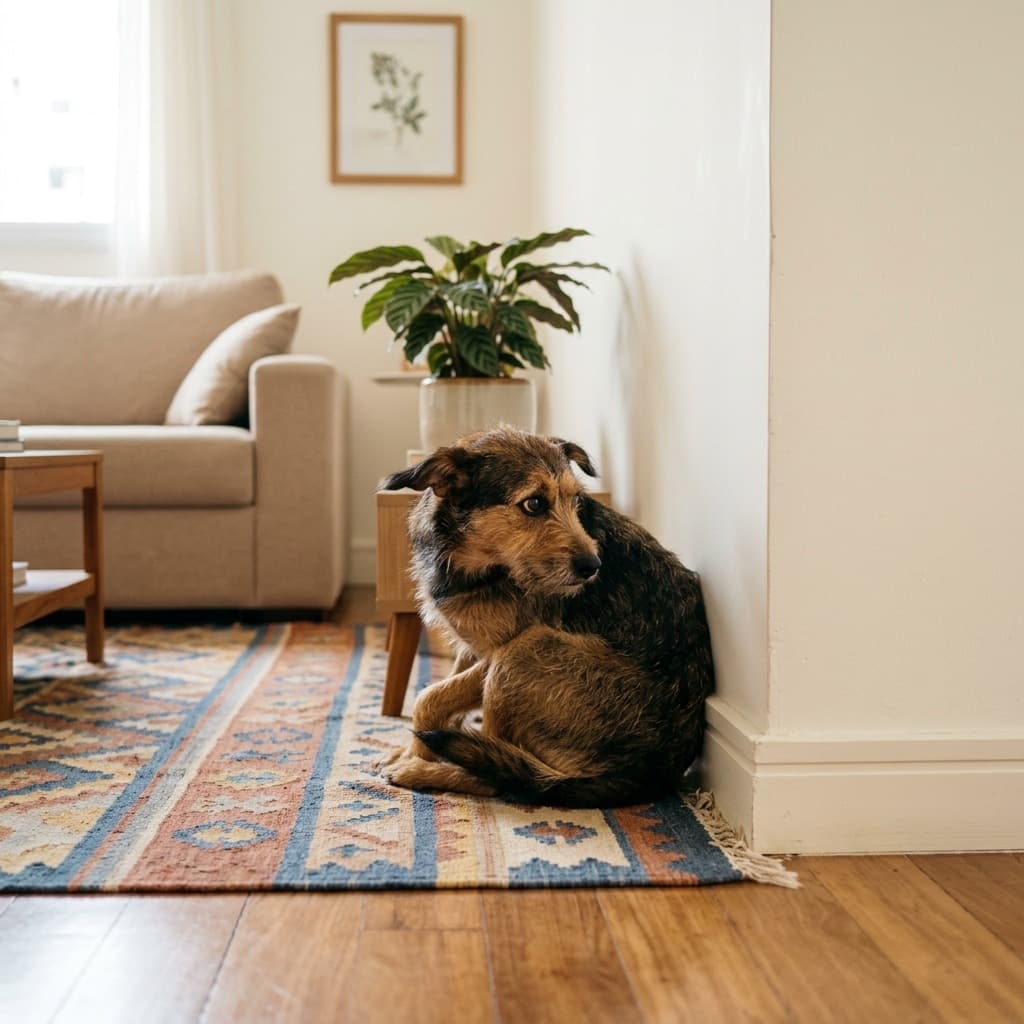
The house goes quiet at the moment the key turns in the lock and no one runs to the door. The water bowl is still in the same corner, and the leash hanging on the wall seems to wait for a walk that will not happen. People who have never lost a dog sometimes do not understand the size of this pain. But it has an explanation — and it is more legitimate than many people admit.
This text will not tell you how to "get over it." It will show you why it hurts this way, which reactions are normal and what helps, so you can stop blaming yourself for feeling what you feel.
Why does losing a dog hurt as much as losing a person?
The bond between owner and dog is real attachment, not a metaphor. The brain processes the animal's absence with the same circuits used in grief for a close person, because daily life together built a relationship of care and mutual dependence — which is why the intensity of the pain is proportional to the size of the bond.
The bond with a dog is real attachment
Behavioral science describes the relationship between owner and dog as attachment, and the São Paulo Regional Council of Veterinary Medicine in Brazil (CRMV-SP) institutionally recognizes that this relationship involves genuine love and bonding, whose loss deserves the same support given to other griefs. The dog learns that you are his secure base: the place he returns to when he is frightened, and from which he sets out to explore the world.
When that bond breaks, the brain does not process the loss as that of an object. It processes it as the loss of a family member. That is why the reaction looks so much like grief for a loved one. It is not an exaggeration — it is the attachment system working exactly as it was built to work.
The chemistry of affection was there too
That calm exchange of glances between you and your dog, repeated every day, was not a pretty detail for nothing. The Petersson et al. (2017) study (via PubMed) shows that regular physical contact between owner and dog changes the levels of oxytocin — the hormone linked to affection and attachment — in both of you, in you and in the dog.
In other words: living together built, in the body, a well-being circuit tied to his presence. When that presence disappears, a daily source of emotional regulation that your body spent years learning to expect is missing. The body feels the absence before the mind even finds words — the same circuit described in how the dog sees the owner as a secure base.
Which reactions are normal in pet grief
Grief for a dog rarely comes all at once. It comes back in pieces, scattered across the routine gestures left without a destination — the walk time, the food at the same hour, the greeting at the door. Every interrupted ritual hurts again.
And the body reacts. These are expected responses, not exaggeration:
- Loss of appetite
- Difficulty concentrating along with loss of appetite.
- Insomnia
- Broken sleep or trouble falling asleep.
- Sense of presence
- Hearing the bark or seeing the dog out of the corner of your eye.
- Guilt
- "Did I do everything I could?"
Knowing this is normal already lifts a weight: relapses are not a sign that you are "stuck in grief." They are the map of everything the two of you built together.
Why your pain seems to be minimized
There is a scientific name for what many people grieving a pet feel: disenfranchised grief, a term studied in research published on PubMed. It is the grief that society does not fully recognize — the kind where you hear "it was just a dog" or "get another one" instead of comfort.
That silence around you hurts, because it forces the person to suffer in hiding. But the lack of outside validation does not make the pain smaller. The pain is real, even when no one around you acknowledges it. Giving it a name is already a way of returning the respect it deserves.
What helps you get through it
There is no formula, but there are attitudes that ease it:
- Allow yourself to feel, with no deadline. There is no right number of days to "go back to normal."
- Keep some routine. Eating, sleeping and leaving the house anchor the body while the mind processes.
- Talk to people who understand. Sharing with someone who validates the loss weighs less than suffering in silence.
- Seek professional support if the pain stops your life for many weeks — it is not weakness, it is care.
What NOT to do
- Do not set a deadline for yourself or compare your grief with others' — it only adds guilt.
- Do not hide the pain to please those who minimize your feelings.
- Do not adopt another dog on impulse to fill the void: a new bond has its own time.
Closing
The hanging leash is not a cruel reminder — it is proof of a whole routine of affection that truly existed. The intensity of the pain is the size of the bond: grief is love that keeps going with nowhere to go.
And when the time comes to care for the one who remains — or the one who arrives — it is worth starting with the basics done well.
Frequently asked questions
Is it normal to feel so much grief when a dog dies?
Yes. The bond between owner and dog is real attachment — similar to that of a baby for a caregiver — and the brain processes the loss as that of a family member. The intensity of the pain tends to be proportional to the size of the bond.
How long does grief for a pet last?
There is no fixed timeline. Grief comes in waves, tied to the routines that vanish, and loses strength over time. If the pain completely stops your life for many weeks, seeking professional support helps.
Which reactions are normal when you lose a dog?
Loss of appetite, insomnia, guilt and even the sensation of hearing or seeing the dog are common, expected responses. They tend to fade gradually. They are not a sign that something is wrong with you.
Picked by score from our overall dog ranking, not by the topic of this article. To get it right for your pet — age, weight, spayed or neutered — take the quiz and get a list made for them. A pet with a diagnosed condition needs a diet prescribed by a veterinarian.



