Does Your Dog See You as a Parent? What Science Found
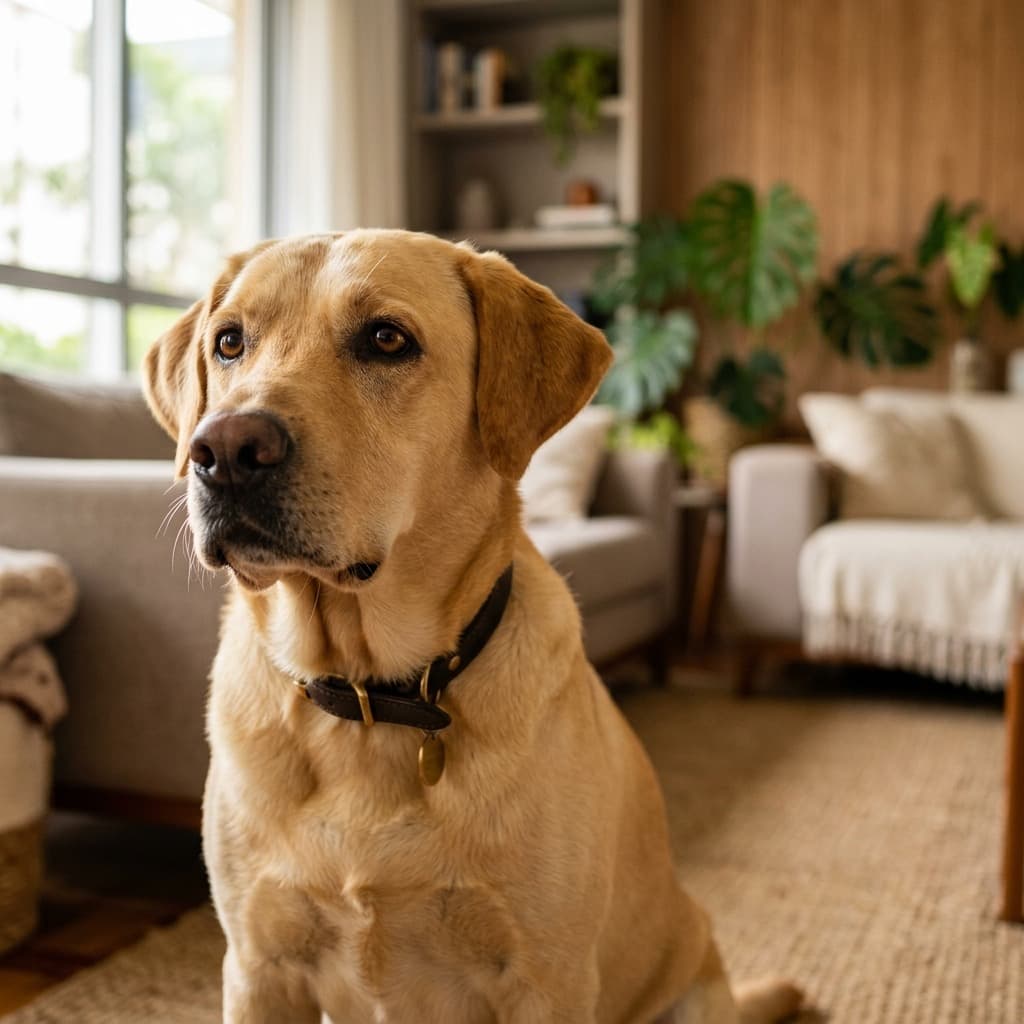
Research in animal behavior shows that dogs treat their owners the way children treat their parents: a study published in Science by Nagasawa et al. (2015) found that when a dog and its owner look into each other's eyes, both of their brains release oxytocin, the hormone tied to the affection between mother and child. The finding sparked active scientific debate — other researchers questioned how far the results can be generalized and the size of the original sample —, but the "oxytocin loop" hypothesis remains the most cited explanation for this mechanism. Research by Topál and Miklósi on canine attachment also shows that the dog seeks out its owner as a secure base in situations of fear — the same attachment pattern described in child developmental psychology. These mechanisms indicate that the relationship goes beyond food conditioning. Understanding this has a practical effect: care includes presence and routine, not just a full bowl.
You open the door and he runs, jumps, spins, looks like he's going to burst with joy. It's easy to think all that celebration is just hunger, or the habit of someone who learned that the door means food. But research into the minds of dogs has been showing something much more beautiful: to your dog, you are not the owner who fills the bowl. You are the figure he treats the way a child treats a father or mother.
That changes how we understand the relationship. It isn't a trade of food for obedience. It is a real bond of affection, grounded in the brain and in behavior. And understanding this helps you take better care of him day to day.
Why does a dog run to its owner when scared instead of hiding alone?
Notice what happens when something startles him: thunder, fireworks, a strange noise in the street. The dog doesn't run off alone to hide in some corner. He runs toward you. He looks for your legs, your lap, your side. This behavior has a name in the study of bonding: you have become his secure base.
It's the same pattern a small child shows with their parents — in the face of danger, they seek the reference adult, because near that adult the world becomes less frightening. When your dog comes to you in fear, he is saying, in his own way, that you are the place where he feels protected.
The chemistry that happens when you look at each other
There is a detail that surprises many people. When you and your dog look each other in the eyes, calmly, both of your brains release oxytocin — the same hormone tied to the affection between mother and child.
It's a cycle: you look, he looks back, you both feel that coziness, and that reinforces the desire to stay close. The original study by Nagasawa and colleagues (2015) proposes that this "gaze that connects" works between dogs and humans in a way similar to what happens between parents and babies — although the scientific community still debates the real reach of the effect. It isn't poetry — it's a hypothesis tested in the lab, though not free of controversy.
What this changes in your day to day
Knowing that he sees you as family has a practical effect. A dog that sees its owner as a secure base suffers more from long absences, pays attention to your mood and calms down with your presence. So care goes beyond food:
- Presence
- Time together, eye contact and calm touch are not a luxury: they feed the bond.
- Predictable routine
- Stable schedules and habits give the dog the sense of security he seeks in you.
- Nutritional foundation
- The energy, mood and willingness for this bond also depend on a diet suited to his life stage and size.
What NOT to do
- Don't treat the bond as manipulation. He doesn't "fake" affection to get a treat. Science points to real affection, not self-interest.
- Don't ignore the request for security. Telling the dog to "stop the drama" when he's startled breaks precisely the trust that makes you his safe harbor.
- Don't reduce care to a full bowl. Food matters a lot, but presence, routine and attention are part of the same care package.
Frequently asked questions
Does my dog really love me or does he just want food?
The two aren't in competition. Behavior studies show genuine affection: he seeks you out in moments of fear, calms down with you and responds to your gaze with a release of oxytocin — signs that go far beyond interest in food.
What is a "secure base" for a dog?
It is the reference figure he turns to when he feels threatened. Near that figure, the dog explores the environment more and gets less frightened. For most pet dogs, that figure is the owner.
Does a dog feel for its owner what a child feels for its parents?
It isn't identical, but the attachment pattern is similar: seeking protection from the reference adult and relaxing in their presence. That is why researchers describe the dog-owner relationship with the same language as the bond between parents and children.
How can I strengthen the bond with my dog?
Quality presence, a stable routine, calm touch, a relaxed gaze and basic care done well — including a diet that keeps the dog energetic and healthy. A predictable routine helps because it makes the environment legible to the dog: when mealtimes, walks and rest repeat, he stops needing to monitor what comes next and starts using you as a stable point of reference — which is the secure-base behavior described above.
The next time he lies down beside you and lets out that sigh, remember: to him, this isn't the habit of an owner and a pet. It's a child's love. And taking good care of him — from presence to the bowl — is answering that affection in kind.
To get right the nutritional foundation that sustains this bond, see the dog food ranking or find the ideal food for your dog.
Picked by score from our overall dog ranking, not by the topic of this article. To get it right for your pet — age, weight, spayed or neutered — take the quiz and get a list made for them. A pet with a diagnosed condition needs a diet prescribed by a veterinarian.



