Why Does Your Dog Like to Lean Sideways Against You?
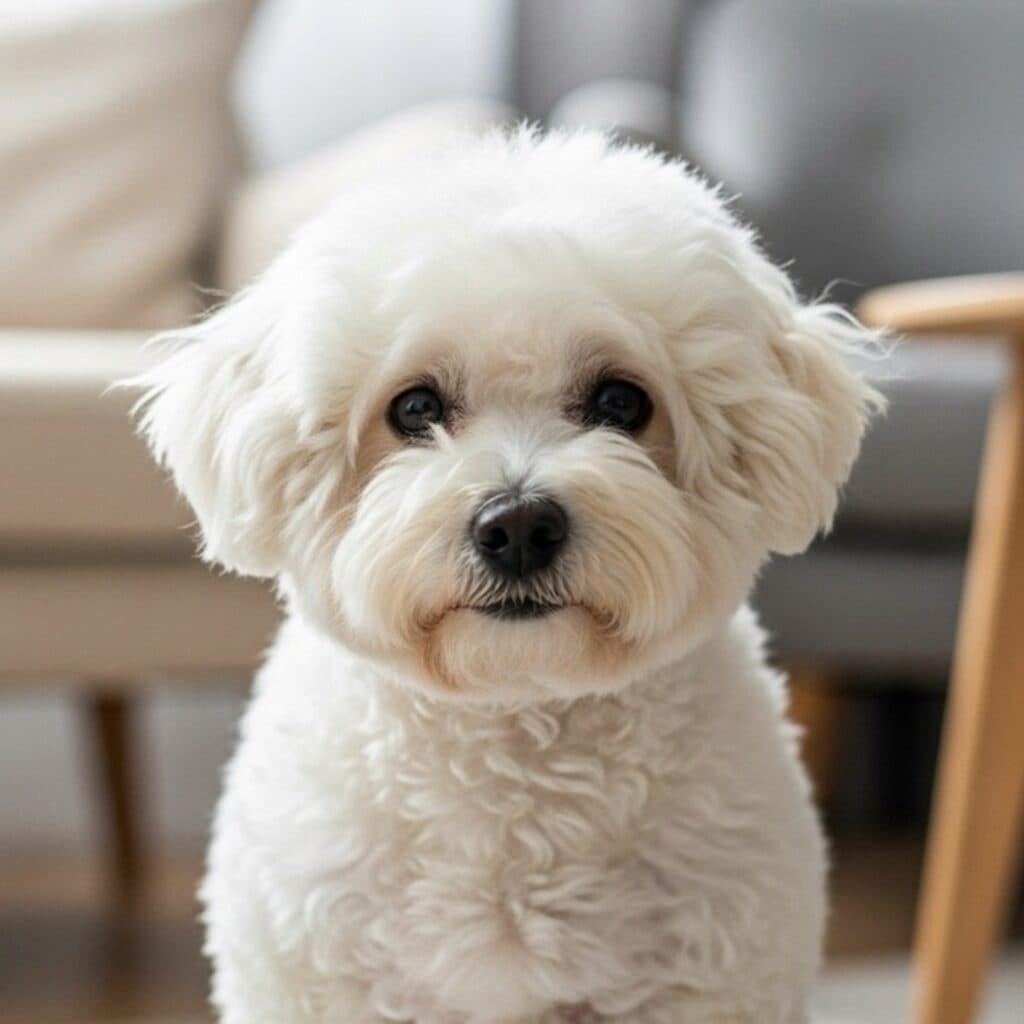
When your dog turns his body and rests his flank against your leg, he is regulating his own emotional state using you as a reference — the same mechanism described by the American Kennel Club, which associates the gesture with a search for security and emotional regulation, not dominance. The gesture has a name: leaning. And it communicates something much more precise than affection.
What does it mean when a dog leans sideways against you?
The gesture — called "leaning" — is the dog shifting the lateral weight of his body toward the owner to regulate his own emotional state. According to Dr. Mary Burch of the American Kennel Club, it is affiliative behavior tied to seeking comfort, not an attempt to dominate the space.
What leaning really says
The position in which the dog shifts the lateral weight of his body toward the owner has a name: leaning. The gesture is not exclusive to clingy dogs or to specific breeds: it is one of the oldest forms of communication among canids.
When the dog does this, he is regulating his own emotional state using you as a reference. Animal behavior research shows that brief physical contact with a trusted figure reduces nervous system arousal in moments of uncertainty. It is the equivalent of a child leaning on an adult during a scare — the other's body works as an anchor.
The detail that sets leaning apart from a simple demand for petting: it appears more often in contexts of novelty or mild stress, not in play or excitement.
3 contexts that reveal your dog's request
Observing when the gesture occurs is more informative than how often it occurs:
| Context | What the gesture signals |
|---|---|
| Veterinarian or unfamiliar environment | Uses you as a reference point while assessing the situation |
| Sudden noise at home | Leans in, waits for things to normalize, then moves away on his own |
| Arrival of an unfamiliar person | "You are my reference right now" — social orientation, not possessiveness |
If leaning shows up in all of these contexts and the dog can move away when the situation normalizes, the bond is healthy. If the dog cannot move away even in a calm environment, it is worth evaluating separation anxiety with a professional.
How to respond to a dog that leans without amplifying fear
The owner's response decides whether the moment strengthens or complicates the bond. Two opposite mistakes produce the same bad result:
Ignoring it completely teaches that contact is not reliable — precisely when the dog most needs stability. He will intensify the signal, looking for the response that did not come.
Reacting with too much verbal comfort — a high-pitched tone, "poor baby, how scary!" — confirms to the dog that there really was something threatening. The owner's anxious emotional state amplifies what he was trying to regulate.
What works: brief, calm contact. A hand on the back for a few seconds, a neutral voice, then going back to the activity. This pattern communicates safety without creating dependence.
What NOT to do
- Pushing him away or giving a firm command when he leans: it teaches that contact is not reliable at the moment he most needs stability.
- Interpreting it as dominance or an attempt to control space: leaning is emotional regulation, not a territorial dispute.
- Ignoring an abrupt change in the pattern: a sudden increase in frequency, especially outside contexts of novelty, deserves veterinary or behavioral evaluation.
Frequently asked questions
Why does my dog lean on me more than on the other people in the house?
Dogs establish hierarchies of trust, not of generic affection. The person who responds most consistently to the dog's signals — including leaning — tends to become the main reference of security. It is not a matter of who gives more food or plays more.
Is a dog that leans all the time anxious?
It depends on the context. Occasional leaning in moments of uncertainty is adaptive, healthy behavior. A dog that cannot move away even in a calm environment, that vocalizes when separated and has difficulty resting alone presents a different picture — these signs together call for specialized evaluation.
Should I encourage this behavior?
There is no need to encourage it — it is spontaneous. What strengthens the bond is responding consistently and calmly. A dog that gets a predictable response learns that you are trustworthy, and that learning consolidates over time.
Do smaller breeds lean more?
There is no evidence that size determines frequency. Socialization history, environment and the relationship with the specific owner carry much more weight than the animal's size.
Is leaning the same thing as my dog following me from room to room?
No. Leaning is a momentary, contextual gesture. A dog that follows the owner all over the house without being able to rest alone shows a distinct pattern, which may indicate separation anxiety — see the signs of anxiety in dogs to tell the two conditions apart.
When your dog presses his flank against you and waits — calm, present — he is doing exactly what a healthy bond allows: using you as a point of support to get through the unknown. Recognizing the gesture is half the way. Responding with the same calm he asks for is the other half.
Want to understand what else influences your dog's well-being in his daily routine? Take the personalized quiz for dogs →
Picked by score from our overall dog ranking, not by the topic of this article. To get it right for your pet — age, weight, spayed or neutered — take the quiz and get a list made for them. A pet with a diagnosed condition needs a diet prescribed by a veterinarian.



