Dog Anxiety: 8 Signs and What to Do About Each One
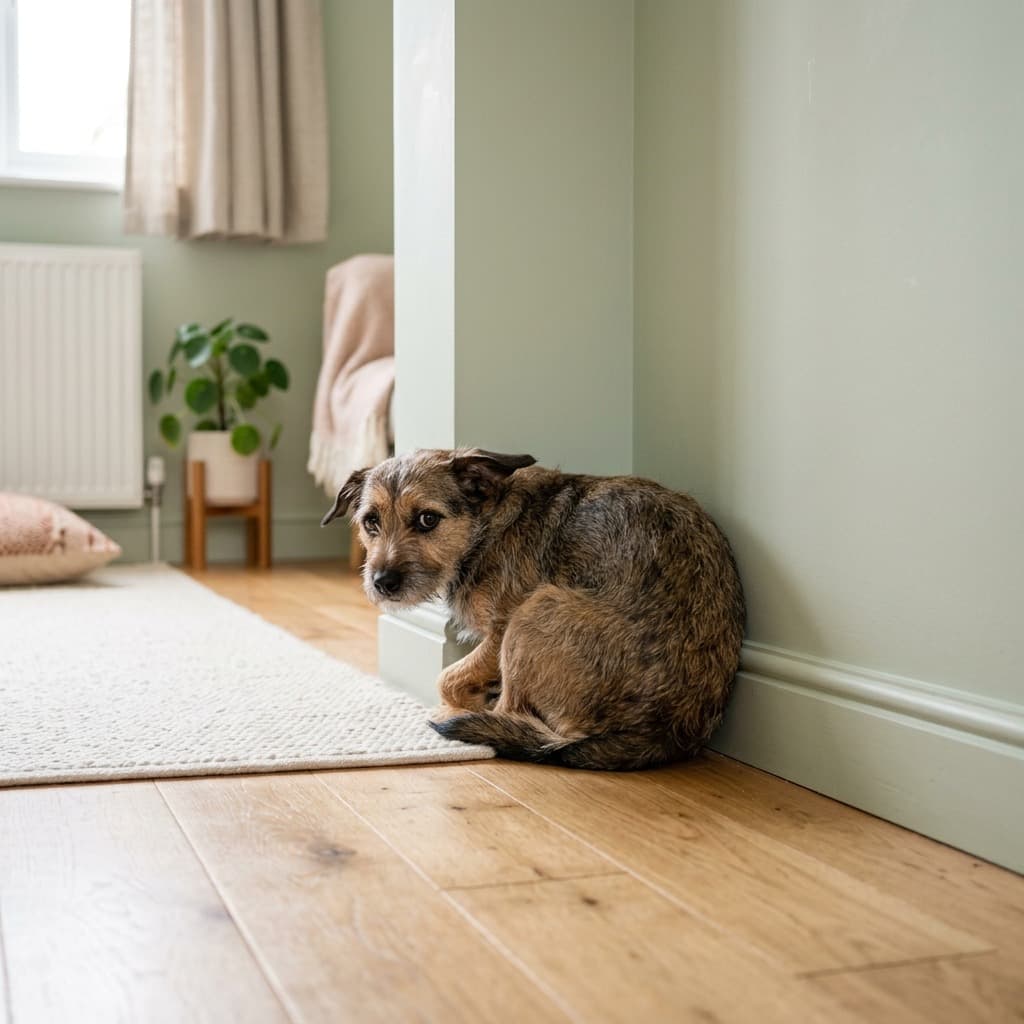
Canine anxiety is one of the most common behavioral conditions in domestic dogs. Separation anxiety — one of the most frequent forms — affects dogs of every breed and size, and the signs show up before the owner notices the pattern: repetitive paw licking, destroying objects while the owner is away, regression in house training. Identifying these signs early determines whether the treatment will be simple (a routine adjustment) or long (specialized follow-up).
Your dog licks his paws until they are red, but there is no wound. Or you come home and find the door scratched and the rug torn. The signs are present in everyday life — what is missing is knowing what they mean.
Canine anxiety rarely announces itself clearly. It shows up in behaviors that most owners read as tantrums, excess energy or "just the way the dog is." Recognizing these signs is the concrete step that opens the way to helping.
What are the main observable signs of anxiety in dogs?
The eight signs below — from paw licking to destroying objects while the owner is away — are the most common in the daily life of anxious dogs. For each one, there is a practical first step that helps reduce the problem, and a warning about what not to do, since punishing most of them only worsens the underlying anxiety.
| # | Sign | First step |
|---|---|---|
| 1 | Licks his paws nonstop | Veterinarian to rule out allergy before investigating a behavioral cause |
| 2 | Yawns or licks his lips for no reason | Observe the context and the stimulus present |
| 3 | Paces back and forth | Environmental enrichment; if it persists, a veterinary behaviorist |
| 4 | Pees in the house though already trained | Never punish — punishment worsens the problem |
| 5 | Hides or trembles for no reason | Identify recent changes in the environment |
| 6 | Cries when left alone | Gradual independence training; severe cases need follow-up |
| 7 | Ears back, tail low | Observe whether it is continuous, not sporadic |
| 8 | Destroys things when you leave | Monitoring camera to confirm the pattern |
1. Licks his paws nonstop. With no visible wound, repetitive licking works as self-soothing. If it persists for more than a few days, take him to the veterinarian to rule out allergy before investigating a behavioral cause.
2. Yawns or licks his lips for no reason. These gestures are appeasement signals — the dog uses them to reduce internal tension. If they appear in seemingly calm situations, observe the context: what stimulus was present?
3. Paces back and forth. Repetitive pacing indicates difficulty with self-regulation. Environmental enrichment (sniffing toys, scent activities) helps in the short term; if it persists, a veterinary behaviorist is the way to go.
4. Pees in the house — while already trained. The most misread sign: a dog that had mastered training and regresses may be in emotional distress, not testing limits. The first step is to never punish — punishment worsens the problem and breaks the bond of trust.
5. Hides or trembles for no reason. Hiding under furniture or trembling with no cold or fever are physical responses of a nervous system on alert. Identify recent changes: a new animal, a move, continuous noise.
6. Cries when left alone. Separation anxiety is one of the most common forms in domestic dogs — a study published on PubMed about risk factors and associated behaviors points to hyperattachment to the owner, extreme following around the house and anxiety in the moments before departure as the main indications that help tell separation anxiety apart from other behavior problems. Persistent crying right after the owner leaves is a clear sign. Gradual independence training resolves mild cases; severe cases need veterinary follow-up.
7. Ears back, tail low. Body language is the dog's primary language. Ears pulled back and tail tucked between the legs in everyday situations with no visible threat indicate continuous stress — not sporadic behavior.
8. Destroys things when you leave. Chewing furniture and tearing up objects while the owner is away is anxiety discharge, not revenge. A monitoring camera confirms whether it happens right after you leave — useful data for the behaviorist.
Why does sign #4 catch people so off guard?
The return to peeing indoors contradicts a visible achievement. The owner naturally associates it with disobedience — but the dog does not reason in a calculated way. What happens is an emotional response that overrides learned control. Punishing at that moment is punishing the symptom, not the cause — and it damages the bond that any treatment will need.
What NOT to do
- Punishing after the anxious behavior. The dog does not connect the punishment to the past act. The effect is more stress and a worse problem.
- Ignoring it and waiting for it to pass. Untreated anxiety tends to intensify over time, not resolve on its own.
- Offering excessive affection at the peak of the anxious state. Comforting intensely during the trembling or crying can reinforce the state of alert. Ask your veterinarian how to act in these moments.
Observe before you act
The eight signs described here — from compulsive licking to peeing in the wrong place — are the dog's attempts to communicate an internal state he cannot regulate on his own. As in the opening of this article: the signs are already there, you only need to learn to read them.
If you identified three or more on this list, start with a veterinary consultation. The professional will advise whether the case calls for a routine adjustment, environmental enrichment or a specialist referral.
Frequently asked questions
Can canine anxiety be treated?
Yes. Mild cases respond to environmental enrichment and a stable routine. Moderate to severe cases usually need a veterinary behaviorist and, in some situations, medication support. The prognosis is good when it is identified early.
How many signs do I need to observe before consulting the veterinarian?
Three or more signs already justify a consultation. A single very intense or frequent sign also calls for an evaluation to rule out physical causes.
My dog destroys things only when I leave — is it revenge?
No. Dogs do not reason vengefully. The destruction is a response to the stress of separation — the dog is suffering, not protesting. Never punish when you come home.
Does an anxious puppy become an anxious adult dog?
Not necessarily. Early socialization and gradual exposure to varied stimuli in the first months greatly reduce the likelihood of persistent anxiety.
Can a dog with anxiety improve without medication?
Mild and moderate cases often improve with a routine adjustment, environmental enrichment and independence training. The veterinarian evaluates whether the animal's specific condition calls for medication support.
Picked by score from our overall dog ranking, not by the topic of this article. To get it right for your pet — age, weight, spayed or neutered — take the quiz and get a list made for them. A pet with a diagnosed condition needs a diet prescribed by a veterinarian.



