When Should You Switch From Kitten Food to Adult Food?
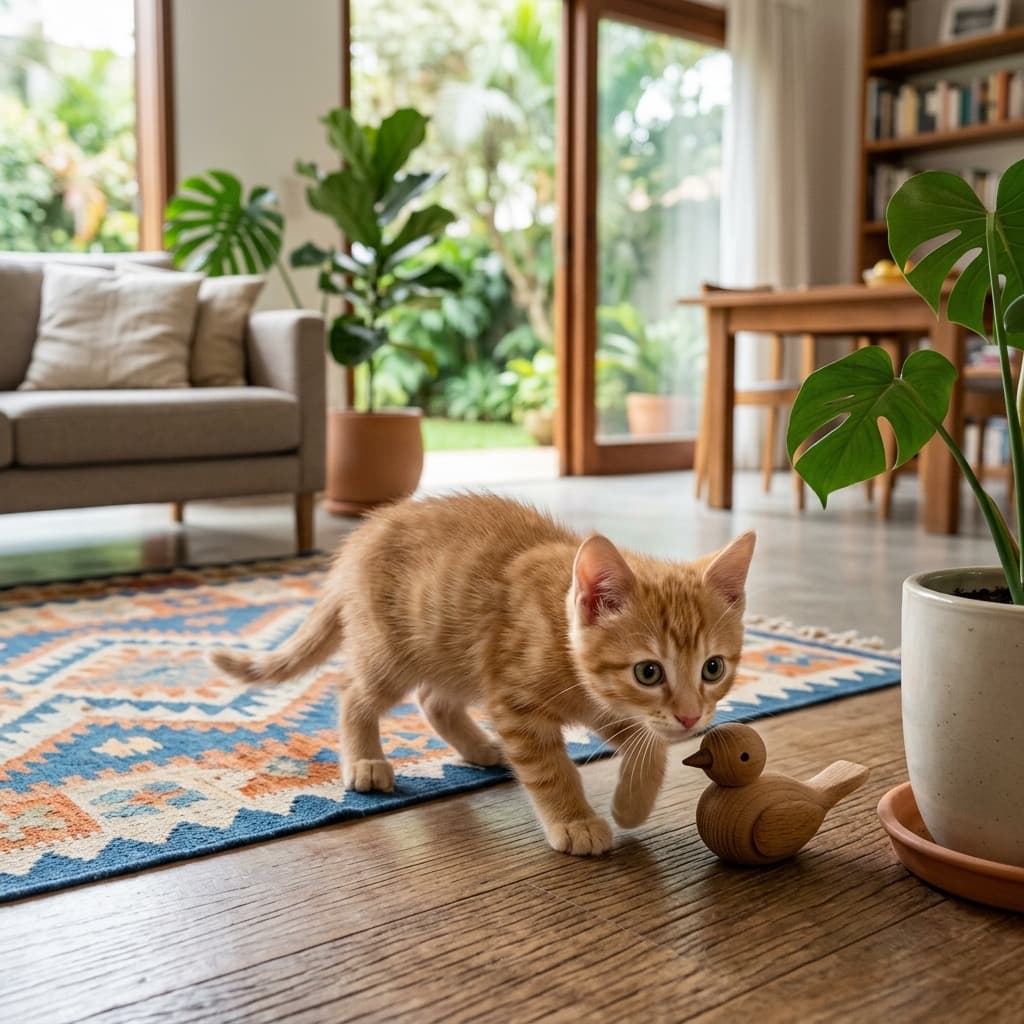
The switch from kitten food to adult food should happen between 9 and 12 months of age — the period in which most cats reach adult body size and bone growth slows. In large breeds, such as the Maine Coon, the window extends to 18 months. In the cat food catalog we track, kitten formulas average 41.0% protein and 20.2% fat on a dry matter basis , versus 39.8% protein and 15.9% fat in adult formulas — the real difference is not so much the protein percentage (which is similar), but the caloric density and the mineral profile adjusted for bone growth, which kitten food supports and adult food no longer needs to support. When it is time to switch, compare the formulas in the adult cat food ranking.
Switching too early deprives the growing body of calcium and phosphorus in the proportions it still needs. Switching too late keeps a caloric density too high for a metabolism that has already slowed — and that is where many cats start gaining weight while still kittens.
At what age is a cat no longer a kitten?
The AAHA/AAFP feline life stage guidelines define the kitten stage as the period from birth to 1 year of age, and the next one, young adult, as 1 to 6 years. The food switch follows this turning point, when bone growth slows and caloric need drops. The WSAVA nutritional assessment guidelines recommend reassessing life stage and body condition score at every visit, calibrating the transition to the individual, not just to calendar age.
The signs the cat's body gives
Besides age, three physical signs indicate the transition is at the right moment:
- Weight stabilization: the cat stops gaining weight quickly month after month and reaches a plateau — a sign that most of the bone growth has already happened.
- Complete permanent dentition: around 6-7 months the baby teeth have already fallen out; at 9-12 months the dental arch is established, with no pending changes.
- Change in appetite pattern: kittens at peak growth eat proportionally more per kilo of body weight; a relative drop in appetite (not refusal, just less voracity) accompanies the slowdown in growth.
Large breeds (Maine Coon, Ragdoll) keep growing until 18-24 months — in these cases, the switch can wait until 15-18 months, always watching the weight plateau rather than following calendar age alone.
Why protein is not the main criterion
It is common to think that kitten food "has much more protein" and is therefore superior — the data do not support that. The protein difference between kitten (41.0% DM) and adult (39.8% DM) in the catalog evaluated is small. What really differentiates the two formulations is:
| Criterion | Kitten food | Adult food |
|---|---|---|
| Protein (dry matter) | ~41.0% | ~39.8% |
| Fat (dry matter) | ~20.2% | ~15.9% |
| Caloric density | Higher | More moderate |
| Calcium and phosphorus | Proportion adjusted for bone growth | Maintenance proportion |
| DHA (fatty acid) | Often reinforced (neural development) | Not a priority |
How to make the transition without digestive upset
An abrupt food change is the most common cause of diarrhea and vomiting in healthy young cats. The safe protocol is gradual, over 7 to 10 days:
- Days 1-3: 75% old food + 25% new
- Days 4-6: 50% of each
- Days 7-9: 25% old + 75% new
- Day 10: 100% new food
If loose stools appear at any stage, stop the progression and keep the current proportion for another 2-3 days before advancing.
Frequently asked questions
Can a kitten eat adult food before 9 months?
It is not recommended. Adult food has calcium and phosphorus in a maintenance proportion, insufficient to sustain the peak of bone growth that happens between 3 and 9 months. The risk is a silent mineral deficiency, not an immediately visible symptom.
What happens if I switch to adult food too late?
The cat keeps receiving a caloric density designed for growth, in a body that no longer grows at the same pace. That sustained caloric excess is one of the gateways to early weight gain in young neutered cats.
Do large-breed cats follow the same 9-12 month rule?
Not entirely. Maine Coon, Ragdoll and Norwegian Forest Cat keep growing bone until 18-24 months — the switch can be postponed until 15-18 months, watching the weight plateau rather than age alone.
See the ranking of kitten and adult cat foods → · Use the cat food comparison tool to put the kitten line and the adult line side by side
Picked by score from our overall cat ranking, not by the topic of this article. To get it right for your pet — age, weight, spayed or neutered — take the quiz and get a list made for them. A pet with a diagnosed condition needs a diet prescribed by a veterinarian.



