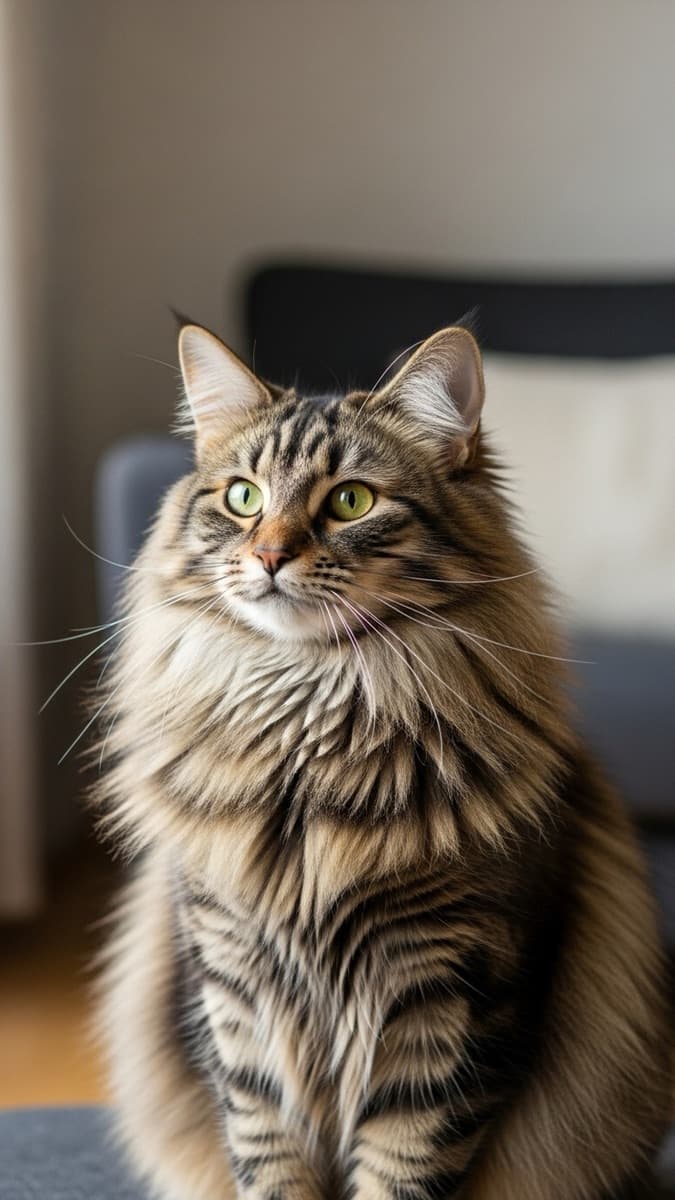
The Norwegian Forest Cat is a large cat, between 4 kg and 9 kg as an adult, with medium energy and a long double coat. The breed carries a genetic risk of hypertrophic cardiomyopathy (HCM), which calls for quality protein and adequate taurine. The dense coat also increases the tendency toward hairballs, calling for functional fiber.
In the current My Pet Magazine analysis, the best food for the Norwegian Forest Cat is ACANA Indoor Entrée (ACANA), with a technical score of 89.3/100 (🌟 Superior Quality), calculated with the My Pet Magazine IDNM/IPFI methodology across 50 cat foods reviewed in July 2026. See the full ranking ↓
What to weigh in food for the Norwegian Forest Cat
Two things guide the choice of a Norwegian Forest Cat's food: cardiac support and hairball control.
Heart. Taurine is an amino acid the cat does not produce on his own in sufficient quantity — it has to come whole from the food, throughout life. Without taurine, the risk is dilated cardiomyopathy (DCM), a heart problem different from HCM. In the Norwegian Forest Cat, that care carries extra weight because the breed is among those the Merck Veterinary Manual lists as having familial HCM — the most common heart disease in cats. Good-quality protein comes in here as support for heart-muscle function, without overloading a heart already under closer watch in this breed.
Hairballs. The breed's long double coat, adapted to the cold climate of Scandinavia, sheds more hair during self-grooming than that of a short-haired cat. That swallowed hair can tangle in the digestive tract and form trichobezoars. Functional fiber in the food — such as psyllium, cellulose or beet pulp — helps the hair continue through the intestine instead of accumulating in the stomach.
Criteria scored against the My Pet Magazine nutritional targets (protein, fat, calcium and caloric density ranges by size — see our methodology).
Breed profile and predispositions
The Norwegian Forest Cat carries two predispositions that change what to look for in the food.
The first is hypertrophic cardiomyopathy (HCM), the most common heart disease in cats. According to the Merck Veterinary Manual — Hypertrophic Cardiomyopathy in Dogs and Cats, HCM is familial in several cat breeds, including the Norwegian Forest Cat. Food does not treat the genetic predisposition — what it does is provide support, with high-quality protein helping cardiac function. A diagnosed cat is followed by a veterinary cardiologist. Taurine remains essential to the feline heart in general — a lack of it causes dilated cardiomyopathy (DCM) — but it is not a specific treatment for HCM.
The second is the formation of trichobezoars (hairballs), favored by the breed's long double coat. According to VCA Animal Hospitals — Trichobezoars in Cats, hair ingested during self-grooming that is not passed in the stools can tangle in the stomach or intestine until it forms a mass too large to pass — the hairball. A high-fiber diet is indicated to move the hair through the digestive tract and reduce the risk of build-up.
Recommended foods for the Norwegian Forest Cat
Ranked by IDNM/IPFI technical score across 50 cat foods — no manual product curation.
- 1
ACANA Indoor Entrée · ACANA
89.3/100 - 2
Purina Pro Plan Sensitive Skin & Stomach · Purina Pro Plan
87.6/100 - 3
BLUE Wilderness Adult Indoor · Blue Buffalo
87.1/100 - 4
Nulo Freestyle Cat & Kitten · Nulo
86.9/100 - 5
Tiki Cat Born Carnivore Indoor Health · Tiki Cat
86.9/100
Frequently asked questions about Norwegian Forest Cat food
- Why is the Norwegian Forest Cat at higher risk of hypertrophic cardiomyopathy (HCM) than other breeds?
- The Merck Veterinary Manual lists the Norwegian Forest Cat among the breeds in which hypertrophic cardiomyopathy — the most common heart disease in cats — is familial, that is, it runs in lines. Being of the breed does not mean the cat will fall ill, but it is reason for regular cardiology follow-up.
- Does food prevent or treat the Norwegian Forest Cat's hypertrophic cardiomyopathy?
- No. The predisposition is genetic, and no food changes that. What the diet does is provide support: good-quality protein helps heart-muscle function, and taurine at an adequate level is essential to a cat's heart throughout life — a lack of it causes another heart problem, dilated cardiomyopathy (DCM). A cat with HCM is followed by a veterinary cardiologist, not treated by food alone.
- Why does the Norwegian Forest Cat form more hairballs?
- The breed has a long double coat, adapted to the Nordic cold, and that means more loose hair during self-grooming. According to VCA Animal Hospitals, that ingested hair can tangle in the stomach and form trichobezoars (hairballs). Functional fiber in the food helps the hair pass through the intestine instead of accumulating.
- Does every Norwegian Forest Cat develop hypertrophic cardiomyopathy?
- No. The Merck Veterinary Manual describes HCM as familial in the breed, but that does not mean every individual develops the disease. Even so, it is worth having periodic echocardiograms and choosing a food with good-quality protein as part of cardiac support, with taurine always present.
- Does the Norwegian Forest Cat's double coat change anything in his feeding?
- It changes the care taken with hairballs. Beyond regular brushing, a food with functional fiber — such as psyllium or cellulose — helps hair ingested during self-grooming continue through the intestine instead of accumulating in the stomach.
Methodology
The block of recommended foods on this page is ordered by My Pet Magazine's IDNM/IPFI technical methodology, which evaluates the nutritional density and ingredient purity of each product in the active dataset for the Norwegian Forest Cat's large-size profile — with no manual curation or brand influence.
The score takes into account how well the food fits the breed profile: the presence of taurine and functional fiber for hairball control are factors that weigh in the ranking, recalculated whenever the product dataset is updated.
The ranking on this page is a projection of the My Pet Magazine IDNM/IPFI scoring engine over the cat dataset, with no manual product curation. See the full methodology →
Want a recommendation tailored to your Norwegian Forest Cat?