Best Cat Breeds for Apartments: 5 Easygoing Options
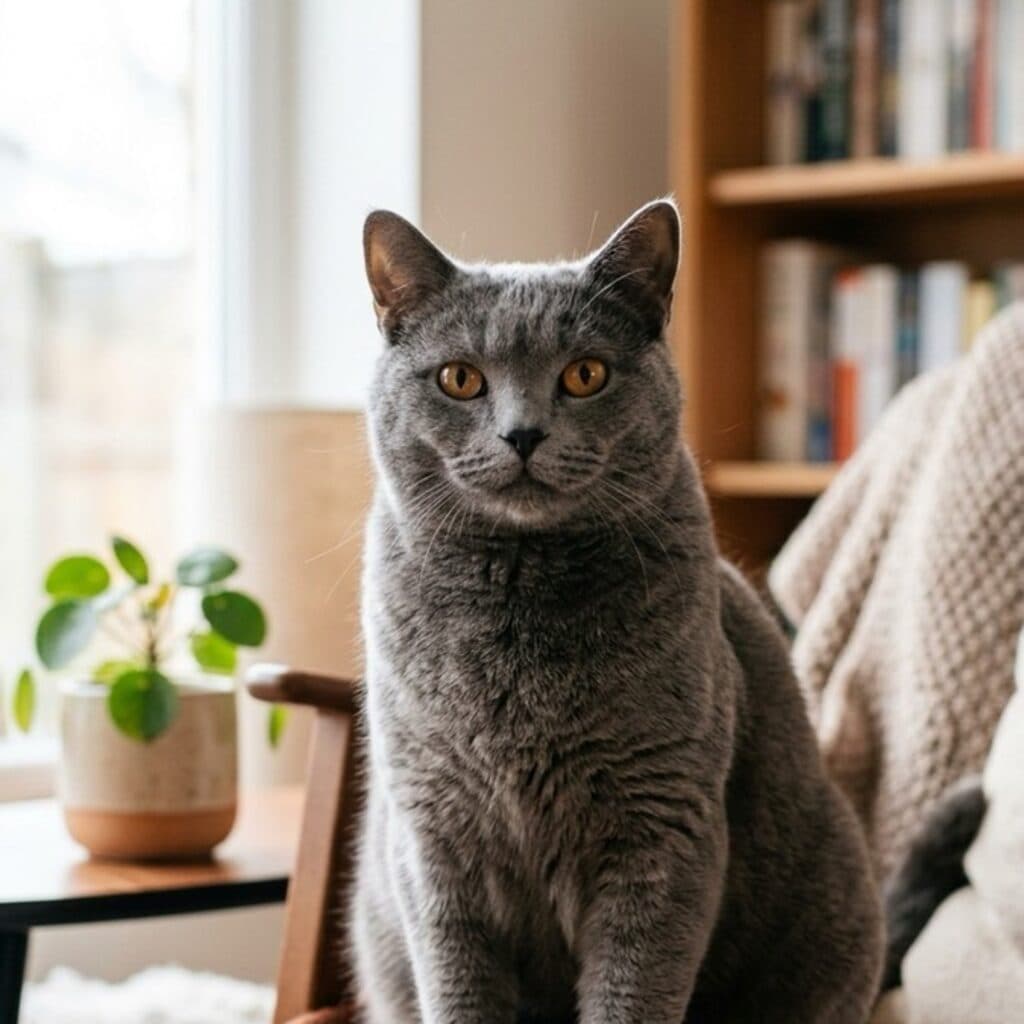
You open the apartment door after a long day and find the cat stretched out on the sofa, in the same spot as always, looking at you with the calm of someone in no hurry at all. Cats and apartments go well together — as long as the choice of breed (and routine) works in favor of that calm. Some breeds carry a temperament that adjusts well to enclosed spaces. Knowing that starting point helps anyone living in a small space get off on the right foot.
The list below brings together four breeds, plus the mixed-breed cat. But save the most important part for the end: the breed is only the start of the conversation.
The 5 choices that adapt well to a small space
Persian has a well-earned reputation for being sedentary. With low energy and a quiet routine, it prefers the soft corners of the house to running marathons, which suits apartment life.
Siamese is smart, talkative and very attached to its owner. It does well in an apartment, with one condition: daily company and play to use up the energy and the chatter it comes with by nature.
Maine Coon is big, but it is a gentle giant: docile, calm and sociable. Despite its size, it adapts well to the space when it has somewhere to climb and observe.
Angora is elegant, active and playful. It likes interaction and height, so shelves and tall scratching posts keep this cat happy even in an apartment.
Mixed-breed cat closes the list on the strongest note. The mixed-breed cat is rustic, healthy and adaptable — perhaps the one that copes best in any space, with or without a pedigree.
| Breed | Energy | What it needs at home |
|---|---|---|
| Persian | Low | Soft corners, a quiet routine |
| Siamese | High, talkative | Daily company and play |
| Maine Coon | Moderate | Space to climb and observe |
| Angora | High, playful | Shelves and tall scratching posts |
| Mixed-breed cat | Variable | Rustic and adaptable to any routine |
Why is the breed only a starting point?
Breed temperament works as a tendency, not a guarantee: the environment shapes a cat's behavior as much as genetics does. A "calm" breed with no stimulation at home becomes a bored cat — and a bored cat scratches the furniture, wakes the house at night and shows signs of stress.
What really makes a cat live well in an apartment isn't in the pedigree. It's in three things: vertical enrichment (shelves, tall scratching posts, places to climb and observe), company and routine (food, play and rest times that are more or less stable). A study published on NCBI/PMC about cats' use of hiding places showed that access to hiding places and elevated spots reduces signs of stress and increases use of the available space — the same logic applies to apartments: giving height is giving space, even in a small place.
What NOT to do
- Pick the breed and stop there. Without scratching posts, shelves and daily play, even the calmest breed gets sick of boredom.
- Leave the apartment "flat." A space with no high spot to climb ignores the cat's most basic instinct.
- Expect the cat to fend for itself. Independent is not a synonym for not needing attention — company and interaction are part of the care.
Frequently asked questions
What is the best cat breed for an apartment?
There is no single "best." Persian, Siamese, Maine Coon, Angora and the mixed-breed cat are among the options that adapt well. Still, the environment and routine weigh more than the breed.
Does a mixed-breed cat do well in an apartment?
Yes — and very well. The mixed-breed cat adapts as well as any breed. What counts is offering vertical enrichment, company and a stable routine, not the pedigree.
How much space does a cat need?
Less than you might imagine, as long as the space is well used vertically. Shelves, tall scratching posts and safe windows are worth more than floor square footage.
Does an apartment cat need another cat for company?
It isn't a rule. Some do better alone with plenty of interaction from their owner; others benefit from a companion. Observe your own cat's temperament before deciding.
In the end, that cat stretched out on the sofa isn't calm because of a breed name. It is doing well because the apartment was designed for it — with height to explore, company to trust and a routine it understands. The breed opens the door; the care is what keeps the cat at home.
Also see the ranking of foods for cats — the right food complements the environment when it comes to keeping an apartment cat healthy.
Picked by score from our overall cat ranking, not by the topic of this article. To get it right for your pet — age, weight, spayed or neutered — take the quiz and get a list made for them. A pet with a diagnosed condition needs a diet prescribed by a veterinarian.



