Why Does My Dog Keep Staring at Me All the Time at Home?
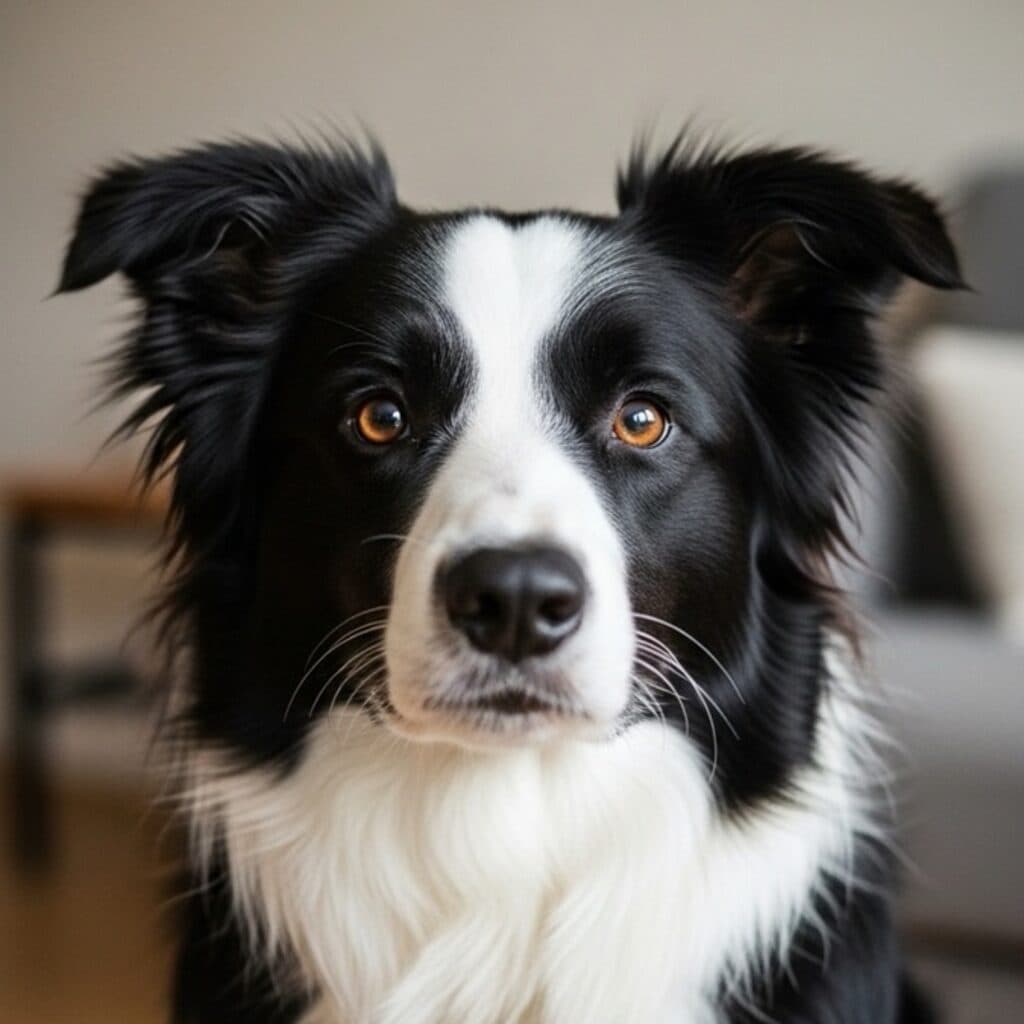
You are on the couch, the dog seems to be sleeping on the other side of the room. Suddenly he opens one eye, checks where you are and goes back to relaxing. A few minutes later, he repeats it. That quick glance repeated all day long has an explanation — and, most of the time, it is good news about your relationship.
What is a dog's "check-in"
In the study of canine behavior, this habit of looking from a distance, confirming your location and getting on with life has an informal name: checking in. It is not distraction or attitude. It is the dog monitoring where you are, the same way a small child playing in the park lifts their head from time to time just to see if the caregiver is still nearby.
The check-in is usually discreet: a look lasting seconds, sometimes just the ears turning in your direction. If your dog does this and goes back to resting, he is not insecure — he is updating his mental map of where the most important person in the house is.
You are his "secure base"
The reason behind the check-in is attachment. Like human babies, dogs form an attachment bond with whoever cares for them, and come to use the owner as a secure base: the reference point that makes the environment predictable and calm.
Knowing where that base is, without needing to stick to it, is what lets the dog relax, play and explore the house with peace of mind. Behavior research shows that dogs are more confident exploring a new place when the owner is present than when they are alone (study on the secure base effect in dogs). The check-in is the silent version of "everything is fine, my safe harbor is still here."
How can you tell if your dog's check-in is healthy?
In most cases, checking in is a sign of a secure bond, not a problem. The table below compares the healthy pattern with the warning sign on each criterion:
| Criterion | Healthy check-in | Warning sign |
|---|---|---|
| Frequency | Quick — he looks, reassures himself and resumes what he was doing | It becomes constant clinging, he follows you from room to room without resting alone |
| Routine | Does not stall — keeps sleeping, playing or eating between check-ins | Cannot relax unless he is stuck to you |
| Emotional reaction | No crying, trembling or pacing | Cries, barks or gets agitated every time you leave his sight |
When the check-in has all three characteristics from the "healthy" column, it is simply your dog's way of saying he trusts you.
When it is worth paying attention
The picture changes when the check-in stops being a glance and becomes constant clinging, as in the "warning sign" column above. That set of signs may indicate separation anxiety, a real condition that causes suffering to the animal — and that has treatment. In that case, a positive-reinforcement trainer or a veterinarian can help build, little by little, the confidence that being alone for a while is also safe.
What NOT to do
- Do not scold the dog for following or looking at you: checking in is not disobedience, and scolding only increases insecurity.
- Do not suddenly force isolation (locking him in another room for hours to "get him used to it") — in anxious dogs, this usually makes the condition worse instead of solving it.
Frequently asked questions
My dog looks at me all the time, is that jealousy?
No. Frequent looking is attachment monitoring, not possessiveness. He is checking where his secure base is, not competing for you.
Is checking in a sign of an insecure dog?
On the contrary: a quick, calm check-in usually indicates a secure bond. Insecurity shows up when the look turns into clinging with crying and an inability to relax alone.
Should I respond every time he checks on me?
You do not need to. Reacting to every glance can reinforce dependence. A calm, predictable environment already sends the message that everything is fine.
How can I help my dog be calmer when alone?
Start with short, low-drama absences when leaving and returning, offer a comfortable space and, if there is distress, seek professional guidance. Short, repeated absences work because they gradually desensitize the stress response — the dog learns, exposure after exposure, that your leaving is not a threat and that the owner comes back.
In the end, that glance repeated all day says less about vigilance and more about trust: your dog chose you as the safe point of his world. Understanding this behavior is the first step toward a lighter routine for both of you.
Picked by score from our overall dog ranking, not by the topic of this article. To get it right for your pet — age, weight, spayed or neutered — take the quiz and get a list made for them. A pet with a diagnosed condition needs a diet prescribed by a veterinarian.



