Why Does My Cat Prefer Tap Water Over Its Water Bowl?
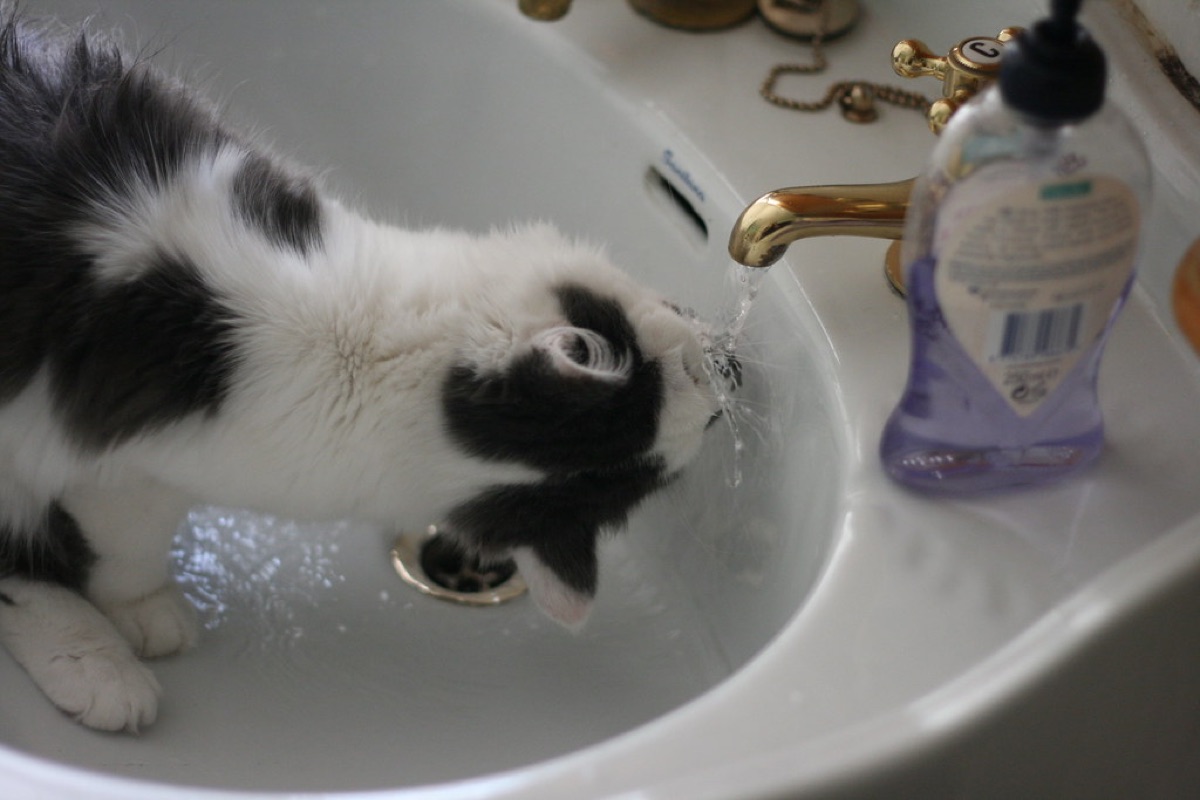
Dry cat food holds 6% to 10% water, according to Cornell, while canned food has at least 75%. A cat that eats only kibble therefore depends heavily on what it drinks, so it is worth understanding why it ignores the bowl and heads for the faucet. The veterinary sources we consulted do not explain why each cat picks the tap. They point to what the owner can adjust: where the water sits, whether there is more than one spot, and whether the water moves.
Why does a cat drink from the faucet and ignore the bowl?
No source we consulted gives a single cause. The Merck Veterinary Manual says cats are often attracted to running water and like to play with it. That fits a cat that prefers the trickle from the tap, but it is a tendency, not a rule.
What the owner can control is the setup around the bowl:
- Where it is. See the next section.
- Whether it is the only one. The Merck Manual states that multiple water sources encourage drinking.
- Whether the water is fresh. Cornell asks for clean, fresh water available at all times, and the Merck Manual asks that the bowl be washed every day.
If your cat drinks from the faucet but also from the bowl, nothing in the sources we consulted treats that as a problem. If it hardly drinks anywhere, that is a different conversation, and the post Cat Not Drinking Water? When Dry Food Is the Problem covers it.
Should the water bowl be kept away from the food?
Yes, that is what the veterinary guidelines ask for. The AAFP/ISFM feline environmental needs guidelines say a cat's resources should be in separate locations, and that food and water should be separated from each other. The text applies to cats in general, not only to those that drink from the tap.
The same guideline explains the reasoning: because cats are solitary animals, they need free access to these resources without being challenged by other cats or other threats. In a home with more than one cat, it recommends spreading things out so the cats do not eat or drink too close to one another.
In practice, the water bowl does not need to share the feeding corner. A quiet hallway or another room often works better, and Cornell notes, about food, that a litter box nearby can put a cat off. The Cornell text is about feeding, not water, so it is reasonable to apply the same criterion out of caution and watch your own cat.
Does a water fountain make a cat drink more?
It can help, but no source we consulted promises that the cat will drink more. The Merck Manual suggests considering a water fountain to encourage a cat to drink, because cats often like moving water. The AAFP/ISFM guideline lists water fountains as an option for fresh water for cats with outdoor access.
That gives a cheap option for the faucet-loving cat: try a fountain in a quiet spot, away from food and the litter box. If the cat starts using it, great; if not, the bowl in another location or a second bowl may do the job. Change the water and wash the equipment regularly, because Cornell and the Merck Manual ask for fresh, clean water.
An owner who sees a cat drinking much more than usual and urinating much more should also call the veterinarian. The Merck Manual says that if a cat seems to drink and urinate a lot, there may be a problem.
Does dry or wet food change how much a cat drinks?
It does, and that is where the food enters the picture. According to the Merck Manual, dogs and cats that eat mostly canned food tend to drink less water than those that eat mostly dry food, and cats often do not drink much. Canned food has 60% to more than 87% water, against 3% to 11% for dry.
| Type of food | Water in the food | Source |
|---|---|---|
| Dry food | 6% to 10% (3% to 11% in another range) | Cornell; Merck Manual |
| Canned food (can) | at least 75% | Cornell |
| Canned food, wide range | 60% to more than 87% | Merck Manual |
The numbers differ because each source measures its own range, which is why the table shows both. In no case does wet food replace fresh water being available, and Cornell says water is especially important for cats that eat only dry food, above all those prone to lower urinary tract disease.
Three dry cat foods in our US catalog declare 8% to 10% maximum moisture on the label, the same order of magnitude as the dry food described by the sources.
| Food (catalog) | Type | Declared moisture (max.) |
|---|---|---|
| Hill's Science Diet Adult Indoor Cat, Chicken Recipe | Dry | 8% |
| Blue Buffalo Tastefuls Indoor, Salmon & Brown Rice Adult | Dry | 9% |
| IAMS ProActive Health Hairball Care, Chicken & Salmon | Dry | 10% |
That does not make one food better than another for drinking habits: the label measures only the moisture in the bag, and how much water a cat drinks depends on the cat. To compare protein, energy and price, the cat food ranking shows each product's profile. If you want to mix pouches into the kibble, you can read Cat Only Eats Wet Food: How to Switch Back to Dry, which covers the change with care.
Frequently asked questions
Is it normal for a cat to drink from the faucet?
Yes, and nothing in the sources we consulted treats it as a problem. The Merck Manual notes that cats often like moving water. The point of concern is a cat that drinks too little or far more than usual, not the place where it drinks.
Do I need to replace the bowl with a fountain?
No. A fountain is an option the Merck Manual suggests to encourage drinking, but no source guarantees it works for every cat. Try one in a quiet spot and also keep a bowl of fresh water somewhere else in the home.
Does wet food solve the lack of water?
It helps, but it does not replace water being available. The Merck Manual says wet food helps a cat get enough water, and Cornell asks for fresh water at all times, especially for cats that eat only dry food.
Picked by score from our overall cat ranking, not by the topic of this article. To get it right for your pet — age, weight, spayed or neutered — take the quiz and get a list made for them. A pet with a diagnosed condition needs a diet prescribed by a veterinarian.