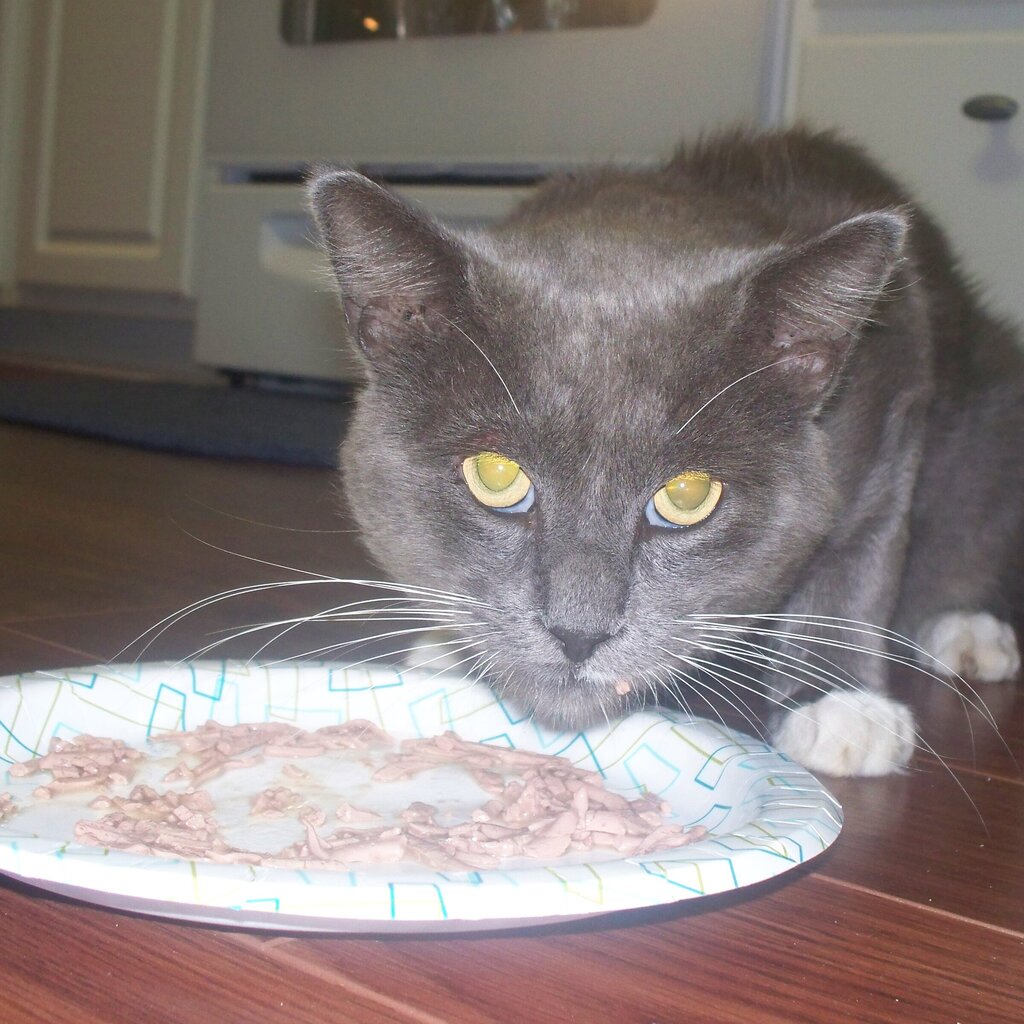
Two Cats, Two Foods: Kitten and Neutered Cat Together
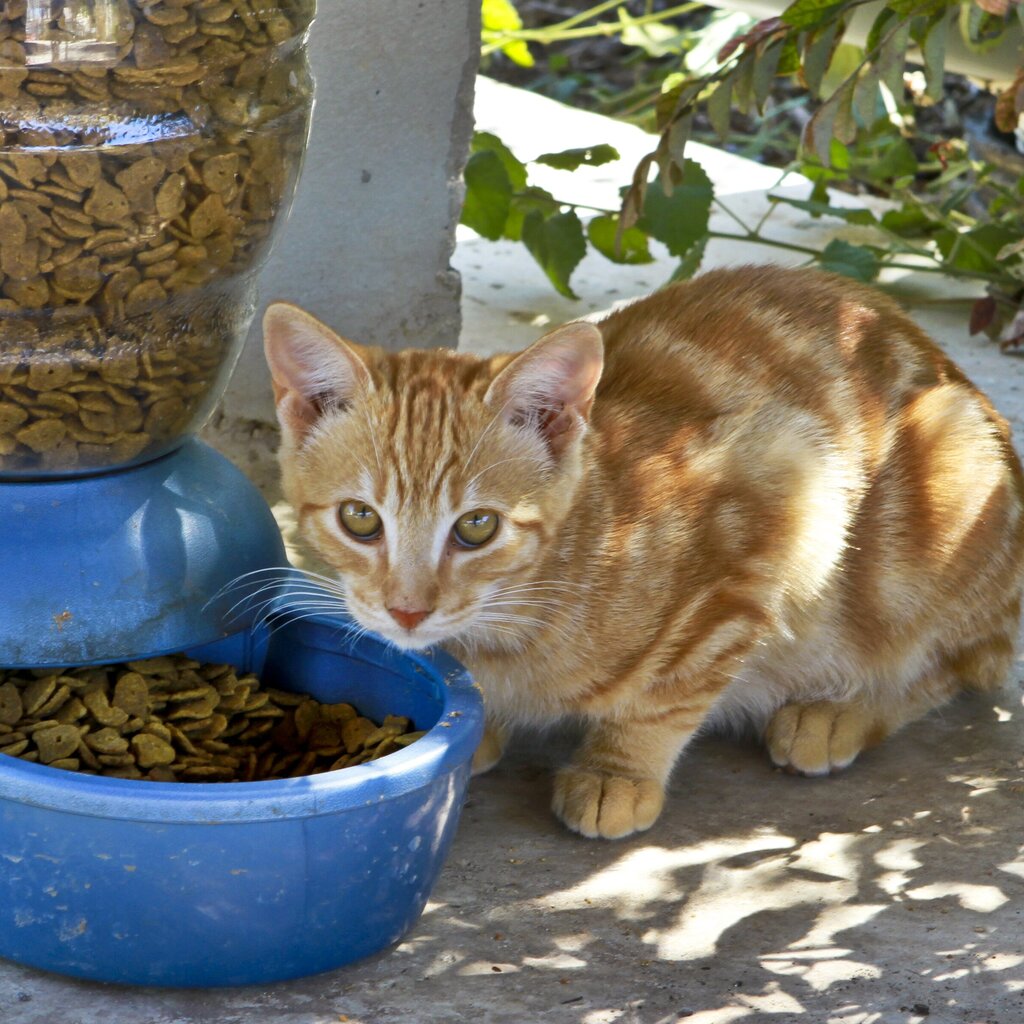
3,917 kcal per kg is the average of the eight kitten foods in our US catalog that state their energy, against 3,689 kcal/kg across the 31 adult foods that also state it. That looks like a small gap in the bowl, but the energy a kitten burns and the energy a neutered adult burns are much further apart than that.
So when a home has a kitten and a neutered cat, one bowl cannot serve as a meal for both. What works is keeping two foods and separating the cats at mealtime.
Can a kitten eat neutered cat food?
Not as the main meal, because a kitten needs far more energy per pound of body weight. The AAHA/AAFP life stage guidelines put it at 200 kcal per kg of body weight a day at 10 weeks of age, against 80 kcal/kg a day at 10 months.
According to the Merck Veterinary Manual, the maintenance energy need of a healthy kitten is 2.5 × RER, that of an intact adult is 1.4 × RER and that of a neutered adult is 1.2 × RER. RER is the cat's resting energy.
In other words, the neutered cat has the lowest energy burn of the three, and the kitten the highest. A neutered-cat food is built for the first. The AAHA/AAFP guidelines (Quimby et al., 2021) also say that at any life stage a cat should eat a diet with an AAFCO nutritional adequacy statement, which is worth checking on the kitten's label.
Can an intact cat eat neutered cat food?
It can, but the adjustment is made on the scale, not on the label. The same Merck table gives 1.4 × RER for the intact adult and 1.2 × RER for the neutered one, so the intact cat burns more energy a day. The AAHA/AAFP guidelines state that neutering is a risk factor for obesity in cats, particularly in males.
The practical conclusion is to weigh the portion and track the cat's weight and body condition score. If the cat loses or gains weight for no clear reason, that is a conversation for the veterinarian. The 15 adult indoor foods in our US catalog with a declared energy range from 3,364 kcal/kg (IAMS ProActive Health Indoor Weight & Hairball Care Chicken & Turkey) to 3,979 kcal/kg (Purina Pro Plan Indoor Care Turkey & Rice), with an average of 3,587.
How do you stop one cat from eating the other's food?
Separate the cats at mealtime instead of counting on their good manners. The 2018 AAFP consensus on feline feeding programs says that cats eating together would still benefit greatly from separate feeding areas. The same document recommends several feeding points that are visually separated, and it favors that over leaving the cats to share one spot.
It also notes that placement should account for each cat's agility and can use elevated spaces, and that meals can come from programmable feeders, some with individual microchips (Sadek et al., 2018).
| Strategy | What it looks like in practice |
|---|---|
| Different rooms | Kitten in a room with the door closed, adult in the living room, each with its own bowl |
| Schedule | Set mealtimes for both cats, instead of a full bowl all day |
| Height | The adult's bowl on an elevated spot, matched to each cat's agility |
| Microchip feeder | Opens only for the registered cat, according to its programming |
A study in multi-cat homes used automatic feeders to separate the cats during meals and to portion the food precisely (Witzel-Rollins et al., JFMS, 2022). The study was about weight loss in adult cats, so it works as an example of the equipment, not as a rule for kittens.
Can one food work for both cats?
Our catalog cannot say that one food serves a kitten and a neutered cat equally well. The eight kitten foods with declared energy fall between 3,705 and 4,067 kcal/kg, and the 15 adult indoor foods between 3,364 and 3,979, with an average of 3,587. The ranges overlap, so the number alone does not separate the life stages.
A kitten grows on high energy. A neutered cat gains weight on excess, and post-neuter obesity risk is what the AAHA/AAFP guidelines point to. Anyone trying to solve it with one food has to weigh each cat's portion and track both weights. To compare options using declared data, see the cat food ranking.
For a kitten food with declared energy, see the profile of Hill's Science Diet Kitten (4,067 kcal/kg). For the neutered or indoor cat, Purina Pro Plan Indoor Care states 3,979 kcal/kg.
Frequently asked questions
Can a kitten eat neutered cat food?
Not as the main meal. The AAHA/AAFP guidelines give 200 kcal/kg of body weight a day for a 10-week-old kitten, against 80 kcal/kg a day at 10 months, and the neutered cat sits at the lowest point of the energy scale.
How much more energy does a kitten burn than a neutered cat?
The Merck Manual gives 2.5 × RER for a healthy kitten and 1.2 × RER for a neutered adult. That is the tabulated value for the kitten, and the real portion depends on age and weight, so follow the feeding guide on the package and your veterinarian.
Can I use a microchip feeder?
Yes. The 2018 AAFP consensus mentions programmable feeders, some with individual microchips, as a way to serve each cat its own meals.
Picked by score from our overall cat ranking, not by the topic of this article. To get it right for your pet — age, weight, spayed or neutered — take the quiz and get a list made for them. A pet with a diagnosed condition needs a diet prescribed by a veterinarian.