Cat Not Drinking Water? When Dry Food Is the Problem
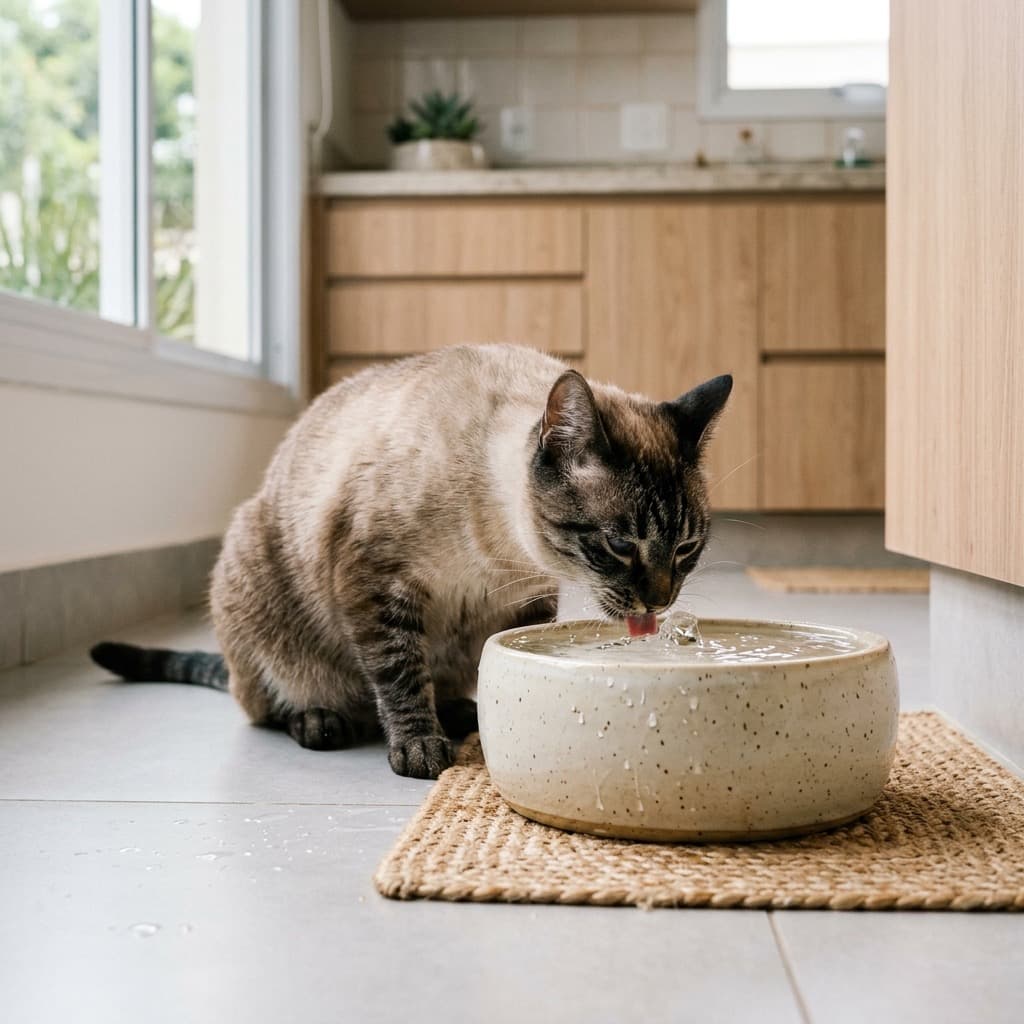
You change the water three times a day. You bought that expensive fountain. You put little bowls all around the house. And your cat still drinks very little — or almost nothing. The urine is concentrated, a strong yellow, and you start to worry about kidney stones.
Before you invest in one more fountain or swap the bowl again, consider this: the problem may be in the food bowl, not the water bowl. Dry food contains about 10% moisture, against 68-78% for wet food — a difference documented by the Merck Veterinary Manual, which associates drier diets with more concentrated urine even when the cat compensates by drinking a little more water. That difference forces the feline body to make up the gap with drinking water — but cats have a poorly developed sense of thirst, a genetic inheritance from desert ancestors.
This article explains when dry food becomes a driver of chronic dehydration, what that does to your cat's urinary and kidney systems, and what you can adjust in your routine — today — to reduce the risk.
Why do cats drink so little?
Cats descend from desert felines (North Africa and the Middle East). Their ancestors got almost all the water they needed from their prey — mice, birds, lizards. Thirst was not a physiological priority because free water was scarce. That trait persists: house cats feel thirst very late, after dehydration has already begun.
When fed exclusively dry food, they would need to drink the equivalent of 2.5 times the volume of the food just to make up for the moisture difference. In practice, most can't. The result: concentrated urine, crystals, kidney overload — especially in neutered male cats, which have a narrower urethra and a higher risk of obstruction.
What you will notice: dark yellow urine with a strong smell. Sometimes the cat spends more time in the litter box, meowing (a sign of discomfort when urinating). Struvite or calcium oxalate stones can form silently — until they block the urethra. That is a veterinary emergency.
| Dry food | Wet food | |
|---|---|---|
| Moisture | ~10% | 68% to 78% |
| Compensation needed | Cat would need to drink 2.5x the food's volume in water | Already delivers much of the water in the meal itself |
| Effect on urine | More concentrated — favors crystallization | More diluted — lowers the risk |
What does dry food do to the urinary system?
Cats fed only dry food tend to produce more concentrated urine than those fed wet food, according to the source cited above. Concentrated urine raises the pH and creates a favorable environment for mineral crystallization — especially struvite (magnesium ammonium phosphate) and calcium oxalate.
The problem is not only crystal formation. It's what comes next: bladder inflammation (feline idiopathic cystitis), pain when urinating, blood in the urine, and — in males — the risk of complete obstruction. When the urethra clogs, the cat stops urinating. After 24-48 hours, the kidneys go into acute failure. That is why urinary obstruction is treated as an emergency.
Neutered cats are a higher-risk group. After neutering, metabolism drops 20-30%, the cat gains weight easily, and a sedentary life reduces urination frequency — urine stays in the bladder even longer, favoring crystallization. Add a dry diet to that and you have the perfect recipe for urinary stones.
Now the practical question: what can you do?
How do you increase hydration in a cat that eats only dry food?
1. Add a pouch or pâté of wet food to the routine
You don't have to switch everything at once. Start with one wet meal a day — preferably the last of the day, so the cat sleeps hydrated. Wet foods contain 75-80% water. An 85 g (3 oz) pouch delivers about 65 ml of liquid water — the equivalent of half a cup that the cat won't have to drink.
Choose complete wet foods (AAFCO or FEDIAF statement on the label), not treats or snacks. If your budget is tight, budget wet foods are still better than dry food alone. The goal is hydration, not nutritional perfection.
2. Hydrate the dry food
Add warm water or homemade unsalted chicken broth to the dry food — about 30-50 ml per serving. Mix and wait 2-3 minutes for the kibble to absorb it. This doesn't replace plain wet food, but it helps. Some cats reject the mushy texture at first; if so, increase the water gradually over a week.
Don't use regular store-bought broth (high sodium). If you make homemade broth, cook only chicken and water, without onion, garlic or seasonings.
3. Multiply the water points
Cats prefer fresh water, away from the food bowl (instinct: contaminated carcass). Spread 3-4 bowls around the house, in places where the cat passes through. Change the water twice a day. If your cat is the picky type, test: glass bowl, ceramic, electric fountain. Some cats drink more from fountains because moving water seems safer (again, desert heritage).
But note: a fountain does not replace the moisture in food. It is a complement, not the main solution.
What NOT to do
- Don't force your cat to drink. It doesn't work. Cats don't increase water intake under pressure — they only do so if the water comes through the food.
- Don't ignore concentrated urine. Dark yellow with a strong smell is a sign of chronic dehydration. If you notice this, adjust the diet BEFORE crystals appear.
- Don't rely only on "urinary health" food. Dry urinary foods help dissolve existing stones (struvite), but they don't fix the underlying dehydration. Wet food plus urinary food is far more effective than dry urinary food alone.
- Don't wait for obvious symptoms. Cats are masters at hiding pain. By the time you notice your cat struggling to urinate, the condition is already advanced.
When is wet food non-negotiable?
Three cat profiles need wet food as a rule, not as an option:
- Neutered male cat — narrow urethra, slow metabolism, high risk of obstruction.
- Cat with a history of urinary stones — recurrence is common, and increasing the moisture in the diet is one of the measures with the most clinical support for reducing the risk of a new episode.
- Senior cat (7+ years) — kidney function declines with age. Concentrated urine accelerates chronic kidney failure. Keeping the cat hydrated protects the kidneys.
If your cat is in one of these groups and you still offer only dry food, the change is urgent — not optional.
The decision that protects the kidneys
Three bowls around the house. A new fountain. Water changed every hour. All of that helps — but it doesn't solve the structural problem: dry food forces the cat to make up a deficit that its body was not designed to make up.
If the food bowl is empty and the water bowl stays full, the message is clear: your cat's body is asking for moisture, and it isn't coming from the right source. Adjust the diet before the kidneys pay the bill.
Frequently asked questions
Can I mix dry food with a wet pouch in the same bowl?
Yes, but serve it right away. Dry food absorbs the moisture from the pouch and can spoil within 1-2 hours outside the fridge. If the cat doesn't eat it all at once, discard the rest and offer a smaller portion at the next meal.
How much wet food a day is enough?
Ideally, 50-100% of the diet should be wet for cats with a urinary history or elevated risk. If your budget allows only one can a day, that single can already makes a difference. The effective minimum is one wet meal daily.
Does an electric fountain really increase water intake?
For some cats, yes — especially those that prefer running water. But the impact is modest: you may see an increase of 10-20 ml/day. That helps, but it doesn't fix the deficit created by dry food. Wet food in the diet has a much greater impact than any fountain.
Is premium dry food better for hydration?
No. Premium dry food may have a better protein profile and less carbohydrate, but the moisture content is the same: 6-10%. Ingredient quality doesn't change the dehydration. If the cat eats only dry food — premium or budget — the problem persists.
My cat rejects wet food. Now what?
Transition gradually: start by mixing 1 tablespoon of wet food into the dry food. Increase the proportion over 7-10 days. Try different brands and textures — pâté, chunks in gravy, mousse. Cats have individual preferences. If it rejects everything, hydrate the dry food with homemade broth as plan B.
See the ranking of wet and dry foods for cats → · Use the cat food comparator to check declared moisture side by side
Picked by score from our overall cat ranking, not by the topic of this article. To get it right for your pet — age, weight, spayed or neutered — take the quiz and get a list made for them. A pet with a diagnosed condition needs a diet prescribed by a veterinarian.



