Cover Your Dog With a Blanket? Only Below 10-15°C (50-59°F)
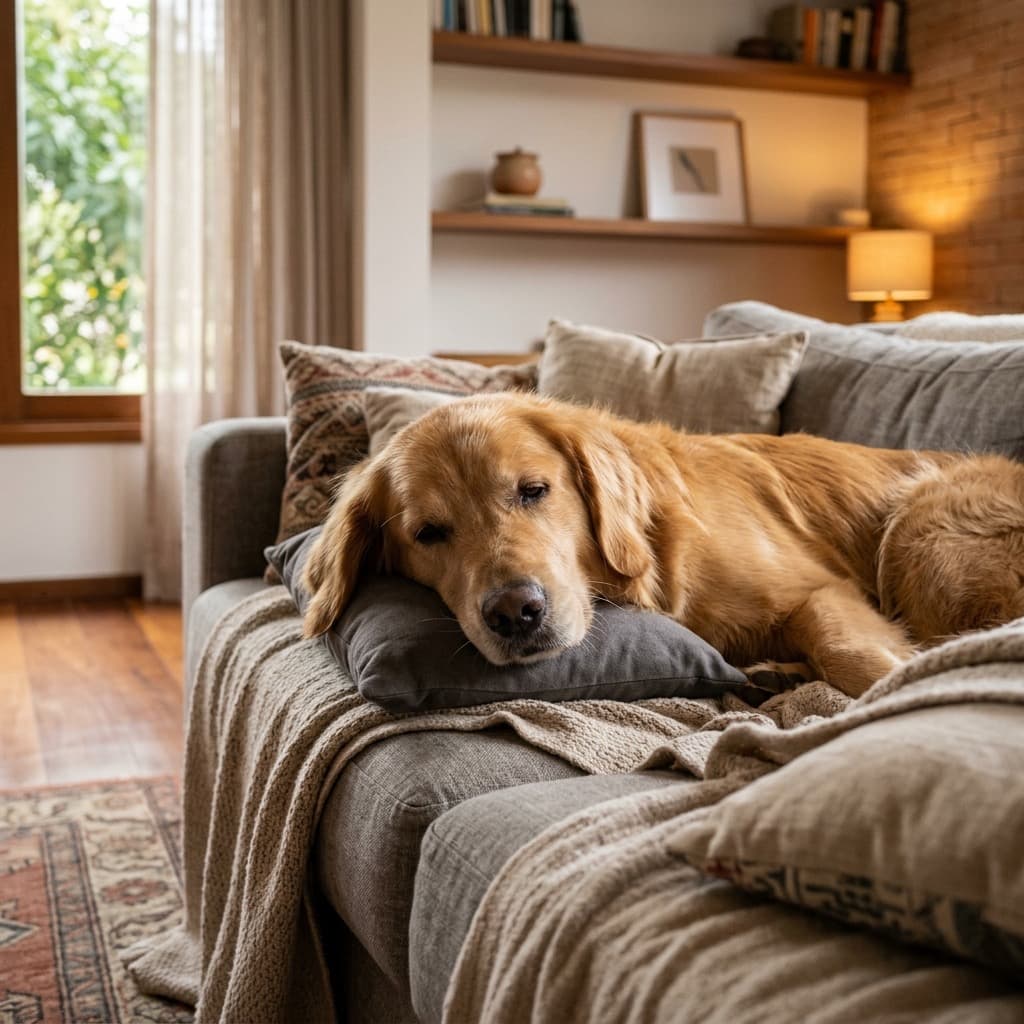
The night cools down, you wrap yourself in the comforter, and the question hits: does your dog get cold too and need a blanket? The honest answer is neither yes nor no — it depends on the dog sleeping there. A small puppy shivering in a corner and a double-coated shepherd sprawled on the floor live the same night in completely different ways.
Instead of a single rule, there are four factors that decide whether the blanket helps, hurts or makes no difference. Understanding each one is what separates real care from guesswork.
| Factor | Needs a blanket | Does not need one |
|---|---|---|
| Size | Small | Large |
| Coat | Short or without undercoat | Double (Husky, German Shepherd) |
| Age/health | Puppy, senior, sick or thin | Healthy adult |
| Room temperature | Below 10-15°C (50-59°F) | Room already heated |
Does size change how much heat a dog retains?
It does, quite a bit. Large dogs have more body mass and a lower ratio of skin surface to volume — meaning they lose heat more slowly and hold their own temperature through the night. That is why a large dog rarely needs a blanket.
A small dog, with a light body, cools quickly. The same night that is comfortable for a Labrador can be too cold for a Pinscher weighing a few kilos. The smaller the body, the faster the heat escapes.
Coat: not every dog wears the same jacket
Coat type weighs as much as size. Breeds with a short coat or no undercoat — such as the Greyhound and the Pinscher — have little natural insulation and feel cold easily. For them, the blanket makes a real difference.
At the other extreme are double-coated breeds, such as the Husky and the German Shepherd. They are born with their own thermal coat, made for the cold, and covering may be unnecessary. Looking only at size is misleading: a small double-coated dog may tolerate more cold than a medium-sized short-haired dog.
Age and health: who regulates temperature worst
Puppies and senior dogs are the ones who may need the most help. A puppy has not yet fully developed the mechanisms to control its own temperature; a senior, with a slower metabolism and sometimes less muscle mass, also loses that efficiency. Sick or very thin dogs are on the same list.
A healthy adult of medium or large size almost always manages on its own. The math changes when age or a health condition takes away the dog's ability to warm itself.
What if the room is already warm?
Here lies the most common mistake. The blanket only makes sense when it is really cold — below 10 to 15 °C (50 to 59°F). The cold weather guide from the American Veterinary Medical Association reinforces it: small dogs, short-haired dogs, puppies and seniors tolerate cold less. In an already warm room, covering has the opposite effect: the dog overheats and uncovers itself.
A blanket is not automatic affection. It is a tool for a specific situation: real cold, on a dog that loses heat easily.
What NOT to do
- Do not cover out of habit, ignoring the temperature. In an already warm room, the blanket overheats instead of warming.
- Do not trap the dog under the blanket. It needs to be able to leave on its own if it feels hot — never wrap it in a way that it cannot uncover itself.
- Do not use the same criterion for every dog in the house. The small senior and the large adult have opposite needs on the same night.
Frequently asked questions
How do I know if my dog is cold at night?
Watch the body: a dog that is curled up, shivering or burrowing under covers is usually cold. Offer the blanket and see if it snuggles in.
Can my dog overheat with a blanket?
It can. Signs of heat are panting, restlessness and the dog uncovering itself. If that happens, take the blanket off — it is too hot for him.
Does a thick-coated dog need a blanket?
Rarely. Double-coated breeds already have their own thermal insulation and usually prefer cool surfaces, even in winter.
What is the best way to warm a small dog?
A light blanket it can get in and out of, a bed raised off the cold floor and away from drafts. The dog decides whether it wants to use it.
To cover or not to cover was never a fixed rule — it is a reading. Size, coat, age and room temperature assemble the answer, and the dog itself confirms with its body whether you got it right. When in doubt about what suits your dog's profile and routine, care starts with informed choices.
Picked by score from our overall dog ranking, not by the topic of this article. To get it right for your pet — age, weight, spayed or neutered — take the quiz and get a list made for them. A pet with a diagnosed condition needs a diet prescribed by a veterinarian.



