The Most Talkative Cat Breeds: Why They Meow So Much
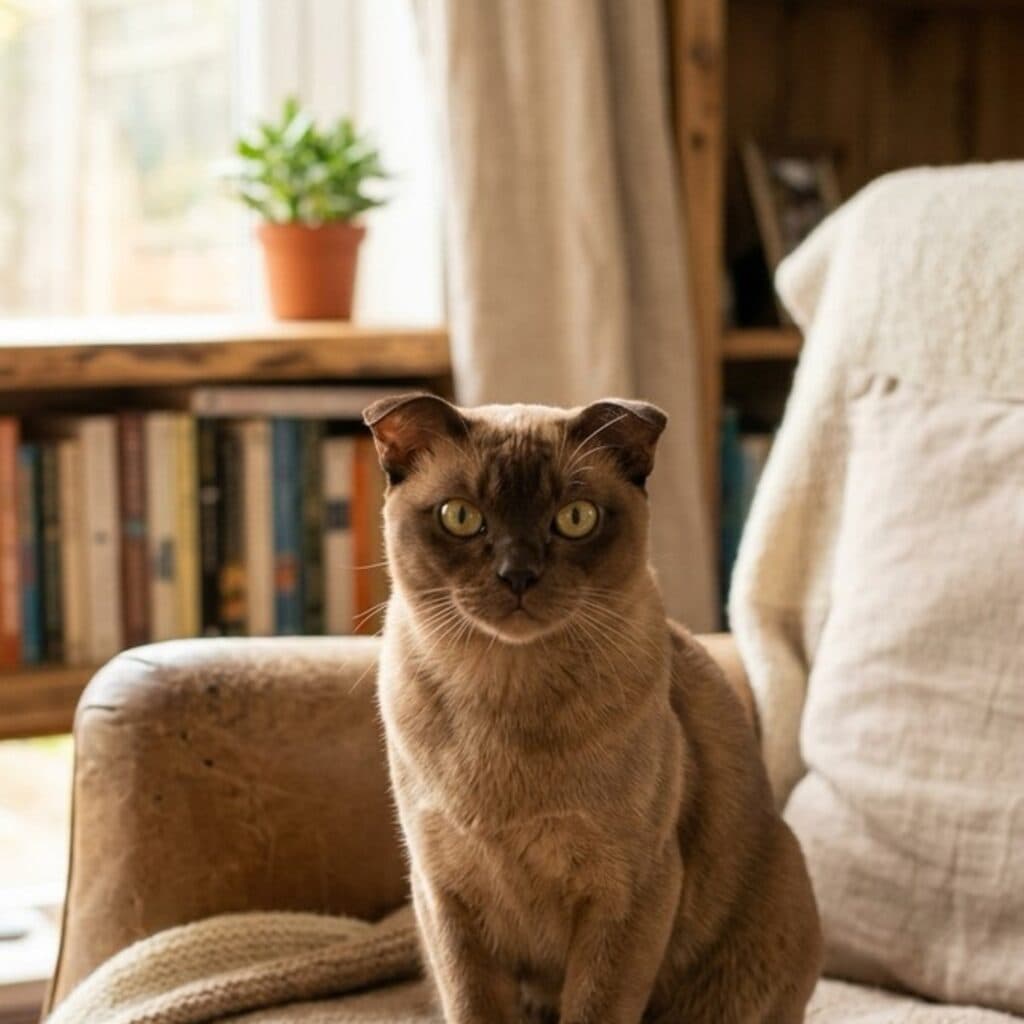
Some cats answer back. You say something in the kitchen and it returns a sound; you change rooms and it follows, commenting on the trip. In some breeds this is not the way of one particular cat — it is a trait described in the breed standard itself, that is, what the cat associations expect of a typical specimen.
Before the three breeds, it is worth undoing the most common reading: excessive meowing is not whining. The adult cat's meow is, in practice, a channel reserved for people. According to the ASPCA, adult cats do not meow at each other — they meow at people. Among themselves, the conversation runs on scent, posture and contact. The meow is the part of the repertoire that exists because of living with humans.
| Breed | How the voice shows up | What characterizes the sound |
|---|---|---|
| Maine Coon | Vocal, but almost without meowing | Short trill, between a meow and a purr |
| Oriental | Extreme vocalization as a breed trait | Raspy voice and a continuous commentary on what you do |
| Siamese | The most communicative of the breeds | Long conversation, and the volume matches yours |
3. Maine Coon: the giant that trills instead of meowing
The Maine Coon is the most curious case on the list, because it defies the expectation of anyone who associates "talkative cat" with "cat that meows a lot". The breed standard describes a cat that is vocal, but almost never uses the meow — its characteristic sound is something else: a short trill, a chirp that sits between a meow and a purr.
In day-to-day practice, this shows up as a reply. You come close, talk to it, and the response is not a long meow: it is that short, high sound, almost a greeting. For the size of the animal, the voice is surprising — the reputation of a "cat that chats softly" comes from there.
2. Oriental: the breed that comments on your whole day
In the Oriental, vocalization is not an owner's observation, it is a breed description: the strong, constant voice is among the characteristics expected of the cat. It is a close relative of the Siamese in physical type and inherited the same profile of a cat that needs interaction all the time.
The result is a cat that follows and comments. It sits near where you are, watches what you are doing and makes sound about it — in a raspy voice, deeper than you would expect from such a slender cat, and one that people who live with it learn to recognize from far away.
1. Siamese: it talks as much as you talk to it
The Siamese is the portrait of the talkative cat, and it is not a reputation without basis: the organization that maintains the breed standard describes that no other breed communicates more than it does. The ASPCA, on the page cited above, also names the Siamese among the breeds prone to excessive meowing and yowling.
The part that closes the reasoning is the most interesting for anyone who lives with one. The Siamese's vocalization is conversational: it grows with the response. When the human answers the meow — with food, with a lap, with attention, or just by talking back —, that behavior is reinforced and tends to repeat. That is why the sentence that best describes the breed is not "the Siamese meows a lot", but rather: the Siamese talks as much as you talk to it.
Is a cat that meows too much a problem, or is it the breed?
In the three breeds above, talking a lot is expected — it is a trait, not a defect, and does not call for correction. What deserves attention is the change: a cat that has always been discreet and started meowing a lot, or a talkative cat whose sound changed in tone, got deeper, more urgent or nocturnal.
New, persistent vocalization can accompany pain, high blood pressure, hyperthyroidism, hearing loss or disorientation in senior cats — and none of these things is solved by asking for silence. The practical rule is this: a breed trait is stable; a problem is change. When the pattern changes, the path is veterinary evaluation, not training.
What NOT to do
- Do not adopt a Siamese or Oriental expecting a silent cat. The voice comes with the breed, and finding that out later is guaranteed frustration for both sides.
- Do not scold or spray water to quiet a talkative cat. It does not reduce the vocalization and it wears down the relationship with an animal that is precisely trying to communicate with you.
- Do not respond with food every time it meows if the intention is to reduce the volume. Answering the meow with a treat is exactly what reinforces the repetition of the behavior.
- Do not ignore a sudden change in the meowing pattern as if it were personality. A new sound, deeper or nocturnal, calls for a consultation, not patience.
Frequently asked questions
Does meowing a lot mean the cat is poorly cared for?
No. In the Siamese, Oriental and Maine Coon, loud vocalization is part of the breed profile and usually indicates a cat interested in interacting. The warning sign is not the usual volume, but a sudden change in that volume or in the type of sound.
Does every cat of these breeds talk a lot?
Not necessarily. The breed standard describes a tendency, not a guarantee: within the same breed, each cat has its own volume. Living together weighs as much as origin — a cat that is spoken to little tends to talk less.
Can you teach a talkative cat to meow less?
You can reduce the meowing that works as a request, by not answering it at the moment it happens and giving attention when the cat is quiet. What you cannot — and should not — do is try to erase the vocalization of a breed selected to communicate.
Why does my cat meow at me and not at other cats?
Because the adult meow is, essentially, a communication channel with people. Between cats, the exchange happens through scent, body language and contact; the meow was left reserved for the relationship with humans and adjusts according to how you respond to it.
If you live with a talkative cat — or are thinking of adopting one —, understanding that the voice is a trait, not a defect, changes how you respond to it. Build your cat's profile and see what to prioritize in its routine →
Picked by score from our overall cat ranking, not by the topic of this article. To get it right for your pet — age, weight, spayed or neutered — take the quiz and get a list made for them. A pet with a diagnosed condition needs a diet prescribed by a veterinarian.



