Labrador Retriever Obesity: What Their Food Must Control

The Labrador Retriever has a specific genetic cause for more intense hunger: a deletion in the POMC gene, present in about 12% of Labradors, associated with greater appetite and higher obesity risk, identified by research published in PMC/NCBI (A Deletion in the Canine POMC Gene — PMC/NCBI). This means that some Labradors do not "overeat out of gluttony" — their bodies process the satiety signal differently, requiring stricter portion control than the dog's instinct suggests.
Our dog food catalog has an average of 3,705 kcal/kg among the foods with declared caloric density , and for a Labrador with the POMC gene variant, serving food "free-choice" or by visual estimate is the most direct recipe for progressive overweight. The breed also combines this genetic factor with a predisposition to hip and elbow dysplasia — which makes weight control a double priority: aesthetic and orthopedic. See the ranking with the best food for Labradors, scored by breed-specific criteria.
Why is the Labrador so hungry even after eating?
The deletion in the POMC gene interferes with the signaling pathway that regulates satiety in the brain, making Labradors that carry the variant feel hunger more intensely after the meal, even though they have already received the adequate amount of calories. The research in PMC/NCBI identified this variant as more common in assistance Labradors than in companion Labradors.
Does extra weight make the Labrador's joints worse?
Yes — the Labrador already has a documented predisposition to hip and elbow dysplasia, and excess weight increases the mechanical load on joints that already carry elevated structural risk. Research in the Journal of Nutrition on diet, exercise and weight as risk factors reinforces that maintaining ideal weight throughout life reduces the progression of joint wear.
How to control portions in a dog with greater genetic hunger
| Strategy | Why it works |
|---|---|
| Measure the portion with a kitchen scale, not a "standard cup" | Cups vary in volume and mask real excess |
| Split the daily food into 2-3 meals | Reduces the feeling of hunger between long periods |
| Prioritize food with moderate to high fiber | Increases satiety without raising calories much |
| Use part of the food in interactive toys | Prolongs the "eating" time, reducing food anxiety |
| Weigh the dog monthly | Detects weight gain early, before it becomes a trend |
What NOT to do
- Do not reward the Labrador's "hungry look" with more food. The intensity of the begging does not reflect real caloric need — it is the effect of the altered satiety pathway.
- Do not use high-calorie treats as a frequent reward in training. Replace part of them with low-calorie treats or with a portion taken out of the daily food itself.
- Do not wait for the dog to "look visibly fat" before acting. In the Labrador, weight gain tends to be gradual and masked by the breed's sturdy body structure.
Frequently asked questions
Does every Labrador have the genetic mutation that causes more hunger?
No. The POMC gene variant was identified in approximately 12% of the Labradors studied — it is not universal in the breed. Even without the mutation, the breed has a behavioral reputation for high food motivation, so portion control remains recommended for all of them.
Is light food mandatory for Labradors?
Not necessarily. Light food is recommended for dogs that are already overweight or have a confirmed risk, under veterinary guidance. For a healthy, active Labrador, the most important thing is the correct portion of regular adult food, not necessarily a low-calorie formula.
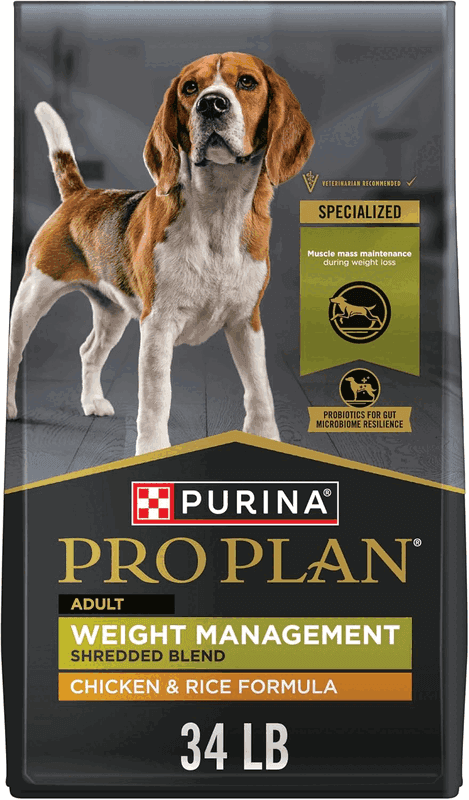
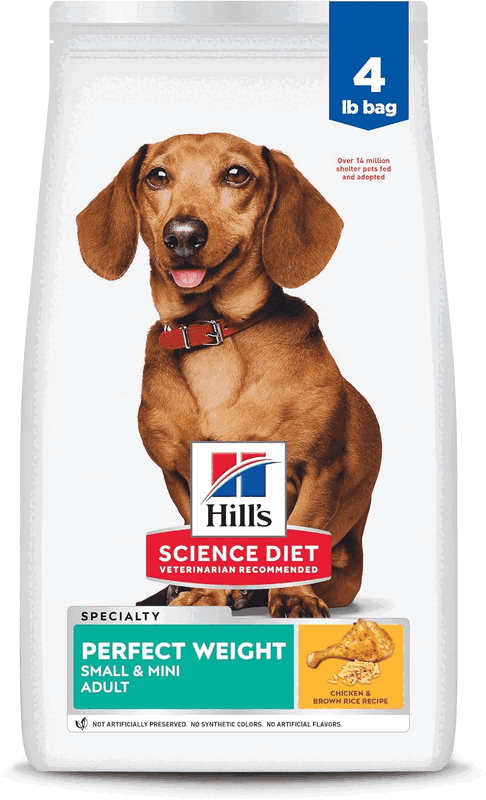
To size up the option: our dog food catalog has 4 light formulas, averaging 23.5% protein and 10.4% fiber as fed . Those numbers only mean something against the yardstick of the others: in the 47 non-light formulas of the same catalog, average fiber is 4.1% and average protein is 26.7% . In other words: the light formulas more than double the fiber, while protein runs about three points lower — so check both numbers on the label, not just the word "light". The dog food comparison tool shows protein and fiber side by side, so you can compare the food in your cart on both counts before buying.
Does neutering increase the obesity risk even more in the Labrador?
Yes. Neutering reduces basal metabolism, and combined with the genetic predisposition already present in the breed, it raises the risk of weight gain even further. Neutered dogs usually need a portion adjustment and, in many cases, food formulated for neutered dogs.
See the ranking of dog foods for large breeds →, or use the dog food comparison tool to put fiber and caloric density of two products side by side.
The Golden Retriever has a similar risk profile — see how the Golden Retriever's nutrition handles weight and joints in the breed.
Picked by score from our overall dog ranking, not by the topic of this article. To get it right for your pet — age, weight, spayed or neutered — take the quiz and get a list made for them. A pet with a diagnosed condition needs a diet prescribed by a veterinarian.