Husky vs. Malamute: 3 Details That Settle the Question
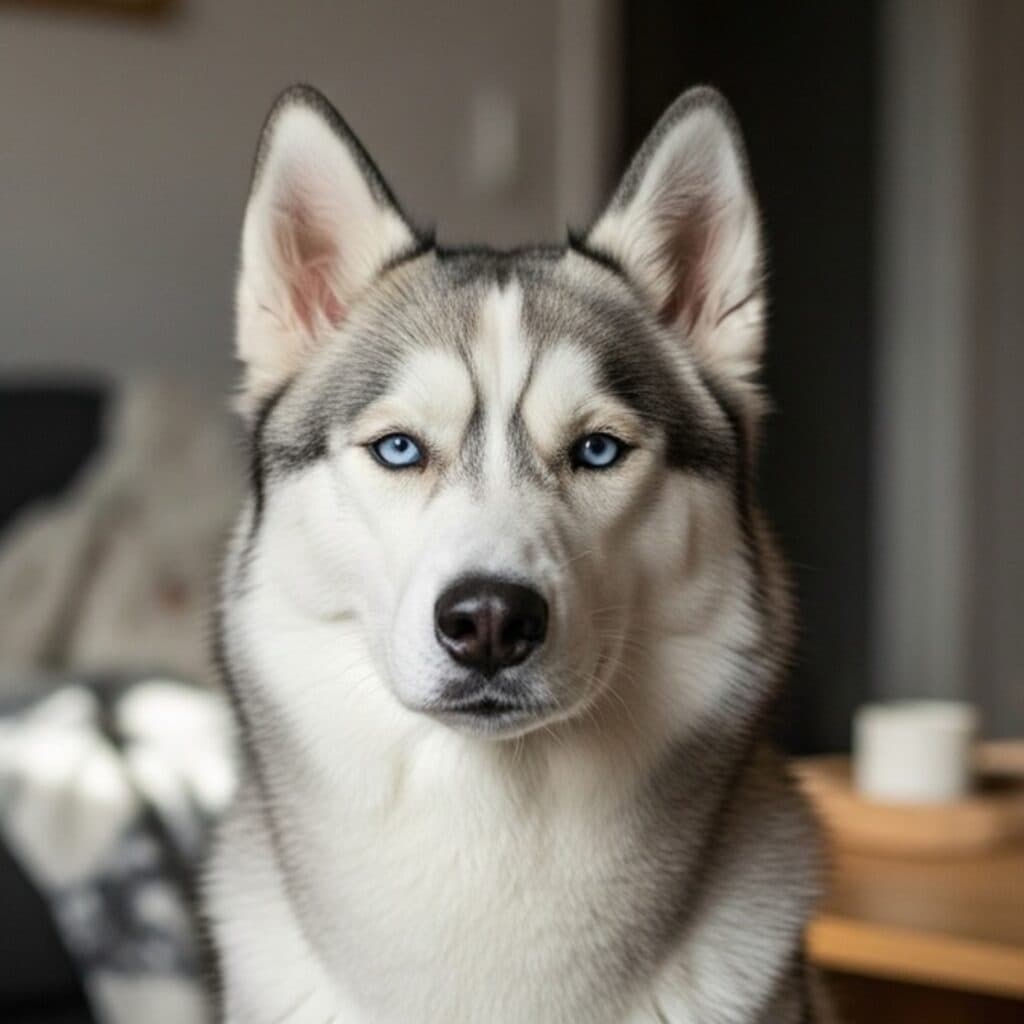
You see a big Nordic dog with a thick coat and a wolf-like gaze and call it a Husky without a second thought. But it may be an Alaskan Malamute — and they are different breeds, bred for opposite jobs. From a distance, the two look like peas in a pod. Up close, three details settle the confusion: the tail, the ear and the eye. None of them is about coat or size — they are body traits that do not change from one individual to another.
This distinction is not just dog-owner curiosity. Mixing up the two breeds leads people to choose the wrong dog for the routine they have at home. Huskies and Malamutes call for different handling, space and exercise levels. Getting the breed right before deciding to bring one home avoids frustration on both ends of the leash.
The tail gives away the Husky or the Malamute
Look at where the tail sits when the dog is standing still or walking. The Siberian Husky carries its tail low and straight, almost brushing the ground. The Alaskan Malamute carries its tail curled over its back, like a scarf thrown over the shoulders. This is the easiest detail to spot from a distance, because it does not depend on getting close to the dog or looking at it head-on.
The Malamute's ear is smaller and sits closer to the head
The second point is on the head. On the Malamute, the ear is smaller and sits closer to the skull, almost flush. On the Husky, the ear is higher, looser and gives the impression of always being alert, slightly apart from the head. Side by side, the difference jumps out. On a single dog, it is worth comparing with reference photos of the breed before deciding.
Brown eyes are the final proof
This is the detail that closes the case and leaves no room for doubt: the Alaskan Malamute always has brown eyes. According to the official breed standard described by the American Kennel Club, blue eyes are a disqualification in the Malamute — that variation does not exist within the standard. If the dog in front of you has blue eyes, it is a Husky — never a Malamute. The Husky can have blue eyes, brown eyes, or one of each color (heterochromia), which also confuses people trying to guess by coat. That is why the eye alone already settles a good share of doubtful cases.
| Detail | Siberian Husky | Alaskan Malamute |
|---|---|---|
| Tail | Low and straight, almost brushing the ground | Curled over the back |
| Ear | Higher and looser | Smaller and close to the head |
| Eye | Blue, brown or heterochromia | Always brown |
| Size | Medium, lighter body | Larger and sturdier |
| Work | Long-distance running, light loads | Heavy-load pulling, slow pace |
Can you tell the difference just by looking?
Yes, but only if you look at the right points. Gray-and-white coat, large size and a wolf-like gaze appear in both breeds and do not help at all — which is exactly what causes the confusion. The order that works is: first the tail (low and straight is a Husky, curled over the back is a Malamute), then the ear (smaller and close to the head is a Malamute), and finally the eye, which settles any doubt left — blue eyes rule out a Malamute immediately.
Two breeds, two opposite jobs
The physical difference exists because the function is also opposite. The Siberian Husky was selected to run long distances pulling light loads, at a fast and steady pace. It is an endurance dog, built to burn energy in continuous movement. The Alaskan Malamute was selected to pull heavy loads at a slow pace, prioritizing strength over speed. It is a heavy-work dog, not a racing dog.
That difference in function explains the difference in temperament and needs that each breed brings into the home. It is not aesthetics — it is why choosing by looks, without understanding the work behind them, usually goes wrong.
What this changes in the routine of living with the dog
The Husky asks for volume of movement. It needs to run, pull, burn energy at a high pace, and it is known for escaping poorly secured yards — it digs, jumps and climbs when bored. A sedentary routine with little room to move quickly becomes a problem: the dog burns off its energy on its own, whichever way it finds.
The Malamute asks for a different kind of effort. It is a strong dog, made to pull weight, and feels best with activity that uses that strength — a long walk, pulling, play that requires the whole body, not just running. It tends to be more independent and territorial than the Husky, which calls for socialization and clear limits from puppyhood.
Neither is a dog for a sedentary routine. The difference is the kind of exertion each one needs, not whether it needs it. People who choose by the photo, without considering this, usually notice the difference too late — when the dog has already shown, at home, what it was bred for.
What NOT to do
- Do not decide by coat color alone. Gray and white appears in both breeds and says nothing about which is which.
- Do not treat them as a "generic snow dog". Huskies and Malamutes have different exercise and handling needs.
- Do not underestimate the energy of either one by thinking they suit a small apartment. Both need space and a routine of real physical exertion.
- Do not ignore the Husky's escape behavior when planning a yard or enclosure — it tests every gap.
- Do not mistake blue eyes for a "trait any Nordic breed can have". In the Malamute, blue eyes are outside the breed standard.
Frequently asked questions
Can Huskies and Malamutes be confused with other breeds?
They can, especially with other Nordic dogs with thick coats. But tail, ear and eye remain the most reliable way to tell them apart, because they are body traits, not coat traits.
Which of the two breeds is easier to train?
Both demand consistency. The Husky tends to respond well to training based on burning energy and rewards. The Malamute, being more independent, calls for firm limits and patience from early on — it is not about which one is "smarter".
Are Huskies and Malamutes good for apartments?
Neither is the ideal choice for a small space without a strong exercise routine. Both were bred for intense physical work and need a daily outlet compatible with that, regardless of the size of the home.
Is there a mix between Husky and Malamute?
There is, and that is where telling them apart by tail, ear and eye is most confusing, because the mix can inherit traits from both sides. When there is no confirmed pedigree, it is worth judging the dog by the behavior and needs it shows, not just by appearance.
Before deciding between a Husky, a Malamute or any other breed, it is worth understanding what your daily routine can really sustain.
Compare foods side by side in our comparison tool.
Picked by score from our overall dog ranking, not by the topic of this article. To get it right for your pet — age, weight, spayed or neutered — take the quiz and get a list made for them. A pet with a diagnosed condition needs a diet prescribed by a veterinarian.



