How to Brush Your Dog's Teeth in Just 2 Minutes a Day
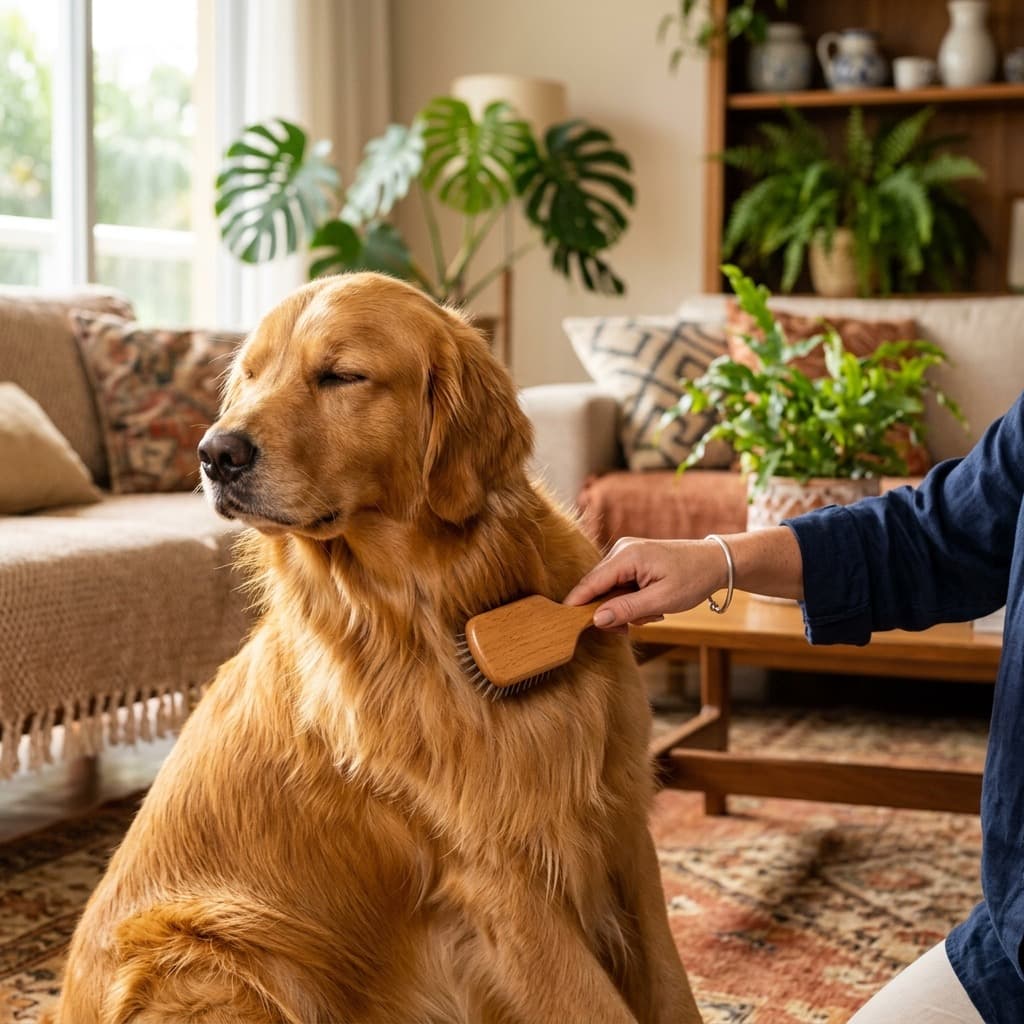
Brushing your dog's teeth daily is the only home routine that interrupts the plaque → tartar → periodontal disease cycle — a condition that affects the vast majority of adult dogs, according to veterinary studies published in PMC/NCBI. The correct technique focuses on the gum line (not the tips of the teeth), uses an enzymatic toothpaste made for dogs — human toothpaste with fluoride is toxic because the dog swallows it — and takes two minutes. The gradual 14-day introduction is the step most owners skip, and it decides whether the dog will accept the brush or run from it.
You open your dog's mouth, catch that strong smell and think brushing his teeth is the stuff of fairy tales. That he'll never allow it. That it's too much work. The truth is simpler: what blocks brushing isn't the dog, it's not having the right way to start. And it fits in two minutes a day.
The plaque that forms in a dog's mouth turns into tartar within a few days. Tartar pushes the gum back, opens space for bacteria and, over time, becomes periodontal disease — a condition that affects most dogs from 2 years of age and whose prevalence increases with age, according to veterinary surveys. Daily brushing is the only home habit that breaks this cycle before it begins.
Why is human toothpaste dangerous?
The first rule is the one most people get wrong: never use human toothpaste. The paste you use has fluoride, which is toxic when swallowed, and the dog swallows everything — he doesn't spit. Some also contain xylitol, a sweetener that can drop a dog's blood sugar severely.
Use toothpaste made for dogs, preferably enzymatic. It is safe to swallow and usually comes in beef or chicken flavor, which turns brushing from a fight into a treat. That detail changes everything else: the dog starts wanting the brush instead of running from it.
Where the brush really makes a difference
Brushing the tips of the front teeth is what almost everyone does — and it's exactly where the least tartar builds up. The spot that matters is the gum line, the border between tooth and flesh, where plaque hides.
- Lift the lip gently, without clamping the whole mouth.
- Brush in soft circular motions, reaching the outer surfaces of the upper teeth — the big ones in the back.
- No force is needed. Tartar doesn't come off with pressure, it comes off with frequency.
How do you start brushing your dog's teeth without him running from the brush?
Whoever tries to brush the whole mouth on day one gives up on day two. The introduction has to be gradual, over about two weeks, so the dog associates the brush with something positive instead of a fight. The most common mistake is jumping straight to the whole mouth without this habituation phase.
| Period | What to do |
|---|---|
| Days 1 to 3 | Let him lick the toothpaste off your finger. Just that. |
| Days 4 to 7 | Run a finger with toothpaste over the front teeth, a few seconds. |
| Days 8 to 14 | Swap the finger for the brush or a finger brush, still only a few teeth. |
Always finish with praise and petting. The dog needs to associate the brush with something good.
After this phase, the whole mouth in two minutes becomes routine — and that's where the result lives.
What NOT to do
- Don't brush hard thinking it cleans more. Pressure hurts the gums and doesn't remove tartar; consistency does.
- Don't start with the whole mouth on day one. You only teach the dog to run from the brush.
- Don't replace brushing with a dental treat. The treat helps, but it doesn't replace the brush's friction on the gum line.
Frequently asked questions
How often do I need to brush my dog's teeth?
Ideally every day. Tartar begins to harden within a few days, so skipping a lot removes almost all of the effect. Two minutes daily beats twenty minutes once a week.
Can I use human toothpaste if it's just a little?
No. Fluoride is toxic to dogs even in small amounts because he swallows it, and some pastes contain xylitol, which is dangerous. Use only toothpaste made for dogs.
My dog already has thick tartar. Will brushing fix it?
Brushing prevents new tartar, but it doesn't remove what has already hardened. Consolidated tartar comes off with professional cleaning at the vet; after that, daily brushing keeps the mouth clean.
From what age can I start?
The earlier the better — puppies get used to it quickly. But an adult dog can learn too; it just takes the gradual introduction with more patience.
In the end, brushing a dog's teeth was never about force or time. It's about repeating a short gesture every day, with the right toothpaste, in the right place. Two minutes that spare your dog pain and you a big bill later. His mouth will thank you — and so will the rest of his health.
Before choosing the next food, see which one fits your dog's size and life stage.
Picked by score from our overall dog ranking, not by the topic of this article. To get it right for your pet — age, weight, spayed or neutered — take the quiz and get a list made for them. A pet with a diagnosed condition needs a diet prescribed by a veterinarian.



