Leaving a Cat Alone: Checklist Before You Leave the House
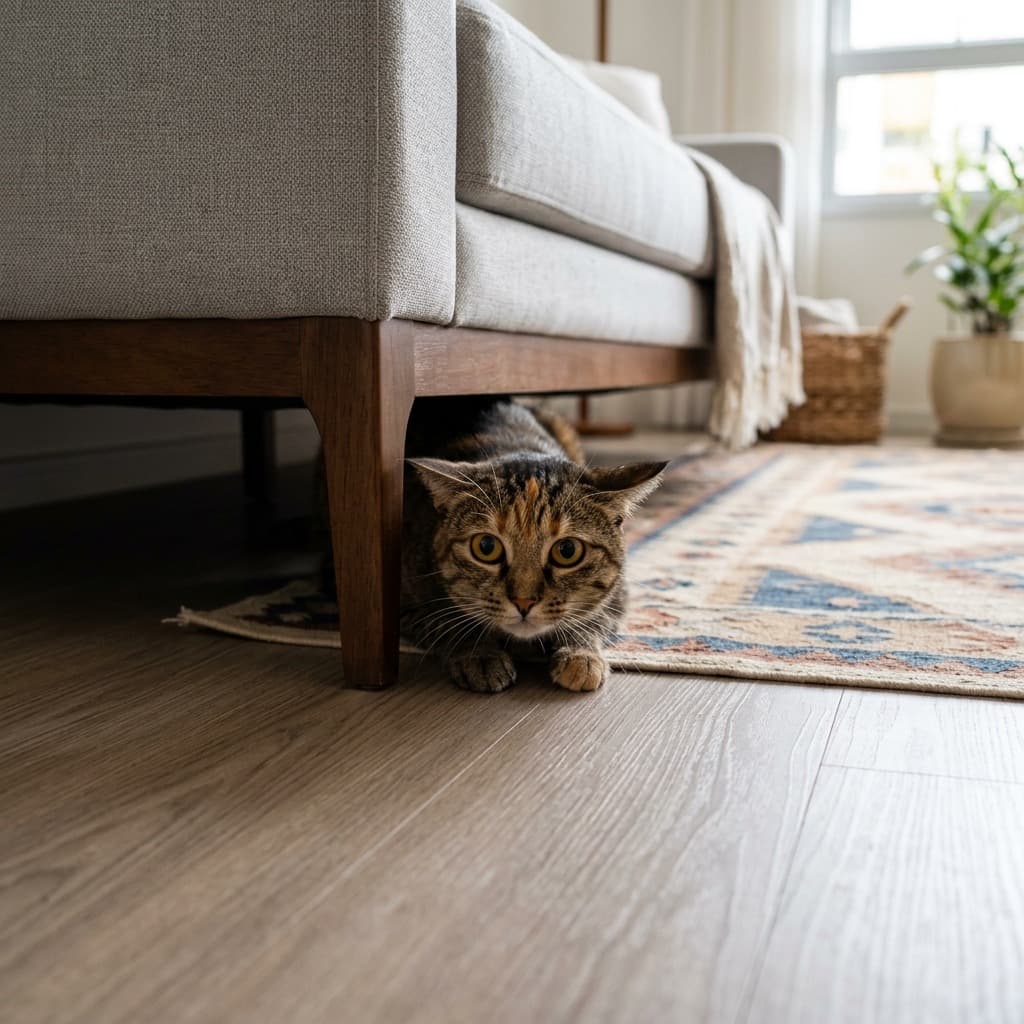
You grab your keys, glance at the clock and you're already late. The cat watches it all from the top of the sofa, with the calm of someone who has no idea the house will be all theirs for the next few hours. Leaving the cat alone is part of the routine for almost every owner — and, contrary to what many people think, it is not just closing the door and hoping for the best. A quick check before you leave is what separates a peaceful day from a scare when you get back.
The good news: this routine takes a few minutes and changes nothing drastic in your home. Save the most important part for last — because one of the steps is worth all the others.
What should you check before leaving your cat alone?
The essential checklist covers four points — water, food, hygiene and entertainment — plus the safety of the environment as a whole. Each item prevents a specific problem: dehydration, overweight, refusal of the litter box or stress from boredom. None of them requires a big change in routine, just attention before you close the door.
Fresh water in more than one spot. Cats are discreet drinkers — many drink less water than they need. According to the Cornell Feline Health Center, maintaining normal hydration is essential for a cat's vital functions, such as temperature regulation and delivering oxygen to the organs, and dehydration — including dehydration caused by chronic kidney disease — can compromise multiple organs if left untreated. Spreading water bowls across more than one room, away from the food bowl and the litter box, increases the chances that the cat will drink throughout the day. A running-water fountain helps even more, because the movement attracts the feline.
Food in the right amount. The temptation to fill the bowl to the brim "just to be safe" is exactly what not to do. The ideal is to leave the day's portion, in the amount your cat already eats normally, in the bowl. Constant excess is a short road to overweight, one of the most common health problems in cats that live indoors.
Clean litter box. Cats are hygienic by nature and avoid a dirty box — to the point of holding their urine or going outside the box when it is far from ideal. Before leaving, scoop the waste and check the litter level. A clean box is halfway to not finding any surprise on the floor when you return — see also the most common litter box mistakes to understand when the problem is the environment, not spite.
Keep them busy. Boredom is the great enemy of a cat left alone. A scratching post, one or two toys and — above all — a high perch near the window to watch the movement of the street turn empty hours into entertainment. A bored cat is a stressed cat, and stress in a feline usually shows up as scratched furniture, excessive meowing or even health problems.
| Item | What to do | Problem it prevents |
|---|---|---|
| Water | Bowls in more than one room, away from the litter box | Dehydration |
| Food | The day's portion in the right amount, no excess | Overweight |
| Litter box | Scoop waste and check the litter level | Refusal of the box, urinating outside the box |
| Entertainment | Scratching post, toys, high perch at the window | Boredom and stress |
My cat gets anxious when I'm away from home. Is that normal?
Yes, within a limit. A review published in PMC/NCBI identified separation anxiety behaviors in a share of the domestic cats evaluated, with destruction of objects, excessive vocalization and elimination outside the litter box as the most reported signs. A stable routine and an enriched environment reduce these signs; if they are intense or daily, it is worth talking to your veterinarian.
The most important thing: a safe home
Here comes the part that is worth all the others. Water, food and toys are no use if the house hides risks that show up precisely when no one is around to step in.
Before leaving, make sure of three things: screened windows and balcony (a fall from a height is one of the most serious and most common accidents with cats in apartments), toxic plants out of reach — lily, dieffenbachia and snake plant, among others, are dangerous to felines — and protected electrical cords, since many cats nibble on cables out of curiosity. A cat-proof environment is what lets you close the door with a clear conscience.
What NOT to do
- Fill the bowl with food "so there's leftover." That is not care, it is encouragement to overweight. The day's portion, in the right amount.
- Leave the litter box dirty. It is the fastest route to the cat going outside the box.
- Ignore open windows and balconies. Cats balance well, but get distracted by a bird and slip. A screen is not optional.
- Think that "he'll manage on his own." Independence is not the same as not needing preparation — it is the environment that must be ready for him.
Frequently asked questions
How long can I leave my cat alone?
A few hours or a whole day is usually fine for a healthy adult cat, as long as water, food, a litter box and a safe environment are guaranteed. Absences of more than 24 hours call for someone to check on the cat.
Do I need to leave food out all the time for my cat?
No. The ideal is to leave the day's portion in the amount he already eats. Free-feeding without control favors overweight — a common problem in indoor cats.
My cat gets stressed alone. What do I do?
Bet on enrichment: a scratching post, toys, hiding places and a high perch at the window to watch the movement. A stable feeding and play routine also helps the cat feel safe. Each item reduces a specific stress trigger — the scratching post gives an outlet for the need to mark territory, the hiding place covers the lack of control over the environment, and the stable routine reduces the insecurity of not knowing when the next meal or interaction comes.
Is it safe to leave the window open with the cat alone?
Only with a protective screen. A window or balcony without a screen is one of the biggest risks for cats, especially in apartments. A fall from a height can be fatal.
In the end, leaving the cat alone safely is not luck — it is preparation. Water in several spots, food in the right amount, a clean box, something to occupy the mind and, above all, a home without risks. Make this check a habit and the door closes without that tightness in your chest.
Picked by score from our overall cat ranking, not by the topic of this article. To get it right for your pet — age, weight, spayed or neutered — take the quiz and get a list made for them. A pet with a diagnosed condition needs a diet prescribed by a veterinarian.



