Cat Peeing Outside the Litter Box: 6 Common Mistakes
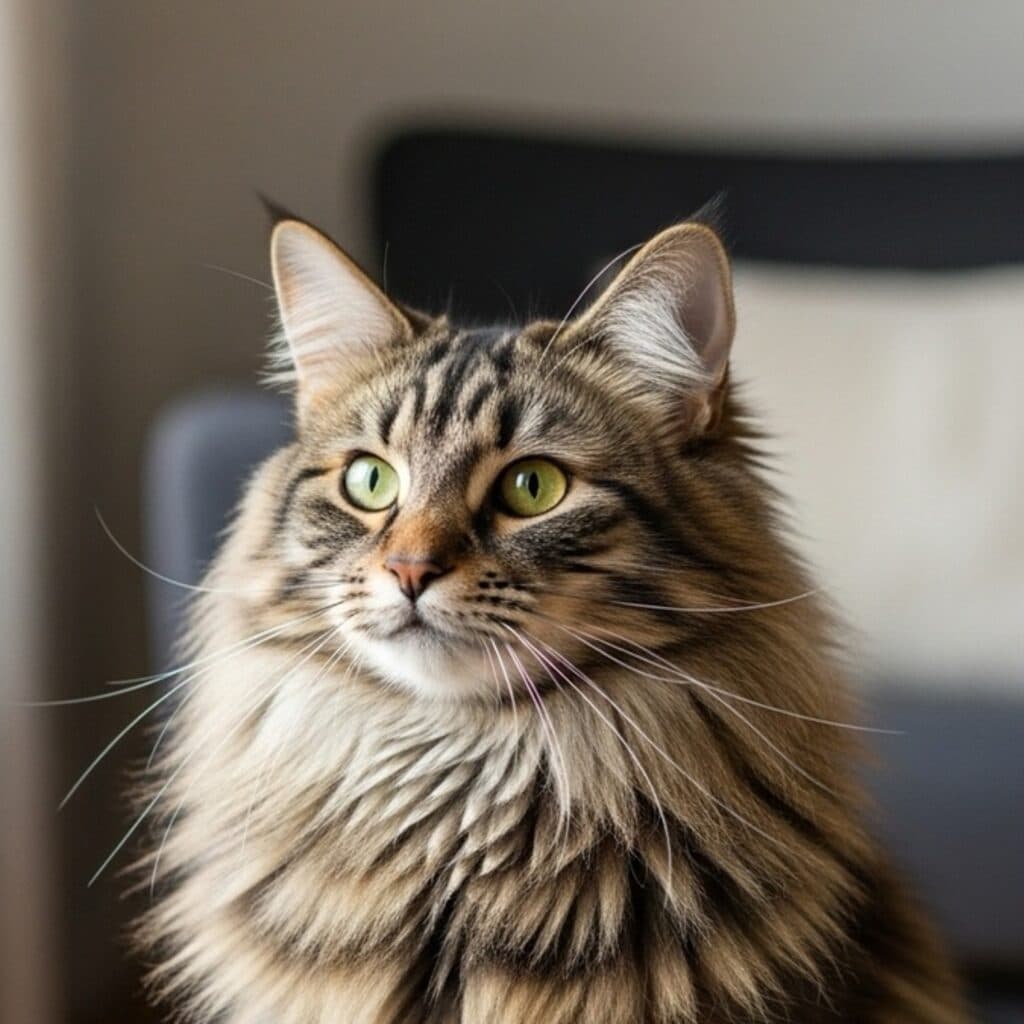
A cat going outside the litter box is almost never spite: in most cases the cause is one of six management mistakes (dirty box, too few boxes, wrong location, litter changed abruptly, a small box or punishment) — and fixing the right mistake solves the problem. The rule recommended by the joint AAHA/AAFP feline life stage guidelines is one box per cat plus one extra, daily cleaning and placement away from the feeding area. If the behavior appeared suddenly, the first visit is to the veterinarian: cystitis and urinary tract infection cause the same symptom and need specific treatment.
Before any adjustment at home, one caveat is worth making: going outside the box can also be a sign of a health problem, such as cystitis and urinary tract infection. If the behavior appeared suddenly, the first step is the vet, not the cleaning.
What a cat expects from a litter box
For a cat, the box is not just a place to do its business: it is a vulnerable point in its routine. There it squats, is exposed, and needs to feel safe and clean. When the environment doesn't offer that, instinct says to look for another corner — usually one that smells less and has more privacy. The six mistakes below are exactly the ones that break that sense of safety.
6 mistakes that drive a cat out of the box
- Dirty box. A cat's sense of smell is far sharper than ours. What seems "fine" to you can be an unbearably smelly bathroom to your cat. Cleaning needs to be daily, with the litter fully replaced often.
- Too few boxes. The rule in the AAFP/ISFM guidelines for diagnosing and solving inappropriate elimination in cats is simple: one box per cat, plus one extra. Two cats, three boxes. Competition over resources is a silent cause of urinating in the wrong place.
- Wrong location. A box next to the food bowl, in a hallway or in a noisy corner drives the cat away. It wants privacy and an escape route, away from where it eats and drinks.
- Litter changed without warning. Changed brand, texture or scent and the urine disappeared from the box? Many cats simply don't accept the new material. When a change is needed, the transition should be gradual.
- Covered or small box. The model with a lid traps odor inside and leaves the cat without a view of its surroundings. The box needs to be big enough for it to step in, turn around and dig without feeling trapped.
- Punishing the cat. Yelling, hitting or rubbing its nose in the urine is the worst mistake. It fixes nothing: it only teaches the cat to go in hiding and increases stress, which is often the root of the problem.
Why does my cat pee outside the box even when the box is clean?
A clean box eliminates the most common cause, but not all of them. If cleaning is up to date, check four points: number of boxes, location, size and litter — any of them can be the real reason. If no adjustment solves it within a week, the next step is a veterinary evaluation to rule out cystitis, urinary tract infection or chronic anxiety.
| What to check | Question | Adjustment |
|---|---|---|
| Number of boxes | Is there one per cat plus one extra? | Two cats: three boxes |
| Location | Is it away from food, with an escape route? | Move to a calm spot |
| Size | Can the cat step in, turn and dig without touching the walls? | Switch to a bigger box, without a lid |
| Litter | Did the brand or texture change recently? | Revert or transition gradually |
Why punishing makes everything worse
A cat doesn't connect the scolding to the past act — it connects you with the threat. The result is a more anxious animal that starts eliminating in hidden places so it won't be caught. Instead of solving anything, punishment creates a second problem on top of the first. The way out is always to investigate the cause and adjust the environment, never to reprimand.
What NOT to do
- Don't rub the cat's nose in the urine or yell at it: it increases stress and pushes the behavior into hiding places.
- Don't clean the soiled spot with just water and ordinary soap: residual odor calls the cat back to the same corner. Use an enzymatic product.
- Don't treat it as attitude. A sudden change in habit calls for a veterinary evaluation before any behavioral conclusion.
Frequently asked questions
Why is my cat suddenly peeing outside the box?
A sudden change usually has a medical origin, such as cystitis or a urinary tract infection, or a new stressor in the environment. See the veterinarian before changing the routine.
How many litter boxes do I need?
The recommendation is one box per cat plus one extra. For one cat, two boxes; for two cats, three.
How often should I clean the litter box?
Remove waste at least once a day and fully replace the litter regularly. Accumulated odor is one of the biggest reasons cats abandon the box.
Can changing the litter brand cause the problem?
Yes. Many cats reject new litter with a different texture or smell. When you need to change, do the transition gradually, mixing the old with the new.
Finding urine outside the box again is rarely stubbornness: it is a message about cleanliness, space, location or health. Fix the right detail and the cat returns on its own to its place. To get the foundation right too — the diet that supports a healthy urinary tract — find the ideal food for your cat →
Picked by score from our overall cat ranking, not by the topic of this article. To get it right for your pet — age, weight, spayed or neutered — take the quiz and get a list made for them. A pet with a diagnosed condition needs a diet prescribed by a veterinarian.



