Garlic and Dogs: Toxic Even in Small Doses? The Real Risk
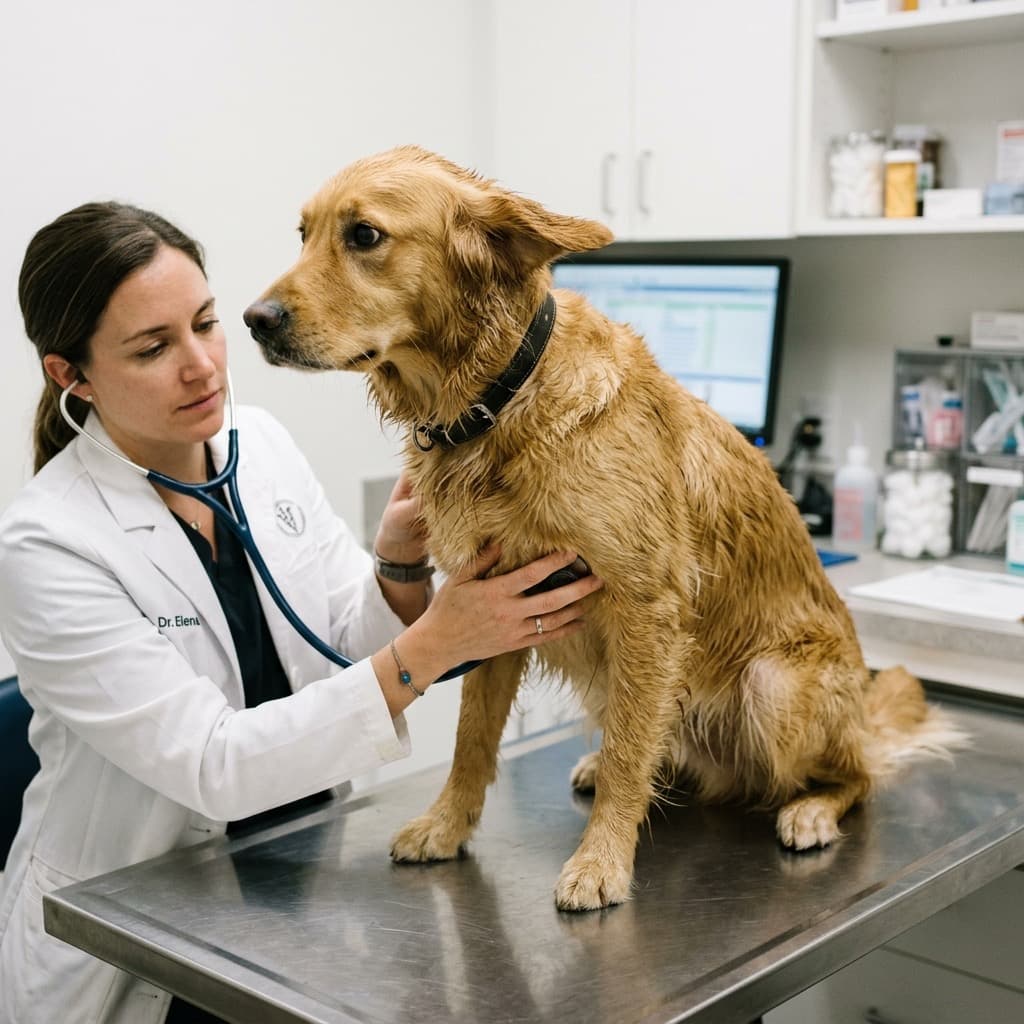
Notice: this content is for information only and does not replace a visit to the veterinarian. If your pet has symptoms, see a veterinarian before acting on this article.
Yes — garlic is toxic to dogs at any amount, and there is no safe dose validated by science. The organosulfur compounds in garlic oxidize the hemoglobin in red blood cells, forming Heinz bodies that destroy the cells through hemolysis, causing anemia. According to the Merck Veterinary Manual, concentrated garlic (powdered, dehydrated or in flakes) causes the same degree of damage to red cells at a much smaller amount than fresh garlic or onion. Symptoms (dark urine, pale gums, extreme fatigue) appear between 24 and 72 hours after ingestion — by which point the owner no longer remembers the "little sliver" the dog ate.
If your dog ate garlic within the last 2 hours, call your veterinarian immediately: the window for inducing vomiting is narrow. This article explains the mechanism of toxicity, why "a small dose" does not exist, and what to do based on how much time has passed.
What garlic does inside a dog's body
Garlic (along with onion, leek and chives) contains organosulfur compounds — substances that are beneficial in humans. In dogs, they attack red blood cells.
The mechanism is this: garlic compounds oxidize the hemoglobin in red cells, forming Heinz bodies — structures that weaken the cell membrane. The result: the cells burst (hemolysis) and the dog becomes anemic.
What the owner sees:
| Sign | What it indicates |
|---|---|
| Dark urine (tea or cola colored) | Blood from destroyed red cells |
| Pale or yellowish gums | Jaundice |
| Extreme fatigue, unwilling to walk | Anemia in progress |
| Panting even at rest | Less oxygen circulating in the blood |
Important: these signs do NOT appear the same day. The picture develops between 24 and 72 hours after ingestion. By the time the owner notices, the damage is already done.
Is there a safe amount of garlic for dogs?
No. You will find texts saying "less than 5 g of fresh garlic per kg of body weight does no harm". Ignore that. The number comes from old studies with questionable methodology, and current veterinary toxicology does not validate a minimum safe dose — sensitivity varies from dog to dog, and the effect is cumulative across repeated exposures.
The reason: individual sensitivity varies. A 22-pound dog may develop anemia from two cloves of garlic. Another, at the same dose, shows no visible symptoms — but may have micro-damage to red cells that only appears in lab work.
On top of that, the effect is cumulative: garlic given in small repeated doses ("a little sliver every day") causes more damage than a single larger dose. The body does not clear the compounds fast enough — they accumulate.
Garlic powder and dehydrated garlic are WORSE
Fresh garlic is already toxic. According to the Merck Veterinary Manual, concentrated forms — garlic powder, dehydrated garlic or garlic flakes, common in commercial seasonings — produce the same degree of damage to red cells at a much smaller amount than the equivalent in fresh garlic.
What that changes in practice:
- Do not give your dog leftovers seasoned with garlic powder (roast meat, chicken, seasoned rice)
- Be careful with jarred sauces, bouillon cubes and packaged snacks — many contain garlic or onion
- Read the label of any processed food before offering it to your dog
Note: natural immunity supplements and homemade flea remedies based on garlic are also toxic. Do not use them.
What to do if your dog ate garlic
If you KNOW the dog ate garlic in the last 2 hours:
- Call your veterinarian immediately — do not wait for symptoms
- Report the approximate amount (for example, "ate 2 cloves of fresh garlic" or "licked garlic pasta sauce")
- The vet may induce vomiting in the clinic (a safe procedure done with specific medication)
If more than 2 hours have passed, or you are not sure when it happened:
- Do not induce vomiting at home — it is too late and can cause aspiration pneumonia
- Take the dog in for a clinical evaluation and complete blood count
- Treatment may include fluid therapy, antioxidants and, in severe cases, a blood transfusion
Warning signs that call for action RIGHT NOW (emergency):
- White or yellowish gums
- Very dark urine (coffee colored)
- Difficulty breathing
- Fainting or extreme weakness
What NOT to do
- Do not wait for symptoms before calling the vet. The action window is short — 2 hours after ingestion.
- Do not give milk, activated charcoal or home remedies. Milk does not neutralize garlic; activated charcoal only works when given by a vet within an hour; home remedies delay real care.
- Do not trust "he has eaten it before and nothing happened". A cumulative effect means the next time may be the one that causes severe anemia.
- Do not use "natural" garlic products to repel fleas. Even applied to the skin, the dog licks and ingests them.
Frequently asked questions
Can a dog eat leeks or chives?
No. Leeks, chives, onions and shallots belong to the same family (Allium) and contain the same toxic compounds. Any plant in that family is off limits.
Does roasted or cooked garlic lose its toxic effect?
No. Cooking reduces the potency of the compounds but does not remove the toxicity. Cooked, roasted, fried or powdered garlic is still dangerous.
Is there an antidote for garlic poisoning?
There is no specific antidote. Treatment is supportive: fluid therapy to help the kidneys clear the byproducts of hemolysis, oxygen supplementation if needed and, in severe cases, a blood transfusion.
Can the vet do anything if 24 hours have already passed?
Yes. Even after 24 hours, a blood count shows whether anemia has set in. Treatment focuses on minimizing kidney damage (destroyed red cells release iron, which overloads the kidneys) and providing support until the body produces new red cells.
Are small dogs at greater risk?
In theory yes — because the toxic dose in grams is smaller. But the real risk depends more on individual sensitivity than on weight. Breeds predisposed to anemia, such as the Shiba Inu and the Akita, carry amplified risk.
The practical rule is simple: garlic never enters a dog's diet, in any form, in any amount. It is not worth the risk for "tradition" or because "that is how it used to be done". Current veterinary medicine has clear data — and the data says garlic causes dose-dependent hemolysis in dogs.
If you suspect your dog ate garlic in the last few hours, do not test your luck: call the vet before symptoms appear. The window for effective treatment is narrow.
Picked by score from our overall dog ranking, not by the topic of this article. To get it right for your pet — age, weight, spayed or neutered — take the quiz and get a list made for them. A pet with a diagnosed condition needs a diet prescribed by a veterinarian.



