Dogs and Hugs: Why the Gesture Stresses Most Dogs Out
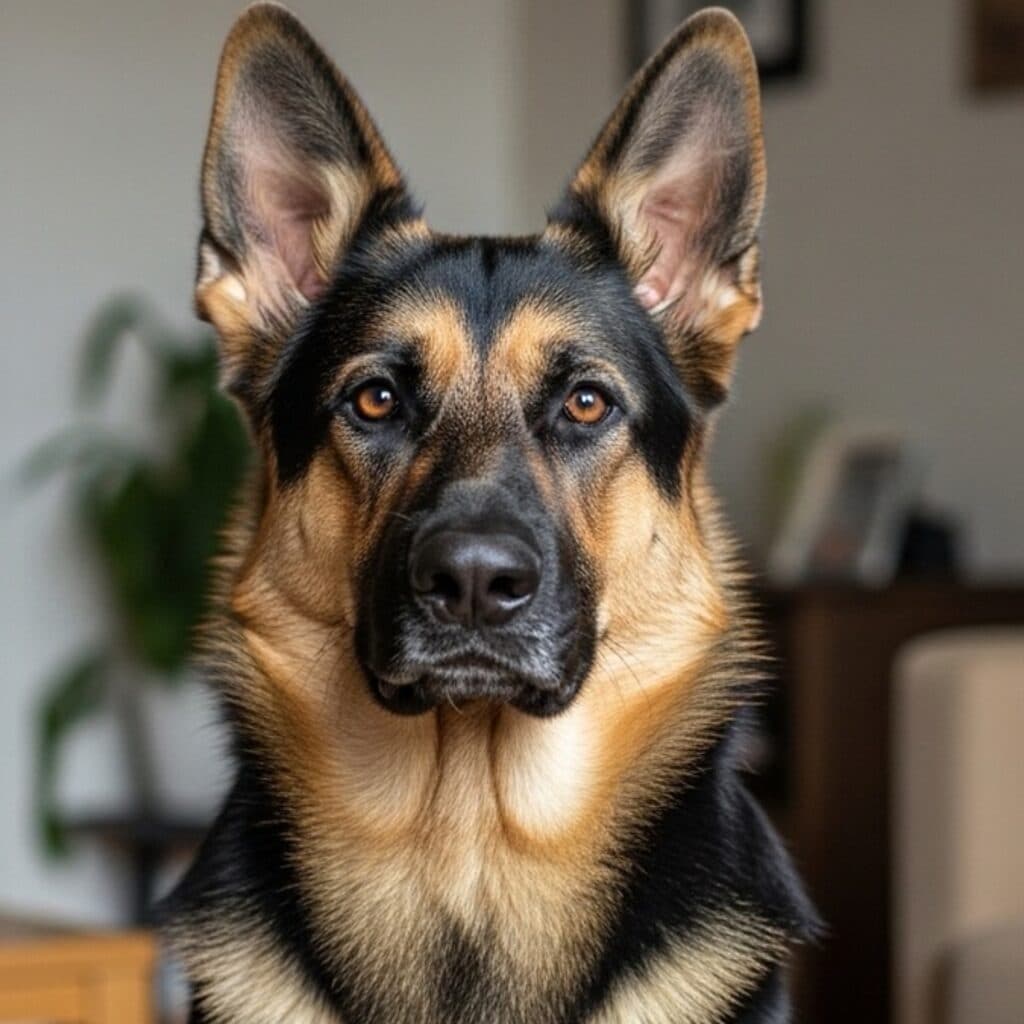
You get home, crouch down and wrap both arms around your dog's neck. He stiffens, turns his face away and shows a sliver of the white of his eye. The scene looks like affection — but in the reading of his body, it is the opposite.
A frontal hug stresses most dogs. Not because he does not like you. Because dogs do not hug — and the gesture we chose to show love is, to his body, something else entirely.
His body speaks another language
Among dogs, resting weight on top of another is never affection. It is a posture of control, of restraint — the way a more confident dog holds the space above another. When you close both arms around his neck, that is the reading his body makes, even though your intention is simply to hug someone you love.
Studies of canine body language that observe this interaction find the same pattern over and over: the frontal hug appears associated with signs of stress in most dogs, not with relaxation. His body does not distinguish "this is my person" from "something is holding me" — the restraint posture is the same in both cases.
The 3 signs he gives before complaining
He does not bite on the spot — he warns you first, quietly. Three signs are worth watching for at the next hug. The American Kennel Club lists exactly this trio as classic canine stress signals: whale eye, lip licking and looking away.
- Whale eye: he turns his face away but keeps watching you sideways, and you can see the white of the eye.
- Lip licking outside the context of food — a common nervous tic of discomfort.
- Turning the whole head to the side opposite you, like someone looking for a visual exit.
One isolated sign may be just a distracted dog. All three together, at the exact moment of the hug, are his body saying that contact bothers him.
| Sign | What it means |
|---|---|
| Whale eye | Turns the face away but keeps watching sideways, showing the white of the eye |
| Lip licking away from food | A common nervous tic of discomfort |
| Turning the whole head | Looking for a visual exit, avoiding contact |
Does that mean he does not love you?
No. And here is the most important point: these signs say nothing about the bond between you — they speak about a specific gesture he cannot interpret. Hugging is human language. You learned that hugging means loving; he never learned that grammar, because no other dog ever hugged him that way.
It is also worth remembering that not every dog reacts the same. Some, especially those raised being hugged from puppyhood, become desensitized and tolerate — even enjoy — frontal contact. That does not invalidate the signs: it means that specific dog learned, through repetition and trust, not to read restraint where there is affection. The general rule still holds for most.
What works instead of a hug
Swap the frontal hug for side-on affection: stand beside the dog, not in front, and rest your hand on his chest or under his chin, without trapping the neck. It is the same affection, without the control posture.
There is a simple test to find out whether your dog enjoys it or merely tolerates it: hug him and let go immediately. If he walks away, it was restraint — he was just waiting for you to release him. If he comes back and leans into you on his own, the contact was welcome, and that is affection in his language.
What NOT to do
- Do not force the hug if the three signs appear — letting go at once is not weakness, it is listening.
- Do not let a child hug a dog by the neck, not even the gentlest one in the house. It is the main posture associated with facial bites in children, because it immobilizes the dog close to its own mouth.
- Do not confuse tolerance with preference — a dog that holds still is not necessarily comfortable.
Frequently asked questions
My dog runs away when I try to hug him — is that a lack of love?
No. It is his bodily reading of restraint, not an assessment of your bond. Switch to side-on affection and watch whether he approaches on his own.
Why does a dog raised with hugs seem to like them?
Repetition in a safe environment desensitizes — he learned that this specific contact, with this specific person, is not a threat. That does not change the default reading in most dogs.
How do I know whether my dog is stressed during a hug?
Watch for the three signs at the moment of contact: whale eye (white of the eye showing), lip licking outside of food, and turning the head to the side opposite you.
Is hugging a dog around the neck dangerous?
For children, yes — it is the posture most associated with facial bites, because it immobilizes the dog close to its own mouth. Teaching side-on affection early prevents the risk.
Is there any hug dogs tolerate well?
Side contact, with a hand on the chest or chin and no pressure on the neck, is the closest thing to affection — without triggering the reading of restraint.
Next time the urge to hug arrives, change position: beside him, hand on the chest, no trapping. If he leans back into you, you just spoke his language. Want to know what else your dog is trying to tell you day to day?
Picked by score from our overall dog ranking, not by the topic of this article. To get it right for your pet — age, weight, spayed or neutered — take the quiz and get a list made for them. A pet with a diagnosed condition needs a diet prescribed by a veterinarian.



