Your Dog's Sleeping Position in Bed Reveals Trust Level
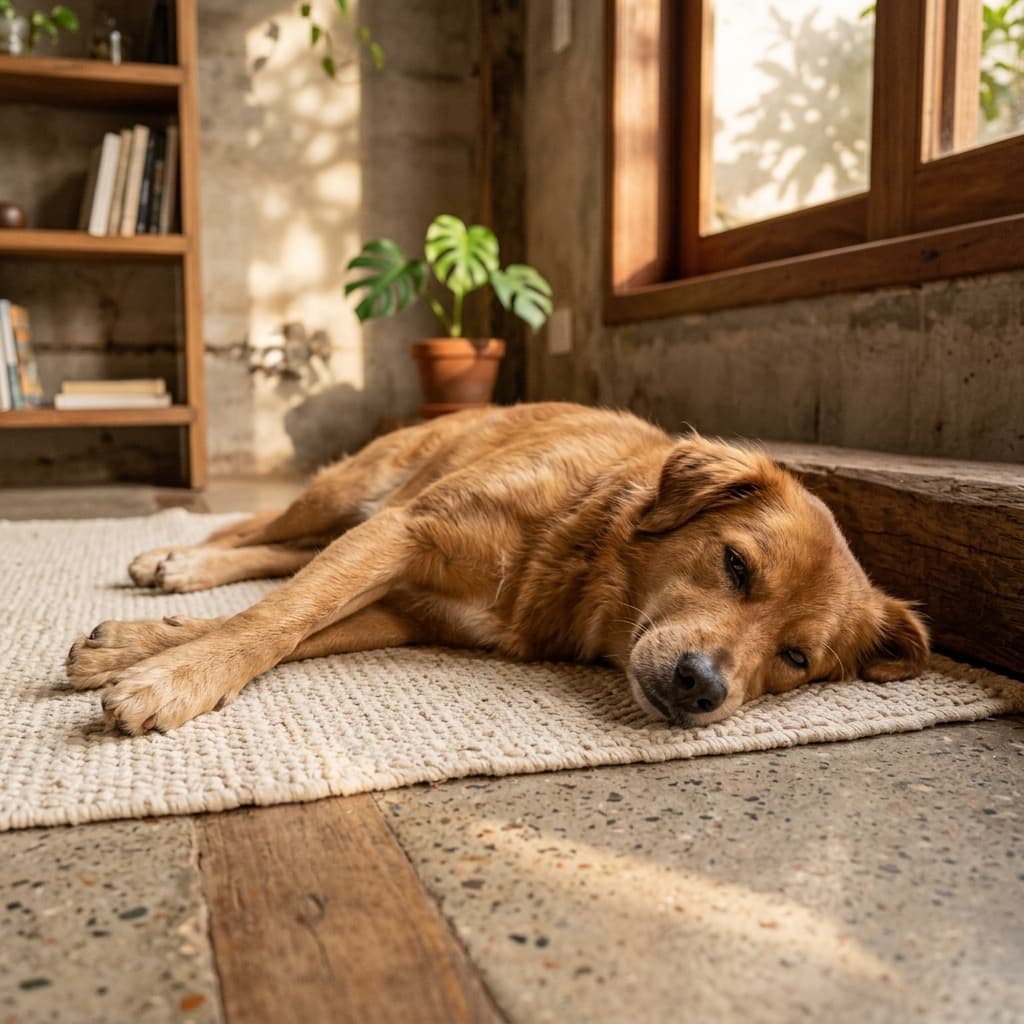
Many people think the dog picks a corner of the bed by chance, or worse, out of spite, to "steal space." It isn't so. Each sleeping position next to the owner is a reading of trust — and the dog doesn't get the calculation wrong. The position he sleeps in on the bed says how much he trusts you. There are four patterns that repeat in almost every dog that shares the mattress with its owner, and each has a function behind it.
1. Pressed against your back: guard mode
When the dog curls up against the owner's back, he isn't looking for warmth — he is on duty. This position turns the dog's back to the door or the room, an area he monitors while the owner sleeps with eyes closed and unprotected. It is the classic guard mode: the dog takes on the sentinel role because he trusts he can devote himself to it without being bothered. Dogs that sleep this way tend to be the same ones that wake first at any noise in the house.
Why does he sleep at your feet?
Sleeping at the foot of the bed looks like distance, but it is protection with respect. The dog chooses the entrance of the bed — the point any threat, real or imagined, would have to pass through before reaching the owner. He looks after the perimeter without invading the resting space closest to the face, which he reserves for another level of intimacy. It is the most common position in dogs that respect household hierarchy but still want to be on the same bed, not outside the bedroom.
Face to face is total trust — and the corner is not rejection
A dog that sleeps facing your face, muzzle near the owner's nose, is at the highest level of trust the species shows. This position exposes the neck and belly, the most vulnerable points of the canine body, and only happens with someone the dog treats as part of his own group — not with just any human in the house. The dog that sleeps far away, in the opposite corner, on the other hand, is not rejecting anyone. A dog has a higher body temperature than a human — the normal range for a dog runs from 99.5°F to 102.5°F, versus about 98.6°F for a human — and overheats before the owner notices the warmth; the corner is thermal regulation, not emotional coldness.
The 4 positions side by side
| Position | What it means |
|---|---|
| Pressed against your back | Guard mode — monitors the environment while the owner sleeps unprotected |
| At the foot of the bed | Protects the entrance of the bed, respects hierarchy, but still wants to be on the same bed |
| Face to face, muzzle near your face | Maximum trust — exposes neck and belly, the most vulnerable points |
| Far away, in the opposite corner | Thermal regulation (body temperature higher than a human's), not rejection |
What NOT to do
- Don't read the corner as rejection and insist on pulling the dog closer — he will move away again as soon as he feels warm.
- Don't push the dog back to the "guard" position thinking it is the most "correct" one. Each position serves a different function, and none is superior.
- Don't force the face-to-face position on dogs that haven't reached that level of trust — it usually creates discomfort, not closeness.
Frequently asked questions
Why does my dog sleep with his back to me?
Sleeping with his back to the owner, but touching, is guard mode: the dog monitors the environment while the owner rests. It is a sign of protection, not distance.
Does a dog that sleeps far away on the bed not like its owner?
No. Dogs have a higher body temperature and overheat faster. Sleeping in the corner is usually heat regulation, not a lack of affection.
Which position shows the most trust from the dog?
Sleeping face to face, close to the owner's face, exposing neck and belly. It is the position that requires the highest level of voluntary vulnerability from the dog.
Is a change in a dog's sleeping position a sign of something?
It can be. Abrupt changes — from "face to face" to "isolated corner," for example — are worth watching together with other signs, such as appetite or energy, before assuming it is just a new preference.
Is it bad for the dog to sleep at the foot of the bed?
No. It is one of the most common positions and shows a dog that respects the owner's space while still protecting the entrance of the bed. It does not indicate less attachment.
Next time your dog settles on the bed, it is worth asking less "why doesn't he want to be close to me" and noticing more which of the four positions he chose — the answer about trust is already there, in the way he lies down.
Picked by score from our overall dog ranking, not by the topic of this article. To get it right for your pet — age, weight, spayed or neutered — take the quiz and get a list made for them. A pet with a diagnosed condition needs a diet prescribed by a veterinarian.



