Dog Breeds That Destroy Your House When Left Alone
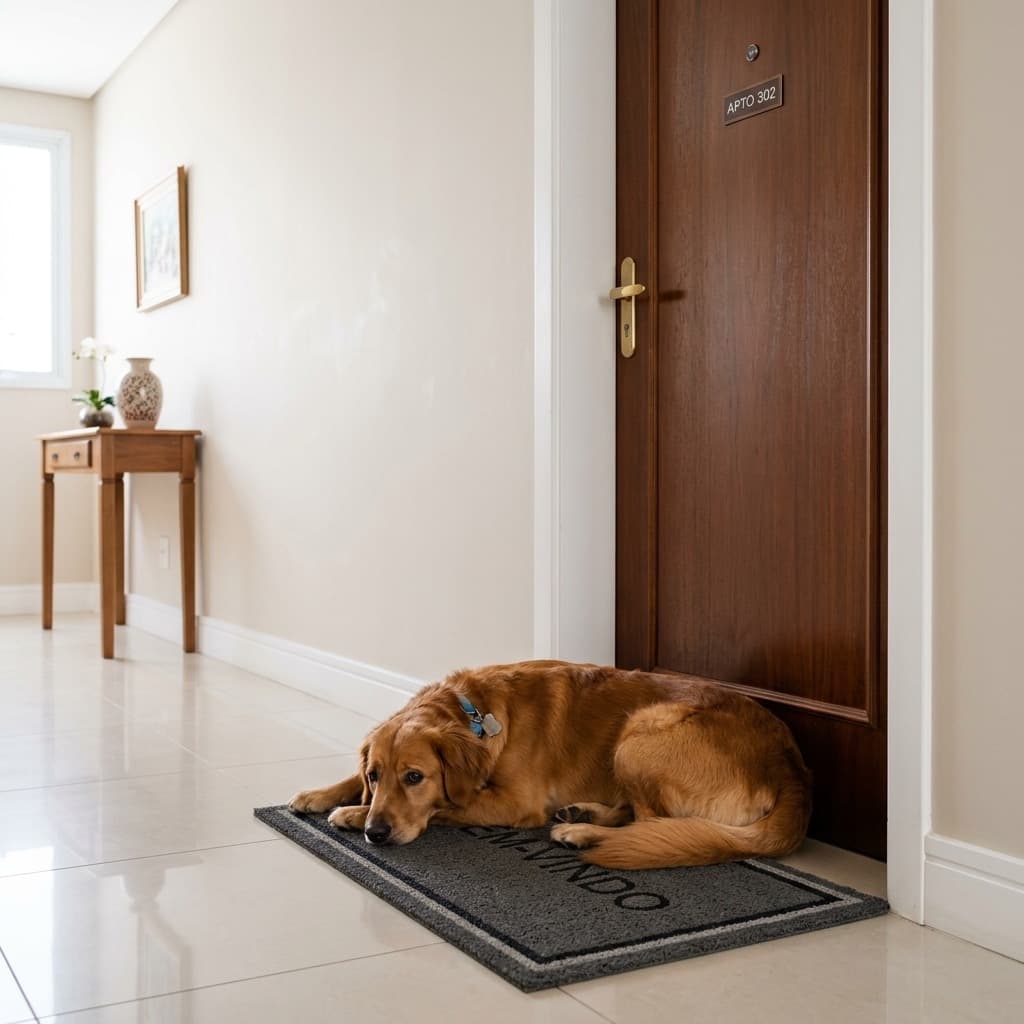
You step out for three hours and come back to a torn-open sofa, a chewed baseboard and a shoe in pieces. The first thought is usually the same: "he did this out of spite because I left." He didn't. Dogs don't hold grudges or plan retaliation — and the three breeds that show up most in these stories are precisely the ones that most like to be near you.
The pattern behind the damage has two ingredients that add up: strong attachment and high energy. A dog very bonded to his owner feels the absence more intensely; a dog bred to work all day arrives at departure time with all his energy still in his body. When no one burned that energy off before the door closed, it comes out on whatever is within reach.
| Breed | Original job | What it becomes when left alone |
|---|---|---|
| Jack Russell Terrier | Hunting in burrows, active all day | Unspent energy turns into digging and chewing baseboards |
| Labrador Retriever | Fetching and carrying game in the mouth | Explores with the mouth and picks the softest target in the room |
| Border Collie | Herding, solving problems all the time | With no task to solve, he "solves" the door and the door frame |
3. Jack Russell Terrier: a full day's energy in a small dog
Size fools a lot of people when it's time to adopt. The Jack Russell was developed to accompany hunts and enter burrows after prey — a job that demanded continuous activity for hours, not a fifteen-minute walk around the block. That engine is still running in a dog who now lives in an apartment.
The math is simple: energy that doesn't leave on the walk doesn't evaporate. It builds up and looks for a way out. Digging at the sofa, chewing baseboards and tipping over the trash are domestic versions of the same digging and chasing behavior the breed was selected for. The practical point is the timing of the effort — burn it off before you leave, not when you get back.
2. Labrador Retriever: he knows the world through his mouth
The Labrador is a retrieving dog — bred to fetch downed game and bring it back in the mouth, without damaging it. According to the breed profile at the American Kennel Club, it is one of the most popular breeds precisely because of this combination of gentleness and willingness to work in partnership with people.
The detail that explains the damage is the tool: for the Labrador, the mouth is the hand. He investigates the environment by mouthing it, and alone he investigates with no one to say "not that one." So he picks the softest, best-smelling target in the room — the cushion, the slipper, the remote. It isn't choosing a target out of spite; it's choosing by texture.
That's why, with a Labrador, putting everything out of reach works less well than offering what he can chew: a tough toy, a stuffed chew, a puzzle feeder. The mouth is going to work either way; the question is on what.
1. Border Collie: he doesn't want a walk, he wants a task
The Border Collie was bred to herd sheep — a job that isn't just running, it's deciding: reading the flock, anticipating movement, correcting the route. The breed profile at the American Kennel Club describes a dog of very high energy and a strong need for mental stimulation, with a working history that calls for constant occupation.
This is where many owners go wrong in good faith: they take the Border Collie on a long run, come back thinking they've solved it, and find the house destroyed anyway. Tiring the body doesn't switch off the mind. A dog made to solve problems all day, with no problem to solve, invents one — and the problem he invents tends to be the door that separates the two of you.
Why does my dog only destroy things when I'm not home?
Because the trigger isn't the object, it's the absence. When the destruction happens only in your absence, and comes with other signs — persistent barking or whining right after you leave, drooling, attempts to escape through doors and windows, agitation as soon as you pick up the keys — the picture stops being "messy dog" and becomes consistent with separation anxiety, described among the most common canine behavior problems by the ASPCA.
The practical difference between the two readings is huge. A bored dog improves with more energy output and more occupation. An anxious dog needs specific work on learning to be alone — tolerating the absence in small doses that gradually grow — and scolding him makes it worse, because it adds tension to an animal that is already on alert.
What NOT to do
- Don't scold when you get home. The dog doesn't connect the scolding now with the damage from two hours ago; he only learns that your arrival is a reason to be afraid — which increases the anxiety that caused the problem.
- Don't choose one of these breeds counting on a still, apartment-dog routine. The demand for activity and occupation comes with the breed, and ignoring that frustrates both sides.
- Don't treat sudden destruction in a dog who never destroyed anything as a "phase." An abrupt change in behavior deserves veterinary evaluation — pain and health problems also show up this way.
- Don't leave the energy output for after work. The walk that protects the house is the one before you leave, not the one at night.
Frequently asked questions
Does a dog destroy the house out of revenge because he got angry?
No. There is no evidence that dogs act out of planned retaliation. Destruction in the owner's absence is better explained by pent-up energy, boredom or separation anxiety — three causes that respond to management and training, and none of them to punishment.
Does burning off energy before leaving the house solve it on its own?
It solves a good share of the cases of boredom and excess energy, especially in Jack Russells and Labradors. But if separation anxiety is established, the energy output helps and isn't enough: you need to work on tolerance of the absence gradually, and more intense cases call for support from an animal behavior professional.
Will leaving another dog at home make mine stop destroying things?
Not always. When the attachment is to a specific owner, the company of another dog doesn't replace the absent person, and the behavior continues. Adopting a second animal to fix the first one's anxiety tends to create two problems instead of solving one.
How long can a dog of these breeds be left alone?
It depends much more on the routine of energy output and occupation than on the clock. A Border Collie who went off to solve a task before you left gets through the same period better than a Border Collie who spent the morning sitting still. What changes the outcome is what happened before the door closed.
If the damage at home has become routine, the way out isn't hiding the sofa — it's adjusting how much energy and occupation your dog gets out before being left alone. Build your dog's profile and see what to prioritize in his routine →
Picked by score from our overall dog ranking, not by the topic of this article. To get it right for your pet — age, weight, spayed or neutered — take the quiz and get a list made for them. A pet with a diagnosed condition needs a diet prescribed by a veterinarian.



