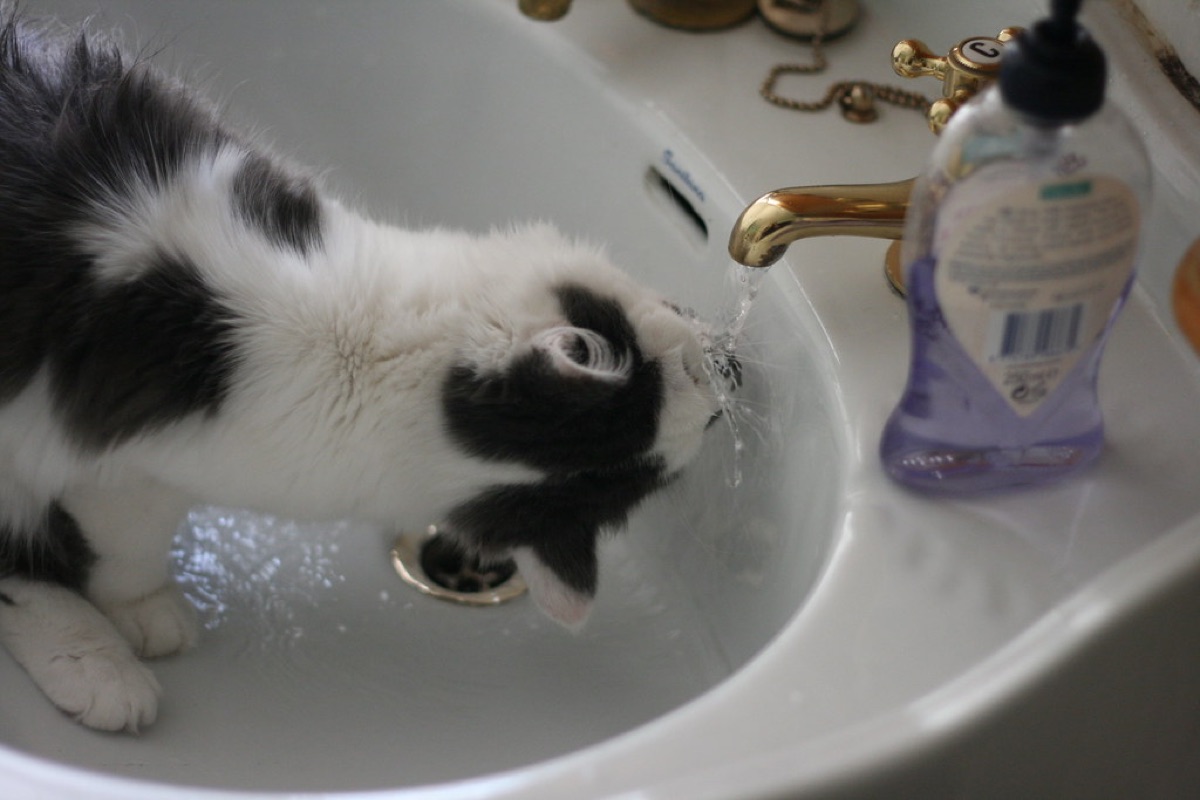
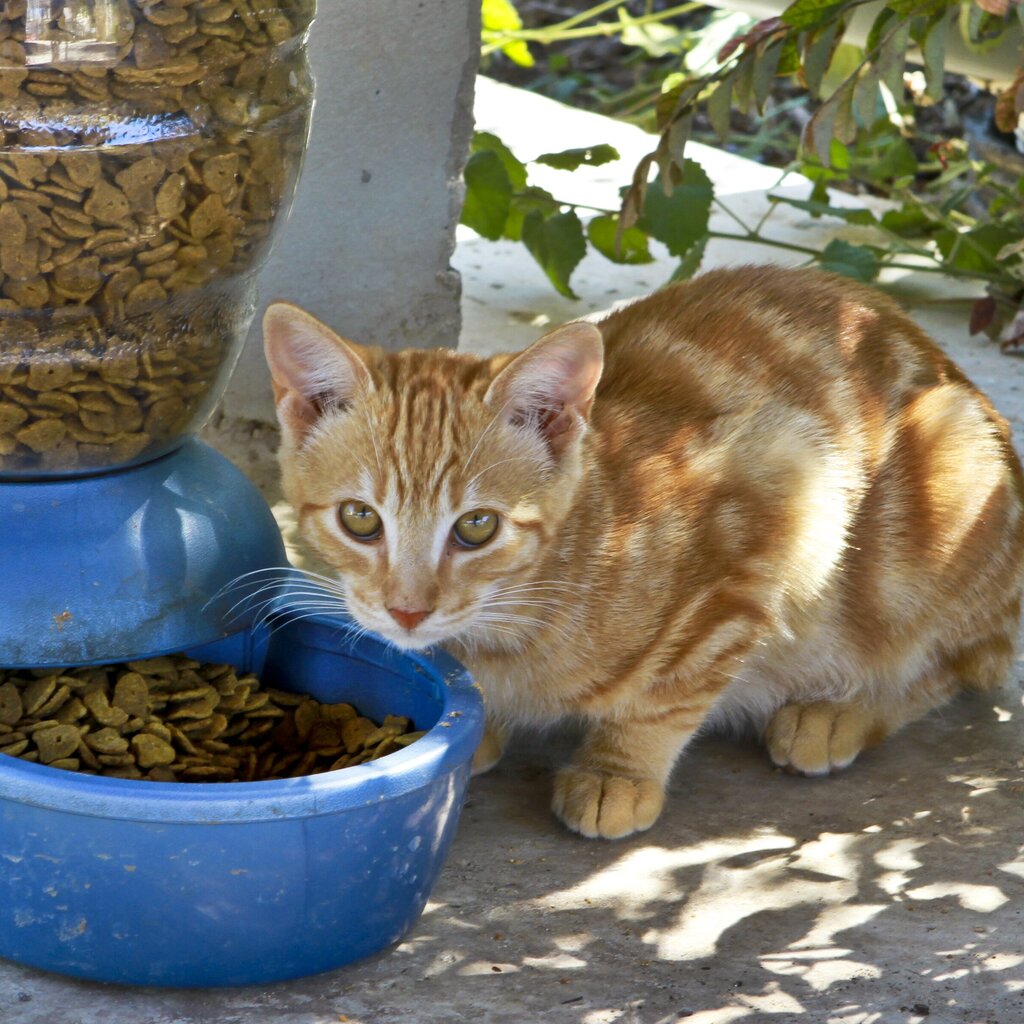
Cat Begging for Food All the Time: Hunger, Habit or Illness

Cats over 4 kg (8.8 lb) seem to have diabetes more often than cats below that weight, and increased appetite (polyphagia) is among the clinical signs of the disease, according to the MSD Veterinary Manual. Not every cat that begs for food is sick, but an appetite that has changed deserves attention.
This guide helps you tell everyday begging from a real increase in appetite, shows how to split the day's food with the grams for four indoor cat foods from the US catalog, and says when to call the veterinarian.
Why does my cat beg for food all the time?
There is no single cause. What the sources consulted allow us to say is this: increased appetite is a clinical sign of diseases such as diabetes and hyperthyroidism, and some cats overeat when food is left out all day. The veterinarian decides which case your cat is.
The ASPCA describes free-choice feeding as food available at all times, and warns that some cats overeat on that system, which can lead to obesity. The page does not cover the cat that begs out of insistence, and this guide will not explain that behavior on its own either.
The useful question is a different one: is the begging the usual kind, or did the appetite increase? A cat that has always been greedy and keeps the same weight and the same energy is one picture. A cat that started eating more than it used to is another, and that one calls for a visit.
When is a big appetite a sign of illness?
When the appetite clearly and persistently increases, rather than the cat simply asking for more, it is worth booking the veterinarian. The MSD Veterinary Manual lists increased appetite among the clinical signs of two common diseases in cats, diabetes mellitus and hyperthyroidism. Only an exam confirms either one.
For diabetes, the manual describes the clinical signs as polyphagia, increased urination, increased thirst and weight loss. It also says that obesity predisposes dogs and cats to insulin resistance, and that cats over 4 kg seem to have the disease more often (MSD, diabetes mellitus). The same page records that up to 50% of cats with diabetes have a decreased appetite, so eating less does not rule the disease out either.
For hyperthyroidism, the manual cites a voracious appetite among the most common signs, and weight loss despite a good appetite. It adds that the disease is more common in cats over 7 years old (MSD, hyperthyroidism).
| Sign you notice | What MSD says | What to do |
|---|---|---|
| Cat eating more than before | Increased appetite is a clinical sign of diabetes and hyperthyroidism | Book a visit |
| Weight dropping despite eating well | Cited for hyperthyroidism; weight loss is also listed for diabetes | Book a visit |
| More thirst and more urine | Cited among the signs of diabetes | Book a visit |
| Cat over 7 years old with a new appetite | Hyperthyroidism is more common at that age | Book a visit |
This table is a list of signs to bring to the visit, not a diagnosis. See your veterinarian.
How do you portion the day's food to curb the hunger?
Work out the day's total from the cat's weight, weigh the food on a kitchen scale and split it into meals. The ASPCA defines portion-controlled feeding as measuring the food and offering it as a meal, and suggests starting from the amount on the label divided into two meals. Adjust afterward by the cat's weight.
For a neutered cat, the FEDIAF uses a coefficient of 75 kcal per kg of metabolic weight (against 100 for an active cat). With it, the cat needs about 157 kcal a day at 3 kg (6.6 lb), 190 at 4 kg (8.8 lb) and 220 at 5 kg (11 lb). The table converts that into grams a day for four indoor cat foods from the catalog.
| Food (catalog) | kcal/kg | 3 kg (6.6 lb) | 4 kg (8.8 lb) | 5 kg (11 lb) |
|---|---|---|---|---|
| Hill's Science Diet Adult Indoor Cat, Chicken Recipe | 3,492 | 45 g/day | 54 g/day | 63 g/day |
| Royal Canin Feline Health Nutrition Indoor, Adult | 3,534 | 44 g/day | 54 g/day | 62 g/day |
| Blue Buffalo Tastefuls Indoor, Salmon & Brown Rice | 3,647 | 43 g/day | 52 g/day | 60 g/day |
| Purina ONE +Plus Indoor Advantage, Turkey | 3,756 | 42 g/day | 51 g/day | 59 g/day |
For the full math, with the monthly price, use the cost and portion calculator. If you already portion and still see the weight go up, read cat gaining weight eating the amount on the package.
Splitting the total into more meals does not raise the total. For the routine by age, see how many times a day a cat should eat. Treats count toward the total: the ASPCA says they should make up 5% or less of the cat's daily intake.
Which cat food fills a cat up the most?
The sources consulted do not compare foods by fullness in cats, so none can be named as the one that fills up the most. What can be measured is energy: the more kcal per kg, the fewer grams the same expenditure requires. Among the four foods in the table, the spread runs from 3,492 to 3,756 kcal/kg.
In practice, this changes the size of the bowl. Between the first and last row of the table, a 4 kg cat gets from 54 g to 51 g a day, with the same energy. The less caloric food gives a larger portion in the bowl for the same total calories, but that does not prove the cat feels more satisfied. The purchase block on this page shows the cat foods rated highest in our ranking, and the gram math works for any of them.
To compare the options, the ranking of cat foods shows each product's profile. Switching foods does not replace the visit when the appetite has changed.
Frequently asked questions
Is a cat begging for food all the time a sign of illness?
Not always. Some cats overeat when food is left out, according to the ASPCA. But increased appetite is a clinical sign of diabetes and hyperthyroidism, according to the MSD Veterinary Manual. If the appetite went up, the weight dropped or the cat drinks more water, see the veterinarian.
My cat eats a lot and is losing weight. What could it be?
MSD cites weight loss despite a good appetite among the common signs of hyperthyroidism, a disease more common in cats over 7 years old. Only a veterinary exam confirms the cause. Do not change the diet on your own before the visit.
How many grams of food does a 4 kg neutered cat need a day?
By the FEDIAF coefficient, about 190 kcal a day. For the foods in the table, that comes to 51 g to 54 g, depending on each food's energy. Weigh the portion and track the cat's weight.
Picked by score from our overall cat ranking, not by the topic of this article. To get it right for your pet — age, weight, spayed or neutered — take the quiz and get a list made for them. A pet with a diagnosed condition needs a diet prescribed by a veterinarian.