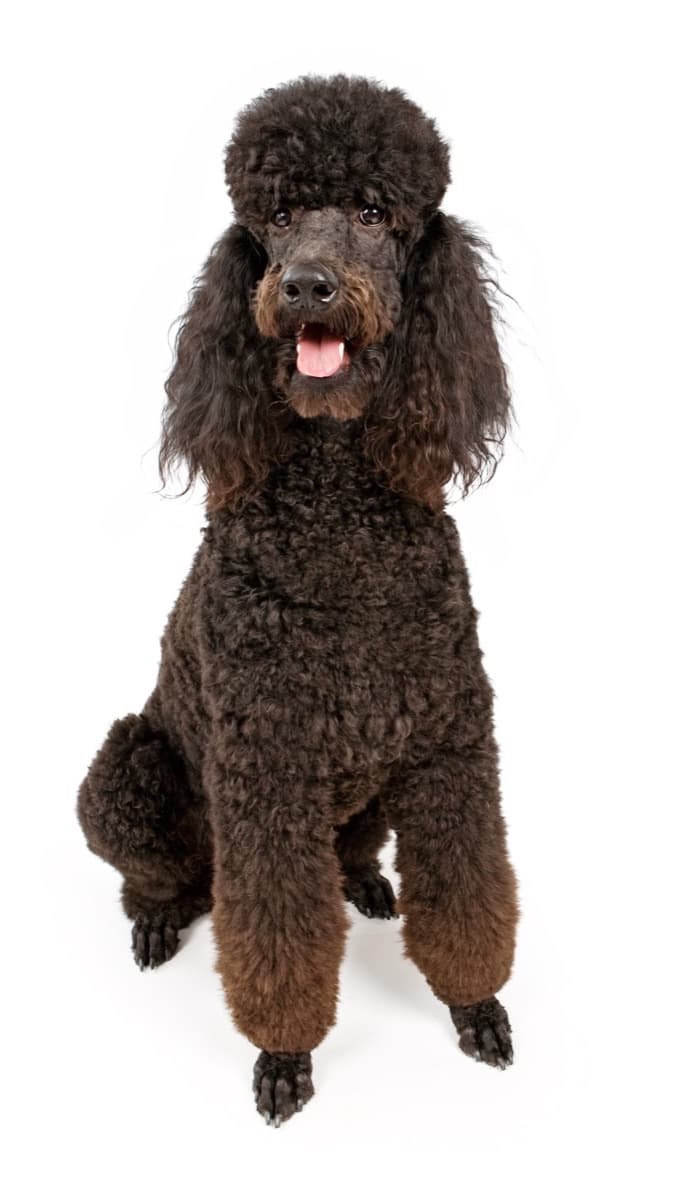
The Standard Poodle is a large dog (20 to 32 kg) with high energy and a medium curly coat. The breed has a documented predisposition to sebaceous adenitis, an immune-mediated skin disease linked to genetic bottlenecks in the line. The ideal food provides balanced omega-3 and omega-6, with support for keratinization and the skin barrier.
In the current My Pet Magazine analysis, the best food for the Standard Poodle is Purina Pro Plan Complete Essentials (Purina Pro Plan), with a technical score of 91.7/100 (🌟 Superior Quality), calculated with the My Pet Magazine IDNM/IPFI methodology across 49 dog foods reviewed in July 2026. See the full ranking ↓
What to weigh in food for the Standard Poodle
Two fronts guide the choice of a Standard Poodle's food: skin health, which is the breed's documented predisposition, and large size, which adjusts the diet's energy.
Skin health. The Standard Poodle is predisposed to sebaceous adenitis, an immune-mediated skin disease that destroys the sebaceous glands and compromises the coat's natural oil production. Balanced omega-3 and omega-6 in the food help support the skin barrier and keratinization, but managing the disease goes through veterinary dermatology follow-up — diet is support, not isolated treatment.
Large size and high energy. At a weight between 20 kg and 32 kg and with high energy, the Standard Poodle needs a food with caloric density proportional to his body weight and the dog's actual activity expenditure, avoiding both calorie deficit and excess.
Criteria scored against the My Pet Magazine nutritional targets (protein, fat, calcium and caloric density ranges by size — see our methodology).
Breed profile and predispositions
The Standard Poodle's most documented predisposition is sebaceous adenitis, an immune-mediated skin disease that attacks the glands responsible for producing the coat's oil, leading to scaling, hair loss and a characteristic odor.
The study by Pedersen et al. (2015), published in Canine Genetics and Epidemiology, associates the rising incidence of sebaceous adenitis (and also of Addison's disease) in the Standard Poodle with genetic bottlenecks and increasing inbreeding in the breed's line over the 20th century. The practical nutritional implication is support via balanced omega-3 and omega-6, which help with keratinization and the skin barrier, always alongside veterinary dermatological diagnosis and management — the condition is not reversed by diet alone.
As a large dog (20 to 32 kg) with high energy, the Standard Poodle also needs a food with caloric density proportional to his weight, following the adult maintenance profiles of the FEDIAF Nutritional Guidelines 2024.
Recommended foods for the Standard Poodle
Ranked by IDNM/IPFI technical score across 49 dog foods — no manual product curation.
- 1
Purina Pro Plan Complete Essentials · Purina Pro Plan
91.7/100 - 2
Blue Buffalo Life Protection Formula Small Breed · Blue Buffalo
91.3/100 - 3
Blue Buffalo Life Protection Formula · Blue Buffalo
91.1/100 - 4
Diamond Naturals Skin & Coat All Life Stages · Diamond Naturals
89.7/100 - 5
Purina Pro Plan Weight Management · Purina Pro Plan
89/100
Frequently asked questions about Standard Poodle food
- Does the Standard Poodle need a special food?
- He needs attention to the skin. The breed has a documented predisposition to sebaceous adenitis, an immune-mediated skin disease linked to genetic bottlenecks in the line. A good food for a Standard Poodle provides balanced omega-3 and omega-6, which support the skin barrier and healthy keratinization of the coat.
- What is sebaceous adenitis in the Standard Poodle?
- It is an immune-mediated skin disease that destroys the dog's sebaceous glands, causing scaling and hair loss. A study published in Canine Genetics and Epidemiology (Pedersen et al., 2015) associates the increase of the disease in the Standard Poodle with genetic bottlenecks and inbreeding in the breed's line.
- Does food with omega-3 treat sebaceous adenitis?
- It does not treat it on its own. Omega-3, omega-6 and keratinization support help maintain the skin barrier, but diagnosing and managing sebaceous adenitis requires veterinary dermatology follow-up — diet is part of the support, not the isolated solution.
- Does the Standard Poodle have any concern beyond the skin?
- As a large dog (20 to 32 kg) with high energy, the Standard Poodle needs a food with caloric density proportional to his weight and activity expenditure — a general size adjustment, not a documented health predisposition.
- How can I tell whether my Standard Poodle is at higher risk of sebaceous adenitis?
- Dogs from lines with a family history of the disease are at higher risk, according to the study by Pedersen et al. A veterinary dermatologist can assess early signs — a dull coat, scaling — and advise on tests and management, including dietary adjustments.
Methodology
The food list on this page is ordered by My Pet Magazine's IDNM/IPFI technical score, which evaluates the nutritional quality and ingredient purity of every product available for large-breed dogs. The order is calculated automatically and updated whenever the catalog changes — no brand pays to appear, and there is no manual product selection.
The ranking on this page is a projection of the My Pet Magazine IDNM/IPFI scoring engine over the dog dataset, with no manual product curation. See the full methodology →
Want a recommendation tailored to your Standard Poodle?