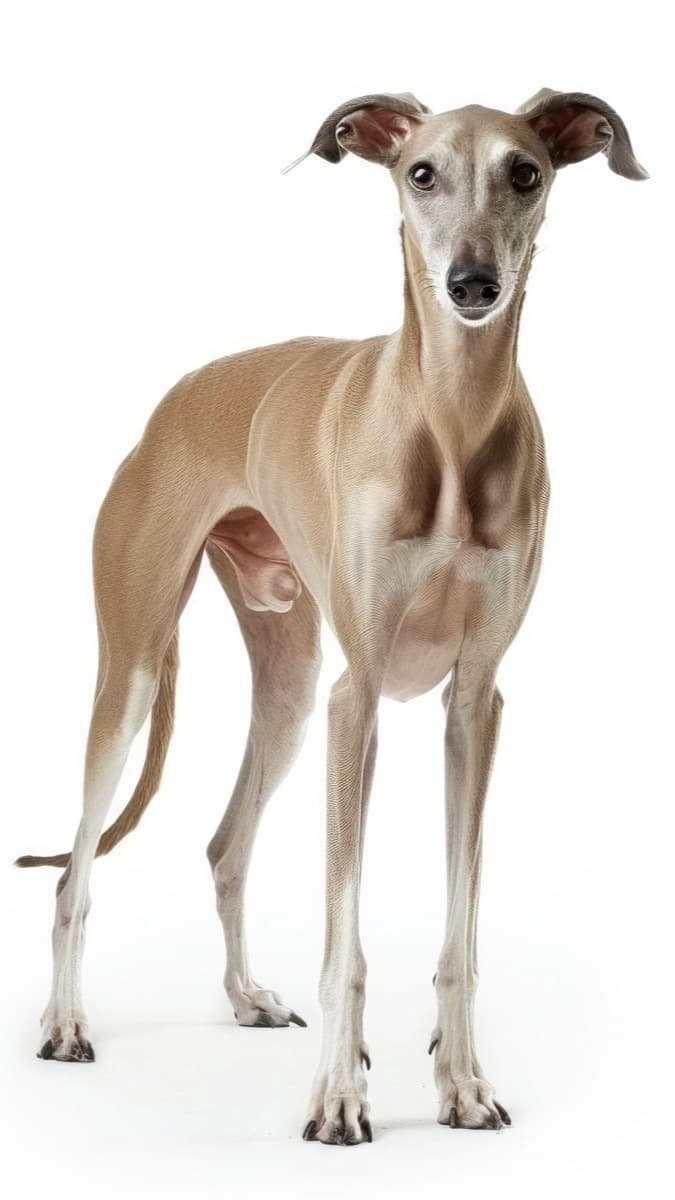
The Greyhound is a large dog (27 to 40 kg) with a short coat and moderate energy. The breed's nutritional hallmark is oral health: about 32% of Greyhounds have periodontal disease, well above the canine average. The ideal food prioritizes kibble with a mechanical cleaning action and dental care from puppyhood.
In the current My Pet Magazine analysis, the best food for the Greyhound is Purina Pro Plan Complete Essentials (Purina Pro Plan), with a technical score of 91.7/100 (🌟 Superior Quality), calculated with the My Pet Magazine IDNM/IPFI methodology across 49 dog foods reviewed in July 2026. See the full ranking ↓
What to weigh in food for the Greyhound
Two fronts guide the choice of a Greyhound's food: oral health, which is the breed's documented predisposition, and energy balance, which is a general trait of the breed.
Oral health. The Greyhound is among the breeds with the highest prevalence of periodontal disease — about 32%, well above the canine average. Food helps with fibrous-textured kibble and a mechanical cleaning action, which scrapes off part of the plaque during chewing. That does not replace brushing or professional cleaning, but it adds to oral care across the dog's life.
Moderate energy and large size. Despite being a sprinter, the Greyhound has moderate energy expenditure day to day — short bursts of running, not continuous activity. The food needs to deliver energy proportional to his weight (27 to 40 kg) and to the dog's actual activity level, avoiding both calorie deficit and excess.
Criteria scored against the My Pet Magazine nutritional targets (protein, fat, calcium and caloric density ranges by size — see our methodology).
Breed profile and predispositions
The Greyhound's most documented predisposition is periodontal disease, an inflammatory condition that affects the supporting tissues of the tooth.
An epidemiological survey of dogs seen in veterinary primary care in the United Kingdom, O'Neill et al. (2021), published in the Journal of Small Animal Practice, found a 32.21% prevalence of periodontal disease in Greyhounds — the highest among the breeds analyzed — with odds 2.58 times higher than in mixed-breed dogs. The authors suggest that a more intense immune response to dental plaque may explain that difference, in addition to factors such as muzzle shape and tooth spacing.
The WSAVA Global Dental Guidelines reinforce that oral health should be assessed at every routine veterinary consultation, and that diet is one of the tools supporting plaque control — alongside brushing and professional cleaning — especially in breeds with a documented higher prevalence, such as the Greyhound.
Recommended foods for the Greyhound
Ranked by IDNM/IPFI technical score across 49 dog foods — no manual product curation.
- 1
Purina Pro Plan Complete Essentials · Purina Pro Plan
91.7/100 - 2
Blue Buffalo Life Protection Formula Small Breed · Blue Buffalo
90.2/100 - 3
Blue Buffalo Life Protection Formula · Blue Buffalo
90/100 - 4
Diamond Naturals Skin & Coat All Life Stages · Diamond Naturals
89.7/100 - 5
Purina Pro Plan Weight Management · Purina Pro Plan
89/100
Frequently asked questions about Greyhound food
- Does the Greyhound need a special food?
- He needs attention to oral health. The Greyhound has the highest prevalence of periodontal disease among the breeds studied in the United Kingdom — about 32%, well above the canine average — possibly because of a stronger inflammatory response to dental plaque. A good food for a Greyhound helps with kibble that has a mechanical cleaning action and a dental care routine from early on.
- Why does the Greyhound have so many dental problems?
- An epidemiological study of dogs seen in primary care in the United Kingdom (O'Neill et al., 2021) found a 32.21% prevalence of periodontal disease in Greyhounds, with odds 2.58 times higher than in mixed-breed dogs. The authors point to a possible hyperinflammatory response to plaque as an explanation, but the exact cause is not yet settled.
- Does food alone resolve the Greyhound's periodontal disease?
- No. Food with a mechanical cleaning action helps reduce plaque build-up, but it does not replace regular brushing and professional cleaning when the veterinarian indicates it. For a breed with such high prevalence, the three measures together make more difference than any one alone.
- How can I tell whether a food has a dental cleaning action?
- Foods designed for oral health usually have larger kibble with a fibrous texture, which demands more chewing and scrapes plaque off the tooth during the bite. The label generally indicates that benefit when the product was formulated with that goal.
- From what age should the Greyhound's oral health be looked after?
- From puppyhood. Since the prevalence of periodontal disease in the breed is high in adult life, starting the oral care routine — suitable food, brushing and veterinary checks — early helps prevent the problem from accumulating over the years, rather than treating it once it is established.
Methodology
The food list on this page is ordered by My Pet Magazine's IDNM/IPFI technical score, which evaluates the nutritional quality and ingredient purity of every product available for large-breed dogs. The order is calculated automatically and updated whenever the catalog changes — no brand pays to appear, and there is no manual product selection.
The ranking on this page is a projection of the My Pet Magazine IDNM/IPFI scoring engine over the dog dataset, with no manual product curation. See the full methodology →
Want a recommendation tailored to your Greyhound?