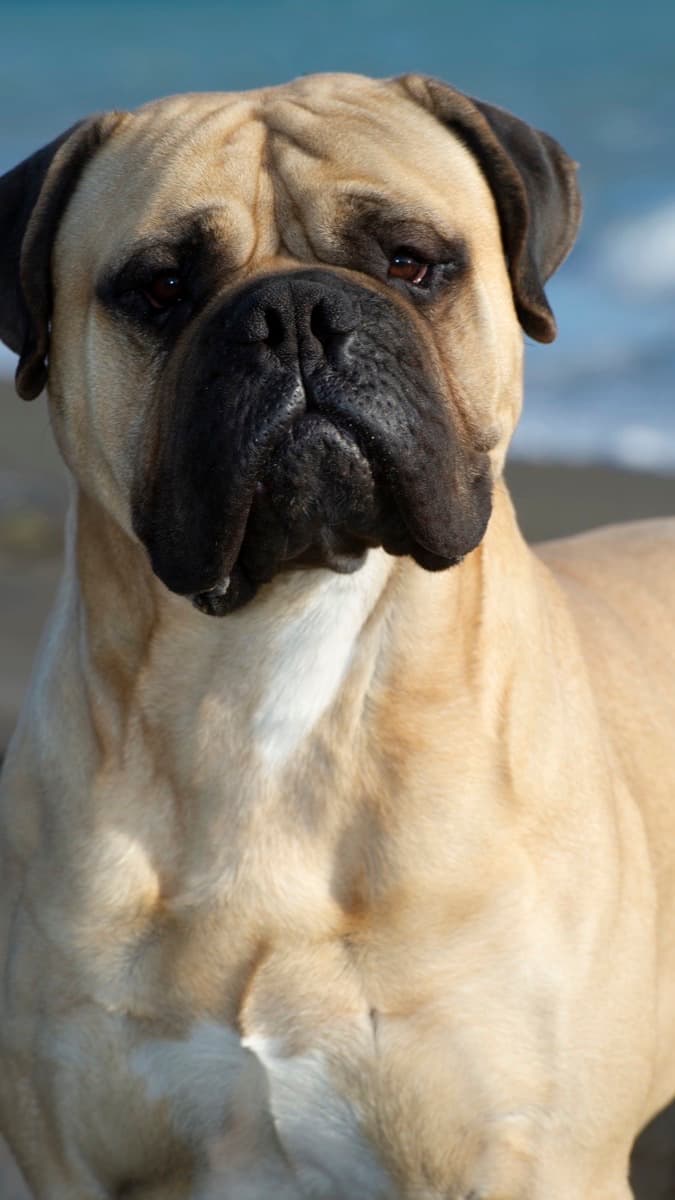
The Bullmastiff is a large dog (45 to 59 kg) with low energy. Like most heavy mastiff-type dogs, he is predisposed to hip and elbow dysplasia. The ideal food controls calcium in the puppy — up to 1.8% of the dry matter of the food, according to FEDIAF — and includes joint support in adult life.
In the current My Pet Magazine analysis, the best food for the Bullmastiff is Purina Pro Plan Complete Essentials (Purina Pro Plan), with a technical score of 91.7/100 (🌟 Superior Quality), calculated with the My Pet Magazine IDNM/IPFI methodology across 49 dog foods reviewed in July 2026. See the full ranking ↓
What to weigh in food for the Bullmastiff
The Bullmastiff is a heavy mastiff-type dog, and the issue that weighs most in choosing his food is joint health — hips and elbows.
Controlled growth in the puppy. Large-breed dogs like the Bullmastiff grow fast, and that accelerated pace is one of the factors associated with dysplasia, according to the Merck Veterinary Manual — which describes the basis of the problem as a mismatch between rapid bone development and slower development of the musculature around the hip joint. That is why large-breed puppy food limits calcium to up to 1.8% of the dry matter of the food, according to FEDIAF, avoiding bone growth too fast for the joints to keep up with.
Joint support in adult life. After the growth phase, the care shifts focus: ingredients such as EPA, DHA (omega-3) and chondroprotectives help maintain cartilage and reduce joint wear across life. Since the Bullmastiff is a heavy dog by nature — reaching 59 kg — each joint already works under more load, which reinforces the importance of that continuous support.
Criteria scored against the My Pet Magazine nutritional targets (protein, fat, calcium and caloric density ranges by size — see our methodology).
Breed profile and predispositions
The Bullmastiff carries the predisposition typical of large, heavy mastiff-type dogs: an elevated risk of dysplasia in the hip and elbow joints.
The Merck Veterinary Manual explains that dysplasia is more common in large-breed dogs and that its basis is a mismatch between rapid bone growth and slower development of the muscle mass around the joint — that imbalance leaves the hip loose and favors early cartilage wear. Accelerated growth, influenced by nutrition, is among the factors the source associates with the problem.
The FEDIAF 2024 guidelines translate that care into a number: for growing large-breed dogs, calcium in the food should be limited to 1.8% of the dry matter of the food — enough to sustain bone development without speeding it beyond what the joints can keep up with. In adult life, the care shifts to continuous cartilage support, which is what justifies ingredients such as EPA, DHA and chondroprotectives in foods aimed at heavy mastiff-type dogs like the Bullmastiff.
Recommended foods for the Bullmastiff
Ranked by IDNM/IPFI technical score across 49 dog foods — no manual product curation.
- 1
Purina Pro Plan Complete Essentials · Purina Pro Plan
91.7/100 - 2
Blue Buffalo Life Protection Formula Small Breed · Blue Buffalo
91.3/100 - 3
Blue Buffalo Life Protection Formula · Blue Buffalo
91.1/100 - 4
Wellness Complete Health Large Breed Adult · Wellness
90.1/100 - 5
Wellness Complete Health Small Breed · Wellness
90.1/100
Frequently asked questions about Bullmastiff food
- Does the Bullmastiff need a special food?
- He needs attention to the joints. Being a heavy mastiff-type dog (45 to 59 kg), the Bullmastiff is predisposed to hip and elbow dysplasia. A good food for a Bullmastiff controls calcium in the puppy stage and provides joint support — EPA, DHA and chondroprotectives — in adult life.
- Why does calcium in the food matter so much for a Bullmastiff puppy?
- Because large-breed dogs grow too fast for the pace of their joints, and that mismatch between bone and muscle is the basis of dysplasia, according to the Merck Veterinary Manual. The FEDIAF guidelines limit calcium in large-breed puppy food to 1.8% of the dry matter of the food.
- What causes dysplasia in the Bullmastiff?
- It is an imbalance between rapid bone growth and slower development of the muscle mass around the hip, which leaves the joint loose and favors wear. Accelerated growth, influenced by nutrition, is among the factors associated with the problem.
- Do EPA and DHA make a difference for the Bullmastiff's joints?
- They help as support. EPA and DHA (omega-3) and chondroprotectives such as glucosamine and chondroitin contribute to maintaining cartilage and reducing joint wear — important for a heavy dog like the Bullmastiff, whose joints work under more load.
- The Bullmastiff has low energy — does that change the food?
- It does. It is a more sedate breed, so the food needs caloric density matched to that lower energy expenditure, avoiding weight gain beyond what is appropriate — extra weight is added load on joints that are already the breed's sensitive point.
Methodology
The food list on this page is ordered by My Pet Magazine's IDNM/IPFI technical score, which evaluates the nutritional quality and ingredient purity of every product available for large-breed dogs. The order is calculated automatically and updated whenever the catalog changes — no brand pays to appear, and there is no manual product selection.
The ranking on this page is a projection of the My Pet Magazine IDNM/IPFI scoring engine over the dog dataset, with no manual product curation. See the full methodology →
Want a recommendation tailored to your Bullmastiff?