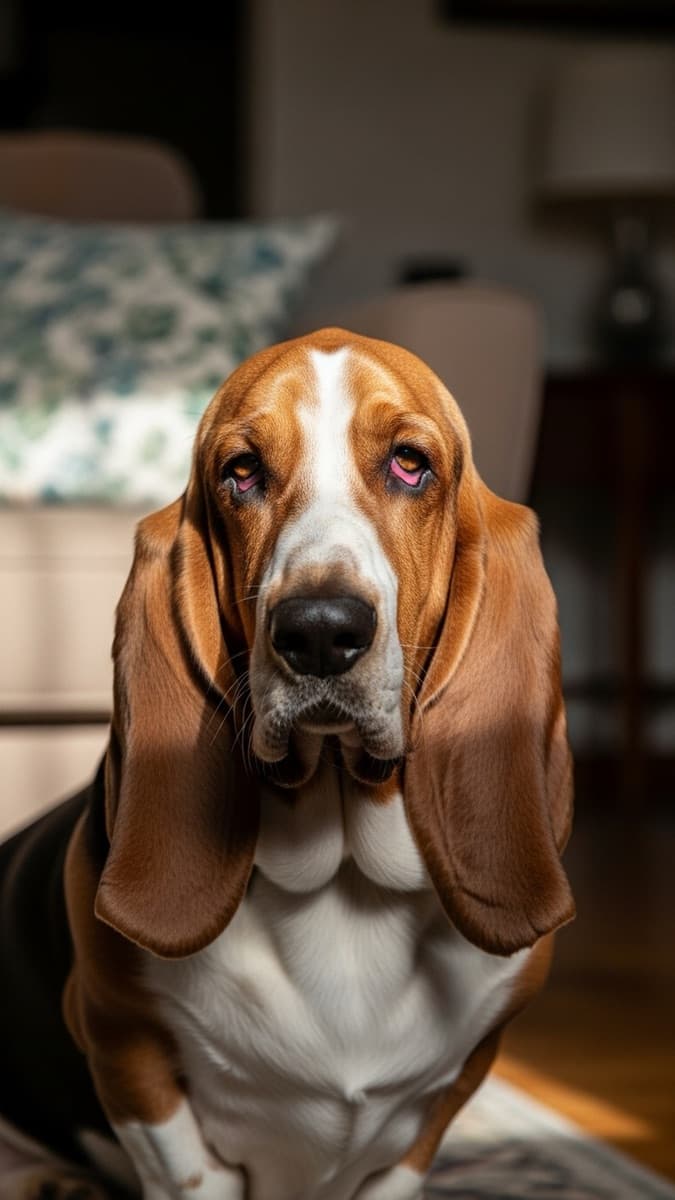
The Basset Hound is a large dog (20 to 29 kg) with short legs, an elongated body and low energy. The breed is chondrodystrophic — a genetic variation that shortens the limbs and lengthens the spine — with an elevated risk of intervertebral disc disease. The nutritional priority is strict weight control, which reduces the load on the spine.
In the current My Pet Magazine analysis, the best food for the Basset Hound is Purina Pro Plan Complete Essentials (Purina Pro Plan), with a technical score of 91.7/100 (🌟 Superior Quality), calculated with the My Pet Magazine IDNM/IPFI methodology across 49 dog foods reviewed in July 2026. See the full ranking ↓
What to weigh in food for the Basset Hound
Two fronts guide the choice of a Basset Hound's food: the spine, which is the breed's documented predisposition, and the low energy, which calls for a calibrated portion.
Weight control for the spine. The Basset Hound is a classic chondrodystrophic breed, with an elevated risk of intervertebral disc disease linked to a genetic variation that shortens the limbs and lengthens the body. Excess weight adds load to a spine that is already more vulnerable to injury. The ideal food controls calories per portion well, with fiber helping satiety without overdoing the caloric volume.
Low energy. The Basset Hound has low energy day to day — it is not a breed with high calorie expenditure. That reinforces the need for a measured portion: a food too caloric for the dog's real activity level quickly turns into extra weight, exactly the factor that weighs most on the breed's spine.
Criteria scored against the My Pet Magazine nutritional targets (protein, fat, calcium and caloric density ranges by size — see our methodology).
Breed profile and predispositions
The Basset Hound's most documented predisposition is chondrodystrophy, a genetic trait with a direct implication for spinal health.
Batcher et al. (2019), published in the journal Genes, identified that the insertion of a copy of the FGF4 gene on chromosome 12 (12-FGF4RG) is associated both with limb shortening and with an elevated risk of intervertebral disc disease (IVDD) in dogs — the study lists the Basset Hound among the breeds that carry that variation, with a disc herniation risk 5.5 to 15 times higher than in dogs without it.
The Orthopedic Foundation for Animals (OFA) lists the Basset Hound among the breeds affected by the FGF4 variation on chromosome 12 and offers a genetic test to size up individual risk — information that, added to weight control, helps owners reduce mechanical overload on the dog's spine.
Recommended foods for the Basset Hound
Ranked by IDNM/IPFI technical score across 49 dog foods — no manual product curation.
- 1
Purina Pro Plan Complete Essentials · Purina Pro Plan
91.7/100 - 2
Blue Buffalo Life Protection Formula Small Breed · Blue Buffalo
91.3/100 - 3
Blue Buffalo Life Protection Formula · Blue Buffalo
91.1/100 - 4
Wellness Complete Health Large Breed Adult · Wellness
90.1/100 - 5
Wellness Complete Health Small Breed · Wellness
90.1/100
Frequently asked questions about Basset Hound food
- Does the Basset Hound need a special food?
- He needs strict attention to weight. The Basset Hound is a chondrodystrophic breed — short legs and an elongated spine caused by a specific genetic variation — with an elevated risk of intervertebral disc disease. Every extra kilo becomes added load on a spine that is already the breed's weak point. A good food for a Basset Hound controls calories well.
- What is the Basset Hound's chondrodystrophy?
- It is a genetic trait caused by the insertion of an extra copy of the FGF4 gene on chromosome 12, which shortens the limbs and lengthens the body — the breed's classic shape. The same variation is associated with a higher risk of intervertebral disc disease (IVDD), the canine slipped disc.
- Why does weight control matter so much for the Basset Hound's spine?
- Because the Basset Hound's elongated spine already carries proportionally more load than that of a dog with regular proportions. Excess weight adds extra pressure on discs that the breed's genetics already leave more vulnerable to injury — which is why calorie control is a nutritional priority, not just a cosmetic one.
- Is there a test to know whether a Basset Hound has a higher IVDD risk?
- Yes. There is a genetic test for the FGF4 variation on chromosome 12 associated with intervertebral disc disease, offered by veterinary genetics laboratories. The result helps size up the dog's individual risk, but it does not replace weight control across life.
- Can food prevent the Basset Hound's disc problem?
- Not on its own — the cause is genetic, and food does not change that. What food controls is a risk factor that weighs heavily: body weight. Keeping the Basset Hound lean reduces mechanical overload on the spine, even though it does not eliminate the inherited risk.
Methodology
The food list on this page is ordered by My Pet Magazine's IDNM/IPFI technical score, which evaluates the nutritional quality and ingredient purity of every product available for large-breed dogs. The order is calculated automatically and updated whenever the catalog changes — no brand pays to appear, and there is no manual product selection.
The ranking on this page is a projection of the My Pet Magazine IDNM/IPFI scoring engine over the dog dataset, with no manual product curation. See the full methodology →
Want a recommendation tailored to your Basset Hound?