Why Does My Cat Put Its Butt in My Face? What It Means
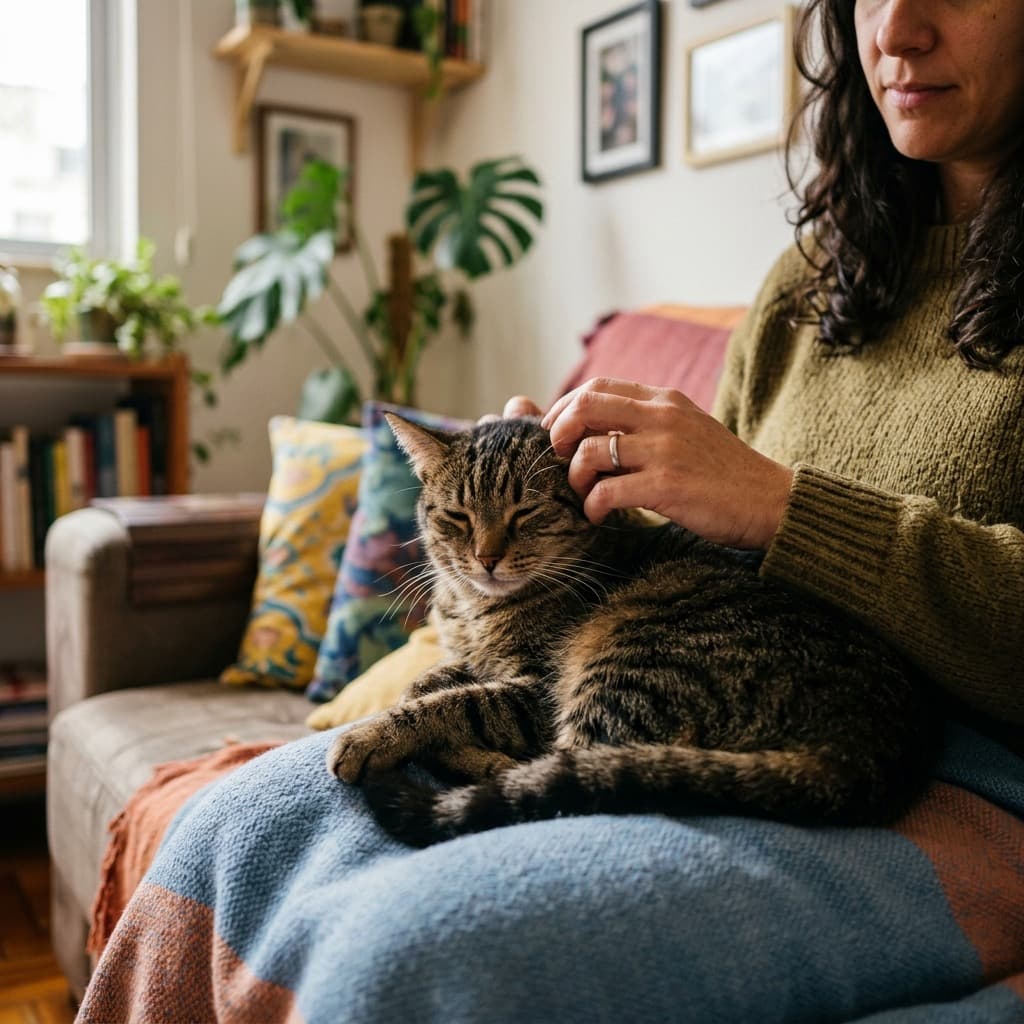
You're on the couch, the cat hops up, turns around and plants its rear end at face level. The almost automatic reaction is to push it away. It looks rude, it looks like provocation, and when you have guests it turns into an embarrassed joke.
It's the opposite. This is one of the most selective gestures a cat makes.
The feline greeting is olfactory
Cats don't introduce themselves face-first the way we do. They approach, sniff each other and move from the head to the rear, because that's where each individual's identity signature is — information about who it is, what state it's in and which group it belongs to.
When your cat lifts its rear and curves its tail into a question mark, it is offering you that introduction. The ASPCA describes the raised tail as a friendly signal in feline communication — the gesture comes along with a relaxed posture and a voluntary approach.
In cat language, it's an invitation, not rudeness.
To read the situation at home, use this table:
| What you see | How to read it | What to do |
|---|---|---|
| Raised rear, tail in a question mark, relaxed body | Greeting and sign of trust | Scratch the base of the tail, or leave it alone |
| New or tense cat in the house that doesn't offer the gesture | Doesn't feel safe yet | Wait, without forcing |
| Back that twitches or tail that lashes during petting | You've passed its limit | Stop right away |
| Suddenly stopped greeting and also stopped jumping | Possible lower back or hip pain | Observe and take to the veterinarian |
Why doesn't it do this with just anyone?
The detail that changes everything is the selectivity. A street cat doesn't offer its rear to a stranger. A tense cat doesn't offer it. A cat that has just arrived in a new home takes weeks to offer it.
The gesture assumes that it doesn't need to keep watch over you. Turning its back and, on top of that, exposing the region that carries its identity requires a level of security that the cat only gives to someone it has already classified as part of the group. If yours does this, you've been promoted.
How to respond without ruining it
- Don't push it away. Pushing interrupts a greeting midway, and most cats simply stop offering it.
- Scratch the base of the tail. That's the response it understands as acceptance. Many cats raise their rear even higher when you hit the right spot.
- Sniffing back is optional. You don't have to perform the olfactory part of the ritual. The cat reads acceptance from your posture and touch.
- Respect its limit. Some cats like the base of the tail and hate the area just above it; if it twitches its back or lashes its tail, stop.
What NOT to do
- Don't interpret it as territory marking. Marking with urine is a different behavior, with a different posture and a different context — confusing the two leads owners to punish a gesture of bonding.
- Don't force the gesture on a cat that's new to the house. It shows up when security is established; trying to speed it up with restraint produces the opposite effect.
- Don't ignore a sudden change. A cat that always greeted this way and suddenly stopped may have pain in the lower back or hips — it's worth watching whether it has also stopped jumping.
The gesture that looks like rudeness
That butt at face level isn't bad manners or provocation. It's the feline version of holding out a hand — and it only holds it out to those who have already made the short list.
Bonding in cats is built into the routine, and a good part of that routine runs through the food bowl.
Frequently asked questions
Why does my cat turn its butt toward me?
It's the feline greeting: among cats, the introduction is olfactory and ends at the rear, where the identity signature is. It offers this to those it considers part of its group.
Is a cat turning its back a sign of contempt?
No. Turning its back and relaxing near someone requires trust, because it means not needing to keep watch over that person. Contempt in a cat looks like avoiding the room, not sleeping with its back to you.
My cat does this with one person in the house and not with me. Why?
Cats classify bonds individually, and the preference usually follows whoever offers predictability — feeding time, tone of voice, respect for its space. It isn't permanent, but it changes slowly.
Can I pet it when it lifts its rear?
You can, and the base of the tail is the spot most cats accept best. If it twitches its back, lashes its tail or walks away, the invitation is over.
Does a cat that doesn't do this not like me?
That's not a safe conclusion. The repertoire of affection varies a lot: some cats show it with a slow blink, others by sleeping nearby, others by following you from room to room.
Picked by score from our overall cat ranking, not by the topic of this article. To get it right for your pet — age, weight, spayed or neutered — take the quiz and get a list made for them. A pet with a diagnosed condition needs a diet prescribed by a veterinarian.



