Why Does Your Cat Always Sit in Your Spot? It's Not Heat
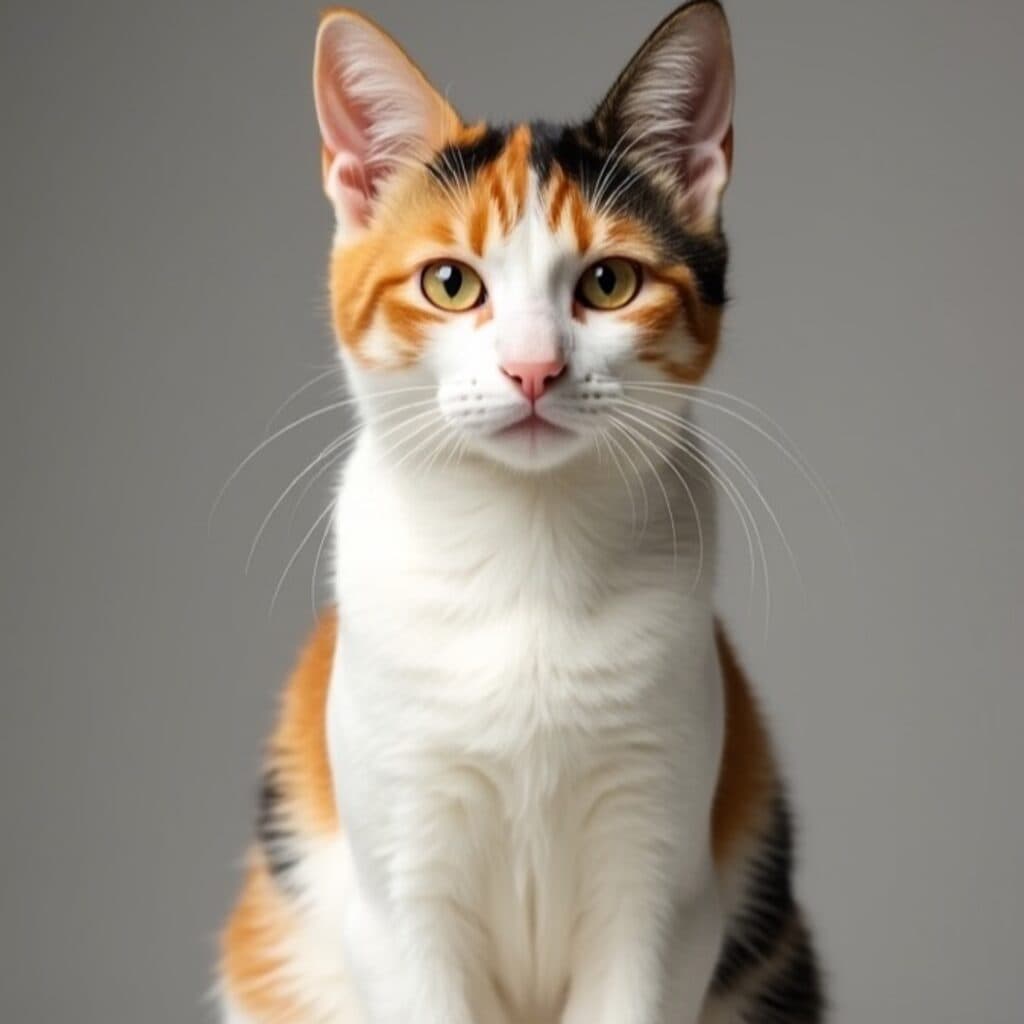
You get up to grab some water and, within three seconds, the cat is already lying exactly where you were. The most repeated explanation is "he wants the warmth." It makes sense — but it is half the truth. The warmth is only the trigger. It does not explain why the cat stays there long after it has cooled down.
Warmth attracts, but it is not the reason
The residual heat from your body does attract the cat's attention — it is warm, immediate, easy to feel. But if warmth were the whole explanation, the habit would end as soon as the spot cooled. It does not. The cat stays settled there for minutes, sometimes hours later. That alone shows that the trigger and the reason are different things.
What is the cat really looking for?
The spot where you stayed still or sat for hours is the place in the house with the highest concentration of your scent. That is what he is after — not the soft upholstery, not the new cushion. An ordinary sofa cannot compete with the spot that carries hours of your accumulated odor. That is why the cat ignores "more comfortable" corners and goes straight to your spot.
Blending the scent, not contesting territory
By lying there, the cat layers his own scent over yours. It is not a fight over space or an attempt to replace you. It is marking by proximity — the mechanism that merges the group's odors instead of contesting who is in charge of which piece of the house. The cat takes your spot to blend your scents. A cat that does this is saying, in his own way, that you belong to the same social group.
How can you tell whether it is heat or scent?
There is a simple test to settle the question at home: observe the behavior in summer. If it were only heat, the habit would disappear when the days warm up — the spot would stop being special, because there is plenty of warmth in any corner of the house. If the cat keeps occupying your spot even in hot weather, what is in charge is the scent, not the temperature.
| What you see | What it points to |
|---|---|
| The cat takes your spot only on cold days | Warmth is the draw |
| The cat keeps taking your spot in summer | Your scent is the draw |
| The cat suddenly becomes much clingier, with no obvious reason | A change worth a veterinary check |
When this behavior changes meaning
A cat occupying your spot is healthy routine. The warning sign is something else: an abrupt change — a cat that suddenly becomes much clingier, or changes his routine sharply, with no obvious explanation (a visitor, a move, a fight with another animal in the house). A sudden behavioral change can have a clinical cause behind it, so this kind of change calls for a veterinary evaluation, not just observation at home. Brazil's Federal Council of Veterinary Medicine (CFMV) follows the same principle: sudden behavior change deserves professional checking, not guesswork.
What NOT to do
- Do not shoo the cat out of the spot. He is not challenging you — he is reinforcing the bond. Pushing him out by force teaches only one thing: that this behavior gets a scolding, and he starts to avoid you instead of approaching.
- Do not confuse it with dominance. He does not want to "take your post." Treating it as a territorial dispute is applying a script that is not his.
- Do not ignore a sudden change in routine thinking it is just attitude. If the pattern changes out of nowhere, it is worth checking with the veterinarian.
If the annoyance is shed hair on the sofa or an allergy in someone in the household, the solution is not to keep the cat away — it is to put a washable blanket on the spot he has already chosen. He keeps the spot (and the bond); you wash the blanket instead of the whole upholstery.
Frequently asked questions
Why does my cat sit in the spot I just got up from?
Because that is where your scent is most concentrated. The warmth gets his attention first, but what makes him stay is the odor, not the temperature.
Is a cat that takes my spot showing dominance?
No. It is affiliative behavior — he is mixing his scent with yours, a sign that he considers you part of the same group, not a sign of a dispute.
Should I move the cat out of the spot when he does this?
It is not recommended. Shooing him corrects nothing — it only teaches the cat to avoid you. If the problem is hair or allergy, use a washable blanket on the spot.
How do I tell whether heat or scent is what attracts the cat?
Observe in summer. If the habit continues with the house hot, scent is in charge, not the search for warmth.
Is a suddenly very clingy cat a cause for concern?
It can be. An abrupt behavioral change — much clingier, a different routine out of nowhere — deserves a veterinary evaluation, because there may be a clinical cause behind it.
The cat that sits in your spot is not fighting over space — he is including you in his scent. Understanding this changes the way you read every gesture of your cat. If you want to go beyond behavior and get the foundation of his routine right too, discover the ideal food for your cat →
Picked by score from our overall cat ranking, not by the topic of this article. To get it right for your pet — age, weight, spayed or neutered — take the quiz and get a list made for them. A pet with a diagnosed condition needs a diet prescribed by a veterinarian.



