Why Do Cats Eat Grass? The 3 Real Reasons Behind the Habit
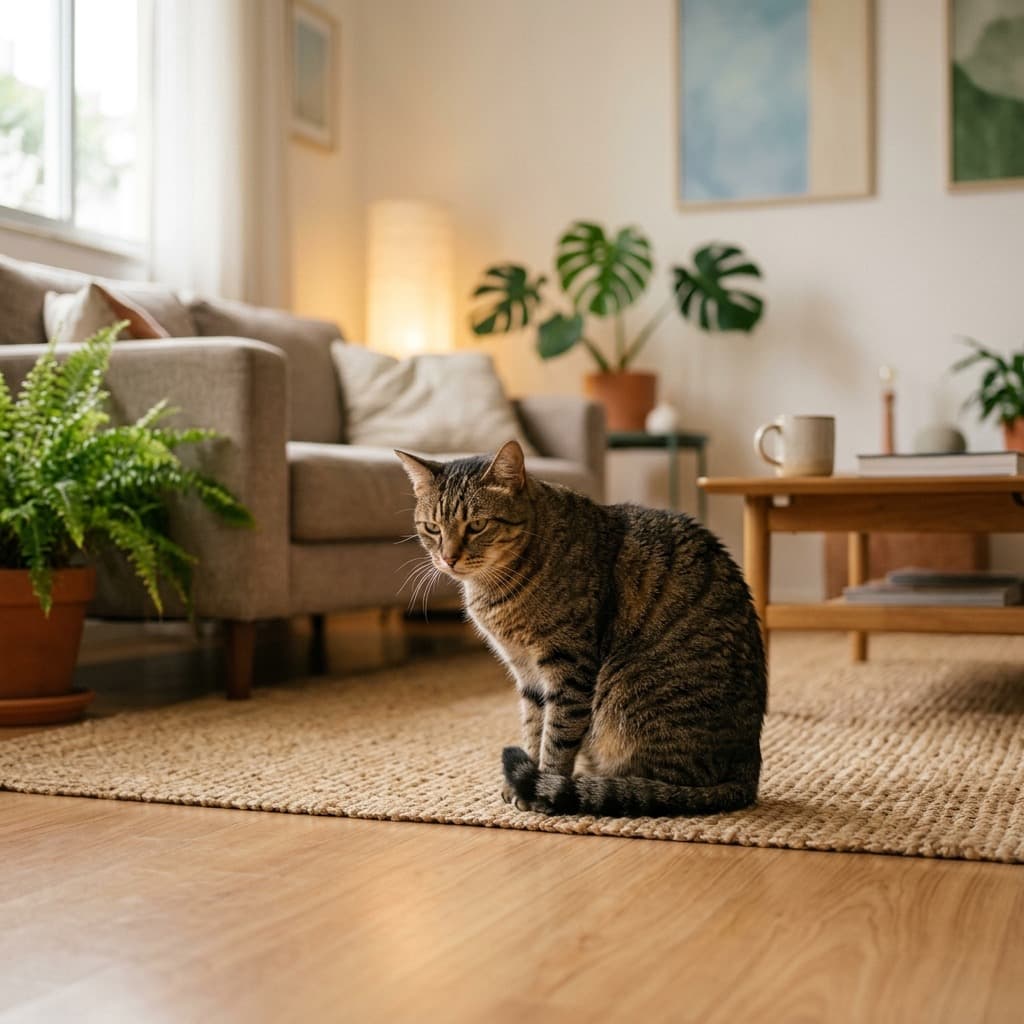
Every cat owner has seen the scene: he chews a blade of grass and, minutes later, throws it all up. The conclusion seems obvious — he just wants to vomit. But that explanation covers only a fraction of what is going on, and sometimes it isn't even the right one.
1. He may be trying to expel a hairball
A cat grooms itself many times a day, and much of the loose hair it swallows while grooming doesn't pass on its own through the digestive tract. The fiber in grass works as a mechanical push: it mildly irritates the stomach and helps the hairball come up and out through vomiting. Here is the detail that changes how you read the scene: the vomiting, when it happens, is a consequence of the mechanism — not the reason he went looking for grass.
Why does grass have folic acid that he can't make himself?
The cat is a strict carnivore, and a diet based almost entirely on meat can leave the supply of folic acid (vitamin B9) tight. This nutrient takes part in the production of hemoglobin, the protein that carries oxygen in the blood. According to the Cummings Veterinary Medical Center at Tufts University, one of the hypotheses under study is exactly this: the cat seeks in grass a nutrient that the everyday diet doesn't provide in sufficient amounts — with no relation to hairballs or feeling unwell.
2. The fiber missing from the diet can also be the cause
Dry food low in fiber may not provide enough bulk to keep intestinal transit regular. Chewing grass adds insoluble fiber that helps push hair and waste through the intestine — a cat that grazes a lot and never vomits may simply be making up for that gap in its own diet.
No single one of these explanations holds for every cat
| Explanation | What supports it | Typical sign in the cat |
|---|---|---|
| Expelling the hairball | grass fiber mildly irritates the stomach and helps hair swallowed during grooming come up and out | vomits right after grazing |
| Replenishing folic acid | a diet of almost only meat can leave vitamin B9 tight; hypothesis studied by the Cummings Veterinary Medical Center (Tufts) | grazes without vomiting and without signs of feeling unwell |
| Making up for lack of fiber | dry food low in fiber doesn't provide enough bulk for intestinal transit | grazes often and almost never vomits |
Here is the point the "he just wants to vomit" myth can't explain: the three hypotheses — hairball, folic acid, fiber — coexist in the literature, and none alone covers all observed cases. A cat that grooms a lot tends to lean toward the first; a cat on a low-fiber diet, toward the third. Medium confidence: science is still debating the relative weight of each mechanism, but agrees that reducing the habit to "he wants to make himself sick" is too much of a simplification.
When eating grass calls for the vet's attention
Grazing on grass now and then is normal behavior and calls for no alarm. The warning sign is something else: urgent and repeated searching for grass, vomit with blood, or lethargy after the episode. That combination falls outside the usual pattern and may indicate a bigger digestive problem — then a visit is worthwhile, not just watching at home.
What NOT to do
- Don't forbid access to grass thinking it is always a sign of a problem — in most cases it is normal behavior.
- Don't offer grass treated with pesticide or chemical garden fertilizer — real risk of poisoning.
- Don't ignore frequent vomiting or vomiting with blood, thinking "it's just the grass again" — that calls for veterinary evaluation.
Frequently asked questions
Is grass bad for cats?
Ordinary grass, with no chemical treatment, is not toxic to cats. The risk is in pesticide or garden fertilizer — that can cause poisoning, even in a small amount.
Is a cat that doesn't vomit after eating grass sick?
Not necessarily. Many cats chew and swallow grass without bringing anything back up — in those cases the habit is usually tied to folic acid or fiber, not to hairballs.
Do I need to grow special grass for my cat?
It isn't required, but wheatgrass sold in pet shops is a safe, controlled option, with no pesticide risk — safer than letting the cat graze in a chemically treated garden.
When does the habit become a warning sign?
If the search for grass becomes urgent and repeated, the vomit comes with blood, or the cat seems lethargic afterward, that falls outside the normal pattern and calls for veterinary evaluation.
The next time your cat comes back from the grass with a green mouth, the scene doesn't need to be cause for alarm — it is probably one of the three mechanisms above at work, not a cry for help. See whether your cat's current diet already covers fiber and essential nutrients →
Picked by score from our overall cat ranking, not by the topic of this article. To get it right for your pet — age, weight, spayed or neutered — take the quiz and get a list made for them. A pet with a diagnosed condition needs a diet prescribed by a veterinarian.



