Cat Scratching the Couch: Instinct, Not Spite or Tantrum
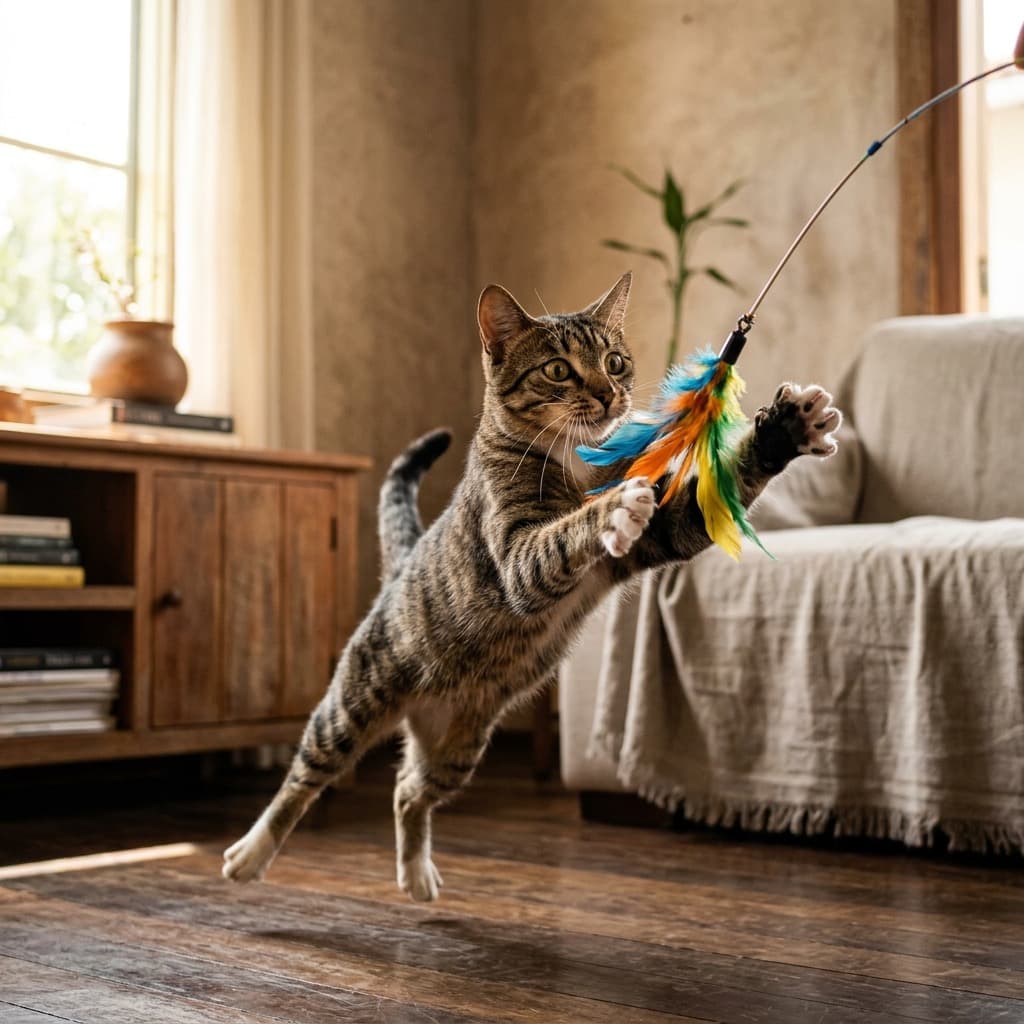
A cat that scratches the couch is not throwing a tantrum — it is performing three simultaneous biological functions: marking territory with glands in the paws, maintaining the claws (removing worn outer layers) and deep muscle stretching. According to the joint guidelines of the American Association of Feline Practitioners (AAFP) and the International Society of Feline Medicine (ISFM) on feline environmental needs, scratch marking is normal, innate behavior that cannot be eliminated — only redirected to appropriate surfaces. The marked couch is not a challenge: it is the absence of a better-placed alternative.
The couch is marked, the claws have gone through the fabric, and the natural reaction is to scold. But the cat that scratches is not defying anyone — it is doing exactly what its biology asks for.
How do you stop a cat from scratching the couch without hurting its instinct?
Why scratching is a biological need
Scratching serves three simultaneous functions that no cat can simply switch off. The first is territory marking: when the claws make contact with a surface, the glands in the paws deposit an odor signal imperceptible to humans but very clear to other animals. The second is claw maintenance — friction removes the worn outer layers, keeping the edge sharp. The third is deep body stretching, with an extension of the shoulders and spine that is part of the animal's physical routine.
| Function of scratching | What happens |
|---|---|
| Territory marking | Glands in the paws release an odor imperceptible to humans, clear to other animals |
| Claw maintenance | Friction removes the worn outer layers, keeping the edge sharp |
| Deep stretching | Extension of the shoulders and spine, part of the cat's physical routine |
When the cat scratches the corner of the couch, it is not angry or testing limits. It is performing body maintenance and leaving a mark of presence in the environment it considers its own.
What punishment really teaches
Yelling or clapping to startle may seem effective in the moment: the cat stops and runs off. But what happened there was not learning — it was association with fear. The need to scratch remains intact; what changed was the context in which the cat perceives it as safe.
The most common result is predictable: the animal starts scratching in the same places when the owner is not present, or finds other surfaces out of sight. Repeated punishment also gradually damages the bond, because the cat begins to associate the owner's presence with threatening situations.
It is not a tantrum. It is not a "vice". It is an instinct redirected to where it seems safest.
1. How to redirect the behavior
The logic is simple: since the cat will scratch anyway, the goal is to offer a surface better than the couch.
Scratching post placement is the most overlooked factor. A post kept in the corner of the bedroom will not compete with the living room couch. Put it exactly where the cat already scratches — next to or in front of the preferred area. In the first days, that physical proximity is what makes the difference.
Height and stability also matter. Cats stretch out when they scratch; a post that is too short does not allow that movement and will be ignored. Models that wobble when used get the same rejection — the animal needs to feel firm resistance.
2. How to reinforce correct use
Redirecting is not enough without positive reinforcement. When the cat uses the post, praise immediately — an upbeat voice, a pet or a treat right after the behavior. The reinforcement must be immediate for the cat to connect the action to the result.
Consistency in the first weeks is what determines whether the habit takes hold. There is no need to train for hours; it is enough to react in a predictable way every time the correct behavior happens.
What NOT to do
- Use a water spray or noise to punish scratching — the cat learns to avoid the post in your presence, not to use it.
- Hide the scratching post in a discreet spot thinking it "will draw attention" — inadequate location is the most common cause of rejection.
- Remove the claws as a permanent solution — the procedure is invasive, does not solve the need for the movement, and the AAFP formally opposes elective declawing, recommending non-surgical alternatives.
Frequently asked questions
Why does my cat scratch the couch right after waking up?
Post-sleep scratching combines two needs: the stretch the cat does on waking and territory marking right as it resumes activity. It is one of the moments of highest likelihood of use — a post placed near the resting spot solves this situation well.
Does a neutered cat also need a scratching post?
Yes. Neutering reduces behaviors tied to reproduction, but scratching originates in instincts far older than those. Territorial marking and claw maintenance remain present regardless of neutering.
Is there a scratching post material that works better?
It depends on the individual cat's preference. The most accepted materials are sisal, cardboard and carpet. If the animal rejects a model, changing the material usually solves it — it is worth observing which texture it already seeks out spontaneously.
How long does it take for a cat to learn to use the scratching post?
With a well-placed post and consistent positive reinforcement, most cats begin to prefer the new surface within three to seven days. Older cats may take a little longer, but respond to the same method.
Is it normal for a cat to scratch more during periods of change or stress?
Yes. Scratching also serves an emotional self-regulation function — in situations such as a change of environment, the arrival of another animal or a change in routine, the behavior may increase temporarily. This is expected and decreases as the animal adapts.
Scratching is not a temperament problem: it is a characteristic of the species. When the owner stops interpreting the behavior as a challenge and starts offering a suitable alternative, the couch stops being the target.
Picked by score from our overall cat ranking, not by the topic of this article. To get it right for your pet — age, weight, spayed or neutered — take the quiz and get a list made for them. A pet with a diagnosed condition needs a diet prescribed by a veterinarian.



