Turmeric and Glucosamine in Cat Food: What Science Shows
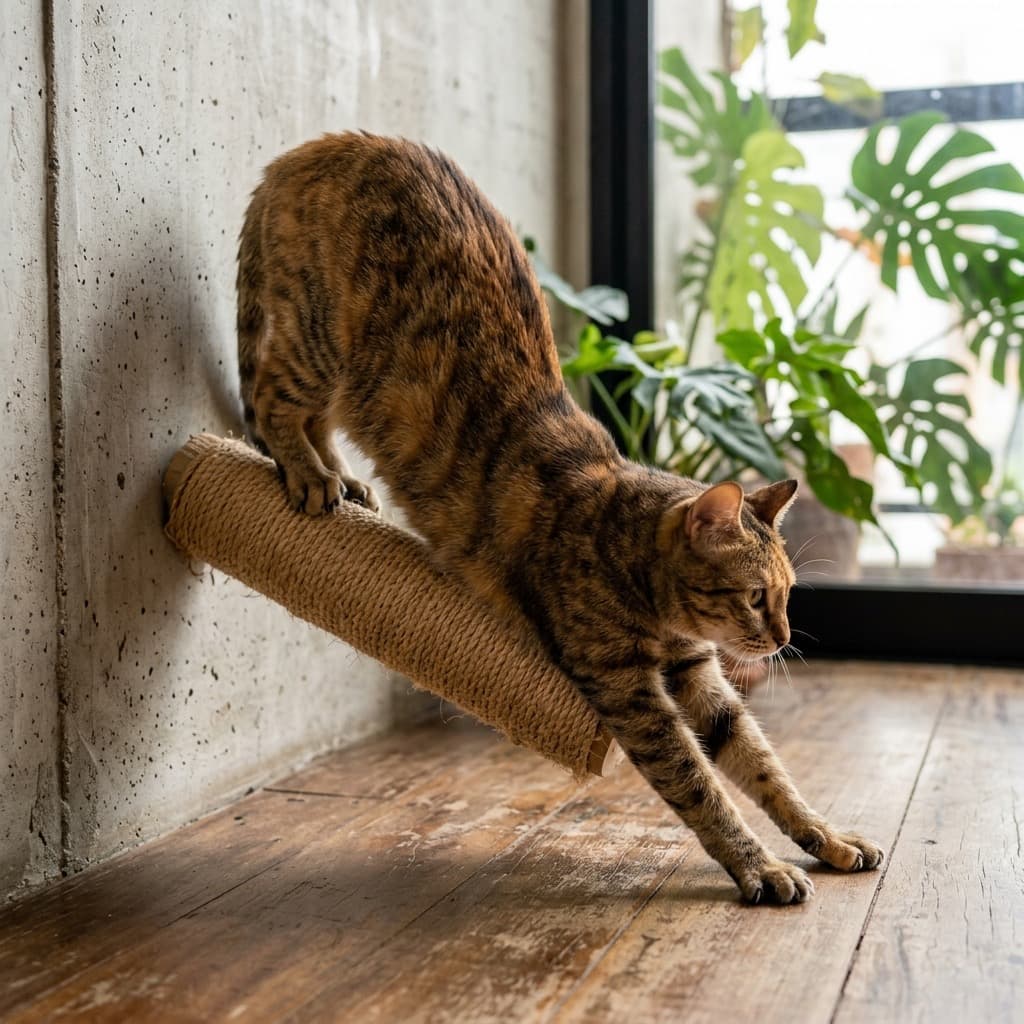
Foods with turmeric and glucosamine promise joint support for cats, but the real scientific evidence is more modest — and, in the case of turmeric, calls for caution. A randomized, double-blind, placebo-controlled clinical trial published in 2022 in the Journal of Feline Medicine and Surgery (Cunningham et al., via PubMed/NCBI) tested glucosamine/chondroitin in 59 cats with degenerative joint disease for 6 weeks and found no effect superior to placebo on pain or mobility. Turmeric, in turn, has a specific biological limitation: cats have a reduced capacity for hepatic glucuronidation — the pathway that processes curcuminoids — which narrows the safety margin and makes the dose a critical factor, not only for efficacy but for safety (tolerance study in Animals/MDPI, 2026).
What real studies show about glucosamine in cats
Recent systematic reviews on supplements and diets for osteoarthritis in dogs and cats point to an uncomfortable conclusion for anyone already buying "joint" food: good-quality evidence on glucosamine and chondroitin in felines is scarce, and the available meta-analyses — such as the 2022 systematic review indexed in PMC/NCBI — find no consistent analgesic effect. The most cited study in the field — the clinical trial by Cunningham and colleagues (2022), published in the Journal of Feline Medicine and Surgery — followed 59 cats with joint pain for 6 weeks, comparing supplement with placebo, and observed a strong placebo effect, with no real statistical difference in favor of the supplement.
This does not mean glucosamine is good for nothing — it means the promise printed on the label of many foods ("proven joint support") runs ahead of what current science supports. Nutrients with more consistent evidence for OA in cats and dogs, according to the same reviews, are omega-3 fatty acids (EPA/DHA), which show a more reproducible anti-inflammatory effect across studies.
Why turmeric in cats calls for extra care
Turmeric (Curcuma longa) is often advertised as a natural anti-inflammatory because it blocks inflammatory pathways at the cellular level. The problem, in cats, is not the principle — it is the metabolism. Felines have a naturally low capacity for hepatic glucuronidation, the biochemical route the liver uses to metabolize and eliminate curcuminoids. That limitation is the same reason cats are more sensitive to several compounds that dogs and humans tolerate well.
A tolerance study published in 2026 (Animals, MDPI) tested turmeric extract in healthy adult cats and, in the absence of sufficient feeding studies in felines, extrapolated a conservative safety limit from toxicological data in other species — something like 0.5 mg of extract per kg of body weight per day for a typical cat. In other words: the safe dose is still being established by veterinary science, and products that do not declare the exact curcuminoid concentration on the label make it impossible to calculate whether they are inside or outside that margin.
What this changes when choosing a food
| Ingredient | Scientific evidence | Risk/caution |
|---|---|---|
| Turmeric | Theoretical anti-inflammatory action; no robust clinical trial in cats | Liver risk at high dose — low feline glucuronidation |
| Glucosamine/chondroitin | No effect superior to placebo (Cunningham et al., 2022, 59 cats, 6 weeks) | Low risk, but efficacy not proven |
| Omega-3 (EPA/DHA) | Most consistent evidence for joint anti-inflammatory effect | No relevant risk reported in the reviews |
- There is no "the more, the better" with turmeric in cats. Unlike glucosamine (which is low-risk even in excess), curcuminoids at a high dose can overload a liver with a reduced capacity to metabolize them.
- A label without a declared concentration is a label that does not allow you to assess safety or efficacy. If the food lists only "turmeric" or "turmeric extract" without stating mg/kg, there is no way to know whether the dose is therapeutic or even safely low.
- Glucosamine alone has no strong efficacy support in cats, according to the most recent clinical evidence. That does not make it dangerous — it only reduces the certainty that it solves joint pain on its own.
- Omega-3 (EPA/DHA) appears in the reviews with more consistent evidence for joint anti-inflammatory support in felines than the turmeric + glucosamine combination.
Is food with turmeric safe for my cat?
It depends on the dose and the form of the ingredient — most labels state neither. Since cats metabolize curcuminoids more slowly than other species, the ideal is to prefer veterinary products with a declared concentration and to talk to your veterinarian before supplementing, especially in cats with a history of liver disease.
What NOT to do
- Don't give your cat kitchen turmeric or human capsules. The curcuminoid concentration is unknown and the product has not been evaluated for the feline metabolic pathway.
- Don't assume "joint support" on the label means proven efficacy. The current scientific evidence for glucosamine/chondroitin in cats is weak, according to recent systematic reviews.
- Don't ignore signs of liver discomfort (loss of appetite, lethargy, jaundice) if the cat takes a turmeric supplement — see the veterinarian.
- Don't replace a prescribed anti-inflammatory with a natural supplement. None of the ingredients discussed here replaces veterinary treatment for joint pain that has already been diagnosed.
Frequently asked questions
Is there a study proving that turmeric and glucosamine together improve a cat's joints?
No controlled clinical study was found that specifically tests the turmeric + glucosamine combination in cats. The most robust clinical trial available (Cunningham et al., 2022, Journal of Feline Medicine and Surgery) tested glucosamine/chondroitin alone in 59 cats for 6 weeks and found no effect superior to placebo.
Is turmeric bad for cats?
At a high dose or without concentration control, yes — it can pose a risk, because the cat's liver has a reduced capacity to metabolize curcuminoids (low glucuronidation). A 2026 tolerance study established conservative safety limits for turmeric extract in healthy cats. Formulated veterinary products with a declared dosage are the safest option.
Is glucosamine for cats scientifically proven?
The evidence is weaker than the marketing suggests. Recent systematic reviews on supplements for osteoarthritis in dogs and cats find no consistent analgesic effect for glucosamine/chondroitin, while omega-3 shows a more reproducible result across studies.
Can I give my cat a human glucosamine supplement?
It is not recommended without veterinary guidance. Human supplements contain excipients (preservatives, sweeteners, colorings) that have not been evaluated for cats, and the dosage is calibrated for human weight, not feline. Use only veterinary products formulated for the species.
What has more scientific support for a cat's joints: turmeric, glucosamine or omega-3?
Among the three, omega-3 (EPA/DHA) is the one that appears with the most consistent evidence in the most recent systematic reviews on osteoarthritis in felines. That does not rule out the other two, but it indicates where current science is most certain.
A label that says "joint support" is not a synonym for proven efficacy — and, in the case of turmeric, it is not an automatic synonym for safety either. Before paying more for these ingredients, it is worth checking whether the food declares the exact dose and, if you have doubts about a cat with a real joint problem, talking to your veterinarian about alternatives with stronger support, such as omega-3.
See the ranking of foods with verified joint support →, or compare the scientific evidence and the protein, fat and carbohydrates between two foods →.
Want to understand the term Glucosamine? Check the Glossary.
Picked by score from our overall cat ranking, not by the topic of this article. To get it right for your pet — age, weight, spayed or neutered — take the quiz and get a list made for them. A pet with a diagnosed condition needs a diet prescribed by a veterinarian.



