Toxic Plants for Cats: The 7 Most Dangerous at Home
Notice: this content is for information only and does not replace a visit to the veterinarian. If your pet has symptoms, see a veterinarian before acting on this article.
A lot of people assume a plant dangerous to cats has to be something exotic and hard to find indoors. It is not like that: the lily, common in bouquets and gift arrangements, is among the most lethal plants that exist for cats — and the effect can show up within hours.
7 plants every cat owner should know
The seven plants with the highest documented risk to cats, per the ASPCA, are the lily, dumb cane (dieffenbachia), philodendron, oleander, azalea, tulip and daffodil. The lily stands alone as the most dangerous: the entire plant, including the vase water, is toxic. The other six affect a cat's body in different ways — from the mouth to the heart — but none carries the same acute risk to the kidneys.
The lily is the most dangerous, and the most common indoors
The lily (genus Lilium) usually arrives at home inside a bouquet, with no warning label. But the entire plant is toxic — leaf, flower, pollen, and even the water it sits in. A small piece of leaf is enough to trigger acute kidney failure, and the effect tends to appear fast, within hours. If your cat can reach a vase at home, checking whether it holds lilies comes before anything else.
Why are these plants so harmful to cats?
Each one hits a different system. Dumb cane and philodendron carry calcium oxalate crystals in their sap, which irritate the mouth immediately — the cat drools heavily and the mouth and throat can swell. Oleander acts directly on the heart, potentially causing arrhythmia and collapse. Azalea affects the nervous system and the stomach, ranging from vomiting to seizures depending on the amount. Tulips and daffodils keep their main toxin in the bulb, not the flower — the risk rises if the cat digs in the pot.
| Plant | What it does to a cat | Most dangerous part |
|---|---|---|
| Lily (Lilium) | Acute kidney failure within hours | The whole plant — leaf, flower, pollen and vase water |
| Dumb cane (dieffenbachia) | Immediate mouth irritation, heavy drooling, swollen mouth and throat | Sap (calcium oxalate crystals) |
| Philodendron | Immediate mouth irritation, heavy drooling, swollen mouth and throat | Sap (calcium oxalate crystals) |
| Oleander | Direct action on the heart — arrhythmia and collapse | The whole plant |
| Azalea | Nervous system and stomach effects — vomiting through seizures | The whole plant |
| Tulip | Digestive and systemic poisoning | Bulb (not the flower) |
| Daffodil | Digestive and systemic poisoning | Bulb (not the flower) |
Go to the vet as soon as you suspect contact
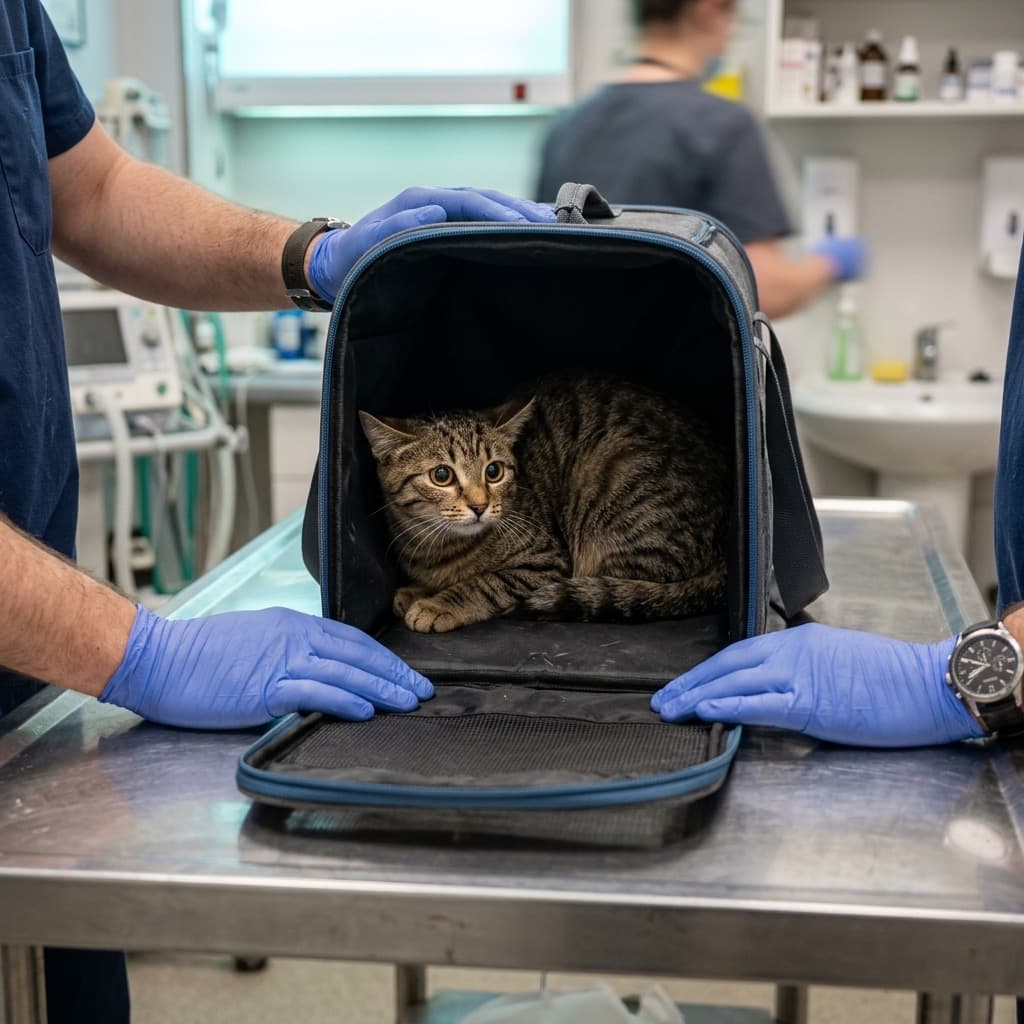
Do not wait for symptoms — with lilies especially, damage can already be underway before the cat shows any sign. Get to a veterinarian immediately, and if possible bring a piece of the plant or its name to speed up the diagnosis. Noting the approximate time of contact helps the vet decide on treatment faster.
How do you make your home safer for a cat?
Before buying a new plant, check its scientific name against a reliable list, because common names change from region to region. For the plants already in the house, move them out of reach or swap them for a safe option such as African violet or areca palm. Gift bouquets deserve the same care — a large share of lily poisoning cases starts exactly there.
What NOT to do
- Do not wait for the cat to "look normal" before deciding to go to the vet — with lilies, that symptom-free window is precisely the most dangerous part.
- Do not try to induce vomiting or give home remedies on your own — it can worsen the situation depending on the plant and the amount.
- Do not trust a common name alone to judge whether a plant is safe — the same name sometimes covers different species from one region to another.
Frequently asked questions
Why is the lily so much more dangerous than the other plants on this list?
Because its effect targets the kidneys directly: even a small amount of leaf, pollen or vase water can lead to acute kidney failure within hours. The other plants on the list cause irritation, cardiac or digestive problems, but none has that fast, severe kidney effect.
My cat only sniffed the plant without chewing — is there still a risk?
With lilies, yes — pollen that sticks to the coat and gets licked off later is enough, and the vase water itself is toxic. With the other plants on the list, the greater risk is chewing or swallowing leaf, flower or bulb, so sniffing alone is usually safer.
Can I tell whether my cat was poisoned just by watching its behavior?
You cannot rely on that alone. With lilies, a cat may look fine for hours before the first signs of kidney failure appear, which is why any suspected contact calls for a veterinarian, even with no symptoms at all.
Is a dried or wilted plant still a risk?
It still is — the toxin does not disappear when the leaf wilts. Only an artificial plant, plastic or fabric, is safe in that sense, though it can still cause an obstruction if the cat chews and swallows pieces.
Is there any common houseplant that is safe for cats?
Several are, such as African violet and areca palm. But the list of safe plants varies a lot between lookalike species — before bringing a new plant home, the safest move is to check its scientific name against a reliable toxicity list.
None of these seven plants announces that it is dangerous — they arrive as a bouquet, a gift or a cutting from the market, with no risk label at all. Knowing the right names and the first signs is still the simplest defense there is.
Picked by score from our overall cat ranking, not by the topic of this article. To get it right for your pet — age, weight, spayed or neutered — take the quiz and get a list made for them. A pet with a diagnosed condition needs a diet prescribed by a veterinarian.



