Happy Cat Signs: 7 Ways to Tell Your Cat Really Likes You
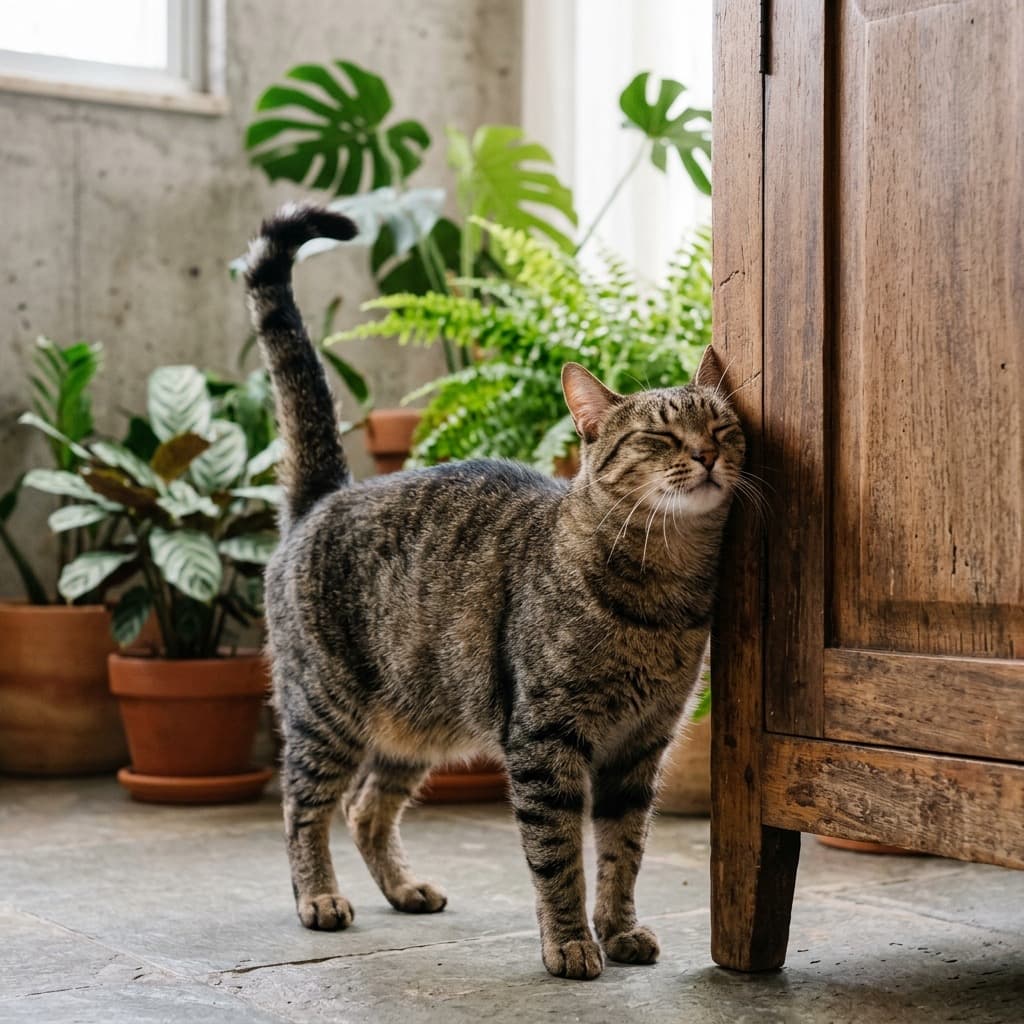
A happy cat doesn't bark or wag its tail, but its body language is clear to anyone who learns to read it: the study by Humphrey and McComb, from the University of Sussex, published in Scientific Reports and indexed in PMC/NCBI, showed that the voluntary slow blink is recognized by cats as a signal of trust and affection coming from humans, and that returning the gesture increases the animal's closeness. Other indicators of well-being include an upright tail in greeting and actively choosing to be near the owner — all signs of trust, not accidents. Recognizing them changes how you live with your cat and lets you quickly notice when something in its mood or health drifts from normal.
There is a moment almost every cat owner has lived: the cat is lying a few feet away, glances at you sideways, slowly closes its eyes and goes back to dozing. It looks like disinterest. It is exactly the opposite. That slow look is one of the clearest declarations of affection a cat can make — and most people miss it every day.
How can you tell if your cat is happy and trusts you?
Body language gives the game away
A cat speaks far more with its body than with its voice. Three signs say "I'm relaxed around you":
- Slow blinking: when it slowly closes and opens its eyes looking at you, it is signaling trust. It's the closest thing to an "I like you" it can manage. Slow-blink back.
- Tail straight up with a curved tip: a vertical tail with the tip bent is an affectionate greeting reserved for someone it considers part of the home.
- Showing the belly: the belly is a cat's most vulnerable area. Exposing it near you is pure trust. Note: this is not an invitation to rub the belly — many cats react badly to that. It is a sign to be read, not a button to press.
Why doesn't purring always mean what you think?
Purring is the most famous sign and the most misread. Most of the time it shows up in a comfort context: the cat sees you arrive, sits nearby and starts to purr. That, yes, is contentment.
But it's worth knowing: purring is also a self-regulation mechanism. Cats purr under stress, pain or illness to calm themselves. That's why context matters so much. Purring lying relaxed beside you is one thing; purring curled up, hidden and not eating is something quite different — and deserves attention.
The habits that reveal a well-adjusted cat
Some signs aren't in a single gesture but in the routine:
- Kneading with the paws ("making biscuits"): it's a leftover from kittenhood, tied to nursing. When it does this on your lap or on a blanket near you, it associates your presence with safety.
- Bringing toys to you: more than asking to play, it is including you in its group. It's social behavior, not just fun.
- Choosing to sleep next to you: a cat sleeps where it feels most protected. If the spot it picks is near you, that is perhaps the highest vote of confidence it gives.
| Sign | What it means |
|---|---|
| Slow blinking | Trust and affection — the closest thing to an "I like you" |
| Tail up with a curved tip | Affectionate greeting reserved for someone it considers part of the home |
| Showing the belly | Pure trust — not an invitation to touch |
| Purring in a comfort context | Contentment (but also self-regulation under stress) |
| Kneading with the paws ("biscuits") | Leftover from kittenhood, tied to safety |
| Bringing toys to you | Social behavior — including you in its group |
| Choosing to sleep next to you | The highest vote of confidence it gives |
Notice that none of these signs is dramatic. Feline well-being lives in consistency: a cat that is doing well repeats these gestures calmly, day after day.
What NOT to do
- Don't force petting on an exposed belly. Trust shown is not permission to touch. Forcing it breaks exactly the trust the gesture was signaling.
- Don't ignore a sudden change in routine. A cat that always slept next to you and disappears, or stops kneading or purring, may be feeling pain or stress — it didn't "turn grumpy."
- Don't treat silence as a lack of love. An affectionate cat is discreet. Demanding the noisy displays of a dog from it is reading the animal wrong.
When care starts before affection
That slow look and the biscuits on the blanket are the cat saying, in its own way, that it feels at home with you. That well-being rests on the basics done well — and the right food for its life stage and profile is a big part of it. A properly nourished cat has more energy, a steady mood and the willingness to make these gestures of trust.
Frequently asked questions
Why does my cat blink slowly at me?
It's a sign of trust and affection recognized by behavior studies. The slow blink reduces facial tension and replaces physical contact as a way of communicating safety — a tense or alert cat keeps a fixed gaze without blinking. It is telling you it feels safe near you. Slow-blink back to respond.
Does a cat that shows its belly want a belly rub?
Not necessarily. Showing the belly is trust, but most cats don't like being touched there. Appreciate the gesture without forcing contact.
Does purring always mean the cat is happy?
No. Most of the time, yes, it is comfort. But cats also purr to calm themselves under pain or stress. Look at the whole context: posture, appetite and routine.
My cat brings me toys — what does it mean?
It's social behavior: it is including you in its group. A sign of bonding, not boredom.
Picked by score from our overall cat ranking, not by the topic of this article. To get it right for your pet — age, weight, spayed or neutered — take the quiz and get a list made for them. A pet with a diagnosed condition needs a diet prescribed by a veterinarian.



