Cat With a Sensitive Stomach: What to Read on the Food Label
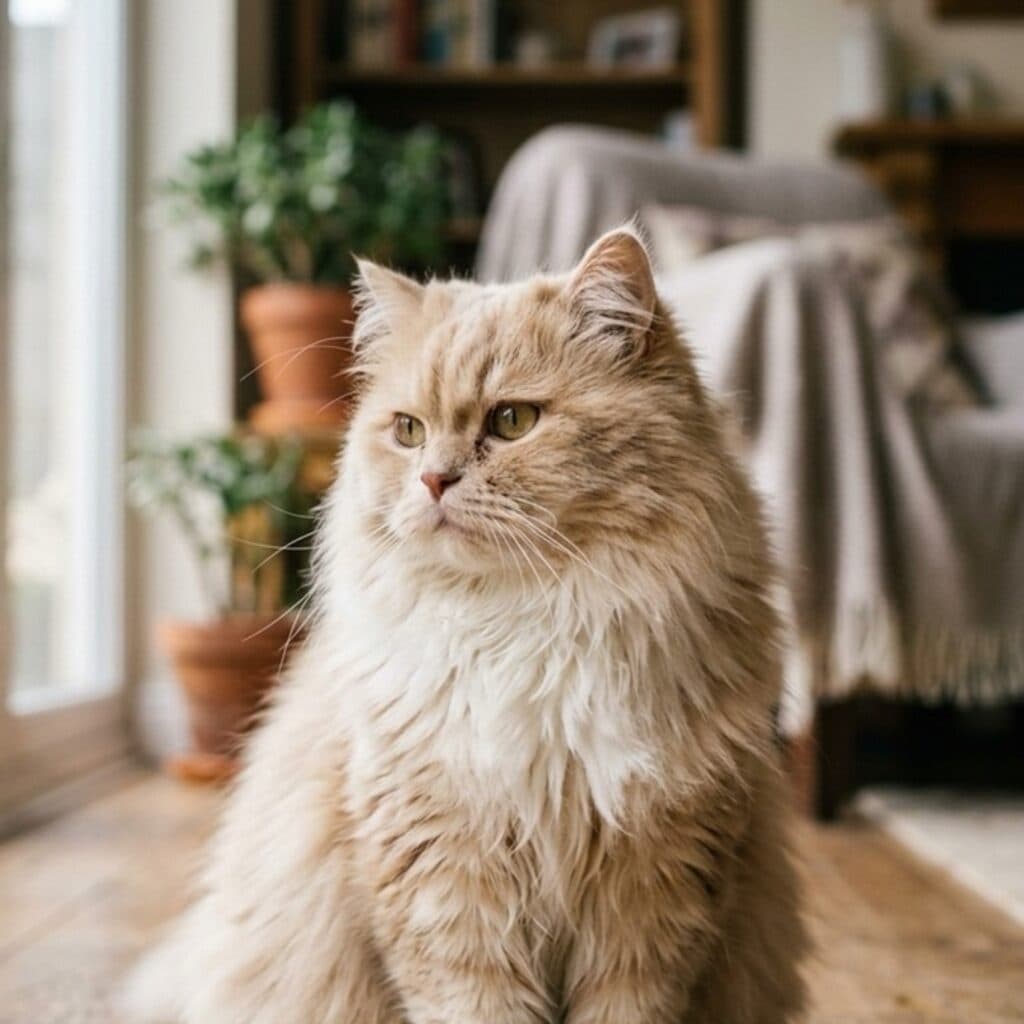
For cats with a sensitive stomach, four label criteria decide whether a food will cause or prevent vomiting and discomfort: a named protein as the first ingredient (e.g., "mechanically separated chicken meat," not a generic "by-product meal"), a minimum of 32% crude protein on a dry-matter basis — above the 26% minimum set by the AAFCO Cat Food Nutrient Profile for adult cat maintenance —, fat between 10% and 15% (ether extract) and fiber between 3% and 5%. Some foods use protein ingredients that vary from batch to batch or exceed 6% fiber — which triggers a digestive reaction even without a change of brand. This article translates each of these technical criteria into practical language you can apply at the store, by looking at the back of the package.
| Label criterion | Ideal range | Risk outside the range |
|---|---|---|
| First ingredient | Named protein (species declared) | Generic meal: composition varies between batches |
| Crude protein | Minimum 32% (dry matter) | Below the AAFCO minimum (26%) compromises maintenance |
| Fat (ether extract) | 10% to 15% | Above 16%: soft stools; below 10%: energy-poor food |
| Fiber | 3% to 5% | Above 6%: bulky stools, poor absorption |
What on the food label causes vomiting in a cat with a sensitive stomach?
The main culprit is not the amount of protein — it is the type of ingredient used to deliver it. Generic by-product meals ("poultry by-product meal," with no species or organ specified) vary in composition between batches: one month the cat tolerates it, the next month, with a different batch, it starts vomiting. A sensitive stomach needs ingredient consistency.
The problem starts with protein — but not the way you imagine
Most owners think "quality protein" solves it. It solves part of it. But what destabilizes a sensitive stomach is not only the amount of protein — it is the type of ingredient used to deliver that protein.
Generic by-product meals ("poultry by-product meal," with no organ or species specified), meat and bone meals of mixed origin, unidentified by-products: all of these cause digestive variation between batches. One month the cat tolerates it. The next month, with a different batch, it starts vomiting.
A sensitive stomach needs ingredient consistency. If the first item on the list changes supplier or composition between purchases, the digestive system cannot adapt — and it reacts.
1. First ingredient: named fresh meat or a specific organ meal
Look for on the label:
- Mechanically separated chicken meat (or salmon, or turkey — species declared)
- Chicken liver meal (a specific organ, not generic "by-products")
- Salmon pieces (minimum percentage declared, e.g., "13%")
Avoid:
- "Poultry by-product meal" (generic — it could be liver, kidney, spleen, varying between batches)
- "Meat and bone meal" (imprecise origin, low digestibility)
- "Chicken by-products" (vague naming — a sign of variable raw material)
Why: a cat with a sensitive stomach reacts to minimal changes in the amino acid profile. When the ingredient is generic, the composition fluctuates — and the digestive system loses its reference point. You will not know whether the intolerance is to the food or to the specific batch.
2. Protein percentage: minimum 32%, but the number alone is not enough
An adult cat needs at least 32% crude protein (dry matter) to maintain muscle mass and kidney function. Neutered cats, above 35%. But that number loses meaning if the source is hard to digest.
What really matters: protein + declared digestibility. Some premium foods report protein digestibility on their website (not on the label) — above 80% is good. Below 75%, you are paying for an ingredient the cat expels instead of absorbing.
Foods with salmon meal or dehydrated egg among the first three ingredients tend to have high digestibility. Generic by-product meal: irregular digestibility.
3. Fat: between 10% and 15% — no more, no less
Fat above 16% in a sensitive cat can cause soft stools or intermittent diarrhea. Below 10%, the food is energy-poor — the cat eats more to compensate, overloads the stomach, and the result is the same: digestive discomfort.
The sweet spot: 10% to 15% ether extract (the technical name for fat on the label). If the food has fish oil or poultry oil among the first five ingredients, even better: they are omega-3 sources that reduce intestinal inflammation.
4. Fiber: 3% to 5% — never above 6%
Excess fiber (above 6%) causes bulky, frequent stools, speeds up intestinal transit and reduces nutrient absorption. A sensitive cat already has a reactive intestinal lining — too much fiber makes it worse.
Adequate fiber: 3% to 5% crude fiber. Good sources: beet pulp, pea fiber, psyllium (in therapeutic foods). Avoid: soybean hulls, powdered cellulose (filler, with no real nutritional value).
5. What must NOT be on the label
Three red flags for a sensitive stomach:
- Artificial dyes (tartrazine, sunset yellow, red 40): they irritate the intestinal lining. Cats do not see color — dye is cosmetic for the owner, a risk for the pet.
- BHA / BHT (artificial preservatives): foods with natural preservation (tocopherols, rosemary) are safer for a reactive lining.
- Whole corn as the second ingredient: corn is not an absolute villain, but when it appears second (before animal protein), the formula is inverted — carbohydrate became the base, protein became the supplement. A sensitive cat reacts badly to excess starch.
6. Prebiotics and probiotics: they help, but they do not rescue a bad formula
MOS (mannan oligosaccharides), FOS (fructooligosaccharides), inulin: all of them help stabilize the intestinal flora. But they do not make up for generic protein or excess fiber.
Think of it this way: prebiotic is maintenance. Quality ingredient is foundation. You do not fix a house with a crack in its base by painting the wall.
If the food has MOS + FOS + named protein + balanced fat, great. If it has only prebiotic and the rest is generic meal, you are paying for marketing, not for results.
What NOT to do
- Do not switch foods at every episode of vomiting. A sensitive stomach needs time to adapt (7 to 10 days of gradual transition). If you switch every week, you will never know what works.
- Do not rely only on the word "sensitive" on the package. Read the label. Many "sensitive stomach" foods have generic by-product meal as the first ingredient — a direct contradiction.
- Do not ignore the manufacturing date. Food with more than 4 months on the shelf can have fat oxidation, even with preservatives. Rancid fat irritates the stomach. Buy recent packages.
Frequently asked questions
Can a sensitive cat eat grain-free food?
It can, but it is not required. The problem is not the grain itself — it is the type and amount. Food with brown rice in fourth or fifth place works well. Food with corn as the second ingredient does not. Grain-free only makes a difference if the cat is proven to be intolerant to grains (rare).
Is wet food better for a sensitive stomach?
Generally yes. Wet food has more water, which dilutes stomach acid and eases digestion. But ingredient quality matters just the same. Wet food with generic by-products can cause the same discomfort as dry.
How do I know if the food is working?
Three signs: formed, regular stools (1 to 2 times a day), no vomiting for at least 15 days, and a glossy coat. If the cat is eating well but the coat stays dull, it is not absorbing nutrients — something on the label is not working.
Can I mix dry and wet food?
Yes, but use the same brand and line to avoid formulation conflicts. If you mix dry food from one brand with a pouch from another, you are adding two different nutritional profiles — a sensitive stomach may react.
Does therapeutic food require a prescription?
It depends. Foods with hydrolyzed protein (broken into smaller pieces to ease absorption) are usually sold with veterinary guidance. Regular "sensitive" foods are not. If the cat has been vomiting for more than 3 weeks, see a veterinarian before switching on your own — it may be more than sensitivity.
The bowl that used to sit full in the morning now empties. The cat eats, digests, does not vomit. You did not need luck — you needed the right label. Named first ingredient, protein above 32%, fat between 10% and 15%, fiber between 3% and 5%. No dyes, no harsh preservatives, no corn in second place. It is a technical criterion, not guesswork.
See the ranking of cat foods for sensitive stomachs →, or compare two foods side by side in the cat comparison tool →
Picked by score from our overall cat ranking, not by the topic of this article. To get it right for your pet — age, weight, spayed or neutered — take the quiz and get a list made for them. A pet with a diagnosed condition needs a diet prescribed by a veterinarian.



