Munchkin Cat Short Legs: The Genetics Behind the Trait
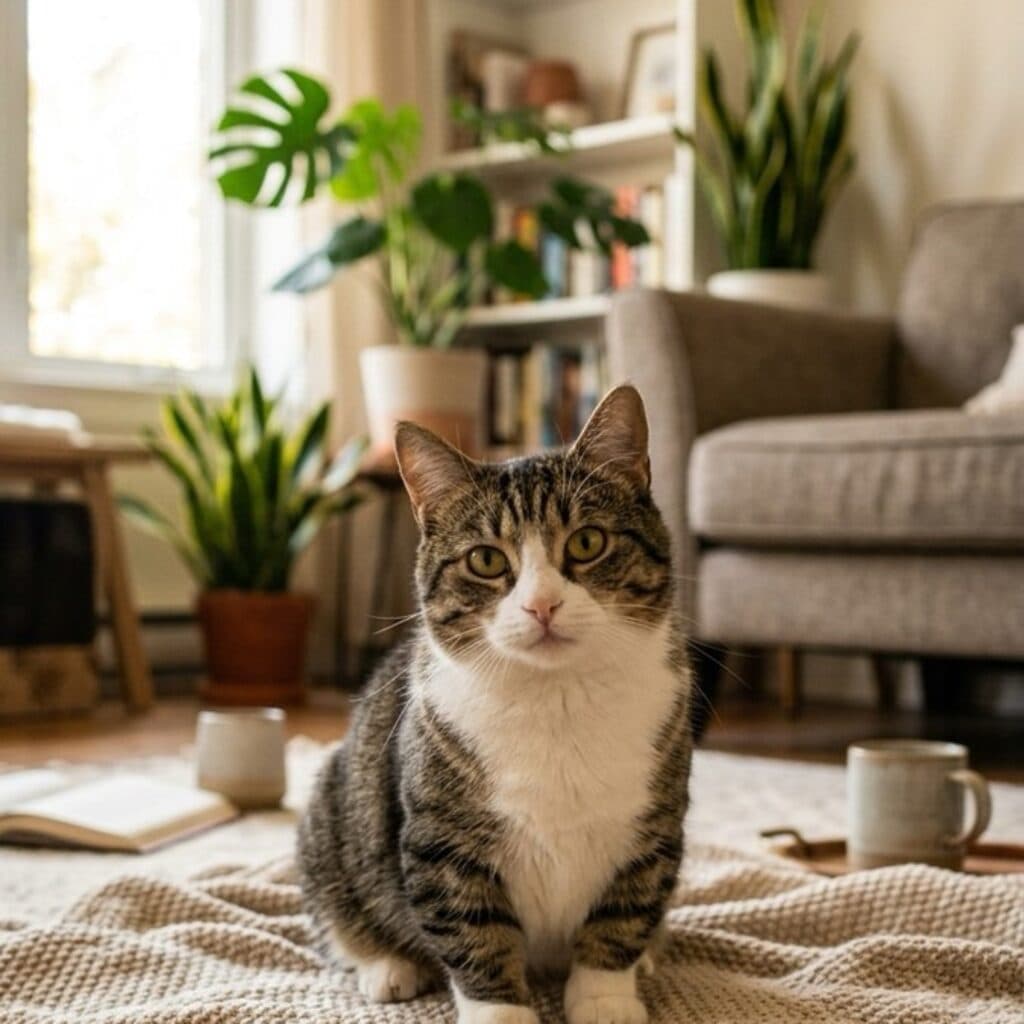
Many people think the short legs of the Munchkin are just a matter of looks — a cute trait that nature picked, like coat color. They aren't. Behind the little legs of the cat nicknamed the "wiener dog" of cats there is a real genetic mutation, already mapped by scientists, with implications that go beyond appearance. And understanding this genetics changes how you evaluate the breed before bringing a Munchkin home.
The 3 genetic facts, in brief
| Genetic fact | What it means in practice |
|---|---|
| Mutation in the UGDH gene (chromosome B1) | The gene controls the growth of the long bones; the variant shortens the legs |
| Lethal in a double dose | Every living Munchkin has only one altered copy; Munchkin×Munchkin loses ~25% of the litter during gestation |
| Joint deformity, not just shortening | X-ray and MRI show twisting and misalignment in the joints — calls for an orthopedic eye throughout life |
The gene behind the short legs: what UGDH is
A study published in 2020 found the culprit: the UGDH gene, located on feline chromosome B1. This gene helps control the growth of the long bones — those of the legs. In Munchkins, a structural variant of this gene had an almost perfect correlation with the short-leg phenotype: a cat with the mutation has short legs; a cat without it has legs of the normal size for the species. It was the first time the exact genetic cause of the breed moved out of the field of observation and became laboratory data.
Why is breeding two Munchkins risky?
Here is the fact that fewer owners know: the mutation is lethal in a double dose. Every Munchkin alive today carries only one copy of the altered gene — because the kitten that inherits the double copy (one from each Munchkin parent) does not develop. In practice, this means that breeding Munchkin to Munchkin is not a neutral choice: it reduces litter size, with about 25% gestational loss. That is why, even within the world of responsible breeders, the standard pairing avoids Munchkin with Munchkin — preferring Munchkin with a normal-legged cat.
It's not just short legs: what X-ray and MRI show
A 2021 study (Anderson et al.) went beyond the ruler and used X-ray and magnetic resonance imaging to examine the bone structure of Munchkins. The result: it is not proportional dwarfism, where everything shrinks equally. It is structural deformity in the joint — visible twisting in the front limbs and altered joint alignment, not just bone length. That is the difference between "a shorter leg" and "a joint that grew crooked", and it is the reason orthopedic veterinarians follow the breed more closely than its looks suggest.
Why do some organizations refuse to register the breed?
The answer divides the world of pedigreed cats. TICA (The International Cat Association) has officially recognized the Munchkin since 1994. Organizations such as CFA, ACFA, GCCF and FIFe, on the other hand, refuse registration — not on a whim, but out of ethical concern about a mutation that, even without documented pain in most cases, permanently and hereditarily alters the animal's skeletal structure. It is the same kind of debate that already exists around the Scottish Fold and folded ears.
What NOT to do
- Don't breed two Munchkins together just because "they're both the breed" — the risk of gestational loss is real and documented.
- Don't treat the short legs as purely cosmetic when deciding whether to adopt — they come with a different joint structure, which may call for orthopedic follow-up throughout life.
- Don't buy from a breeder who hides the genetics or doesn't explain the risk of Munchkin×Munchkin breeding — transparency about the mutation is the bare minimum to expect.
Frequently asked questions
Is the Munchkin in pain because of its short legs?
It isn't the rule — most Munchkins lead active lives with no reported pain. But the joint with an altered structure (a finding of the 2021 study) calls for closer long-term veterinary follow-up than a cat of standard conformation.
Does a Munchkin jump and climb on furniture like any cat?
Yes, in most cases — the short legs reduce vertical reach a little, not the desire to climb. The body adapts, but the environment can help: shelves and steps placed closer together make access easier.
Is breeding two Munchkins safe for the litter?
It isn't ideal. Because the mutation is lethal in a double dose, Munchkin×Munchkin litters lose about 25% of the kittens during gestation — which is why responsible breeders pair Munchkins with normal-legged cats.
Why does TICA accept the Munchkin and other organizations don't?
Because the organizations assess welfare risk in different ways: TICA has recognized the breed since 1994; CFA, ACFA, GCCF and FIFe refuse it out of ethical concern about a hereditary structural mutation, even without proven widespread pain.
Cute, the Munchkin is. But those little legs carry a real genetic story — a mapped gene, breeding risk and a different joint structure. Knowing this changes how you evaluate any breed of atypical conformation, not just this one.
Picked by score from our overall cat ranking, not by the topic of this article. To get it right for your pet — age, weight, spayed or neutered — take the quiz and get a list made for them. A pet with a diagnosed condition needs a diet prescribed by a veterinarian.



