How to Trim Your Cat's Nails Safely Without Stress
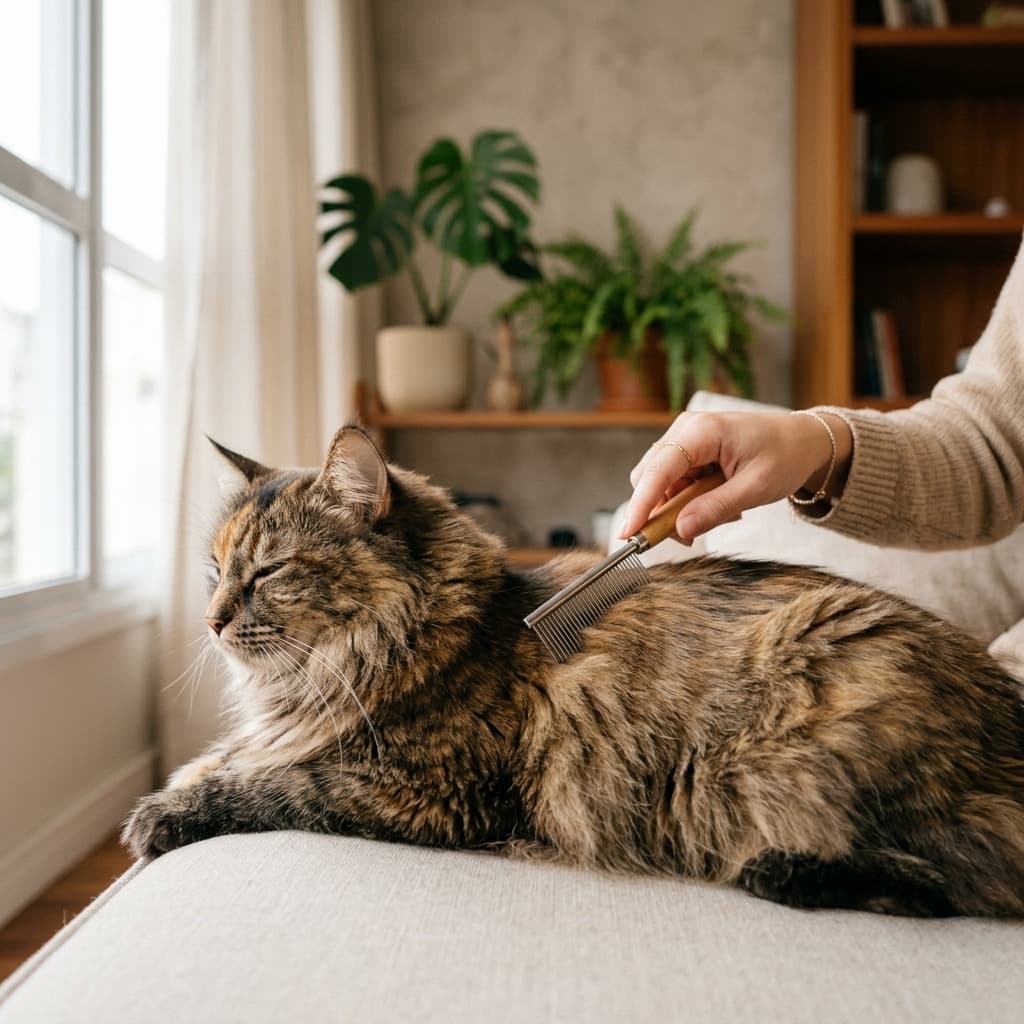
Trimming a cat's nails does not have to turn into a fight with scratches on both sides. The secret is not force or speed — it is desensitization and knowing exactly where to cut: only the white tip of the nail, never the pink part (the "quick"), where the blood vessel and nerve are. Here is the step-by-step that works even with the most resistant cat.
Where is the "quick" and why can't you cut into it?
The quick is the blood vessel and nerve inside the cat's nail, visible as a pink area against the light. The white, translucent part at the tip is safe to cut. Cutting into the quick hurts, bleeds and teaches the cat to hate the process — so the rule is to cut only the little white tip, away from the pink.
In practice: look at the nail against the light before every cut. If you cannot tell the pink apart on dark nails, cut a much smaller piece than you think is safe — the risk of being off by a little is always better than hitting the quick.
Step 1: get the cat used to being touched
For days before cutting any nail, handle the cat's paws every day for a few seconds — always followed by a treat. Gently press the pad so the nail extends, praise and let go. You are teaching that touching the paw = something good, not a threat. The Cornell Feline Health Center recommends starting the trimming routine early in the cat's life — this makes the task easier as it gets older — and suggests asking your veterinarian for a demonstration of how to trim the nails correctly.
Step 2: position and press
With the cat calm (preferably sleepy, in your lap or leaning on you), hold the paw and gently press the little pad between your thumb and index finger. The nail extends. Identify the pink quick before bringing the clipper close.
Step 3: cut one nail at a time
Use a clipper made for cats (guillotine or curved scissors). Cut only the white tip, in one firm motion. Give a treat right after each nail. Do not try to do them all at once — two or three per session is already a win.
| Step | Action | Why |
|---|---|---|
| 1. Desensitize | Handle the paws every day, always followed by a treat | Teaches that touching the paw is safe, not a threat |
| 2. Position | Press the pad so the nail extends | Lets you identify the quick before cutting |
| 3. Cut | Cut only the white tip, one nail at a time, with a treat after each cut | Avoids hitting the quick and reduces the cat's stress |
The secret that changes everything: stop early
Most owners make the mistake of wanting to finish all 18 nails in one sitting. The cat gets overwhelmed, thrashes and associates the clipper with stress. Do the opposite: stop BEFORE the cat gets irritated. Two nails today, two tomorrow. In a few days they are all done — and with no trauma.
What NOT to do
- Do not cut into the quick (the pink part). When in doubt, cut less.
- Do not hold the cat down by force or wrap it tightly if it panics — reschedule for another time.
- Do not use a large human nail clipper: it crushes the cat's nail instead of cutting cleanly.
- Do not scold or yell if it reacts — that destroys the trust you have built.
If you hit the quick and it bleeds, stay calm: press the tip with gauze or apply styptic powder (or a little cornstarch) and end the session. Bleeding that does not stop calls for a veterinarian.
Well-kept nails are part of a cat's health — and they go hand in hand with good nutrition and a care routine. See the pet nutrition glossary to better understand label terms, or find the right food for your cat.
Frequently asked questions
How often should I trim my cat's nails?
Most cats need their nails trimmed every two to four weeks. Older cats or those that scratch very little usually need more frequent trims, since the nail grows without natural wear.
Can I use a human nail clipper on my cat?
It is not recommended. Human clippers tend to crush the cat's nail instead of cutting cleanly, which causes pain and can split the nail. The ideal is to use a clipper made specifically for cats, guillotine or curved scissors type.
What should I do if I accidentally cut the quick?
Press the tip of the nail with gauze or apply styptic powder (or cornstarch, if you do not have the powder at home) until the bleeding stops. End the session and keep the cat calm. If the bleeding does not stop within a few minutes, see a veterinarian.
Can a cat that hates nail trimming be desensitized?
Yes. Gradual desensitization — associating touching the paws with treats, days before the trim, and cutting only a few nails per session — reduces stress in most cats over a few weeks. Forcing the process all at once tends to make the cat's resistance worse.
Picked by score from our overall cat ranking, not by the topic of this article. To get it right for your pet — age, weight, spayed or neutered — take the quiz and get a list made for them. A pet with a diagnosed condition needs a diet prescribed by a veterinarian.



