How to Reduce Cat Shedding: 5 Strategies That Really Work
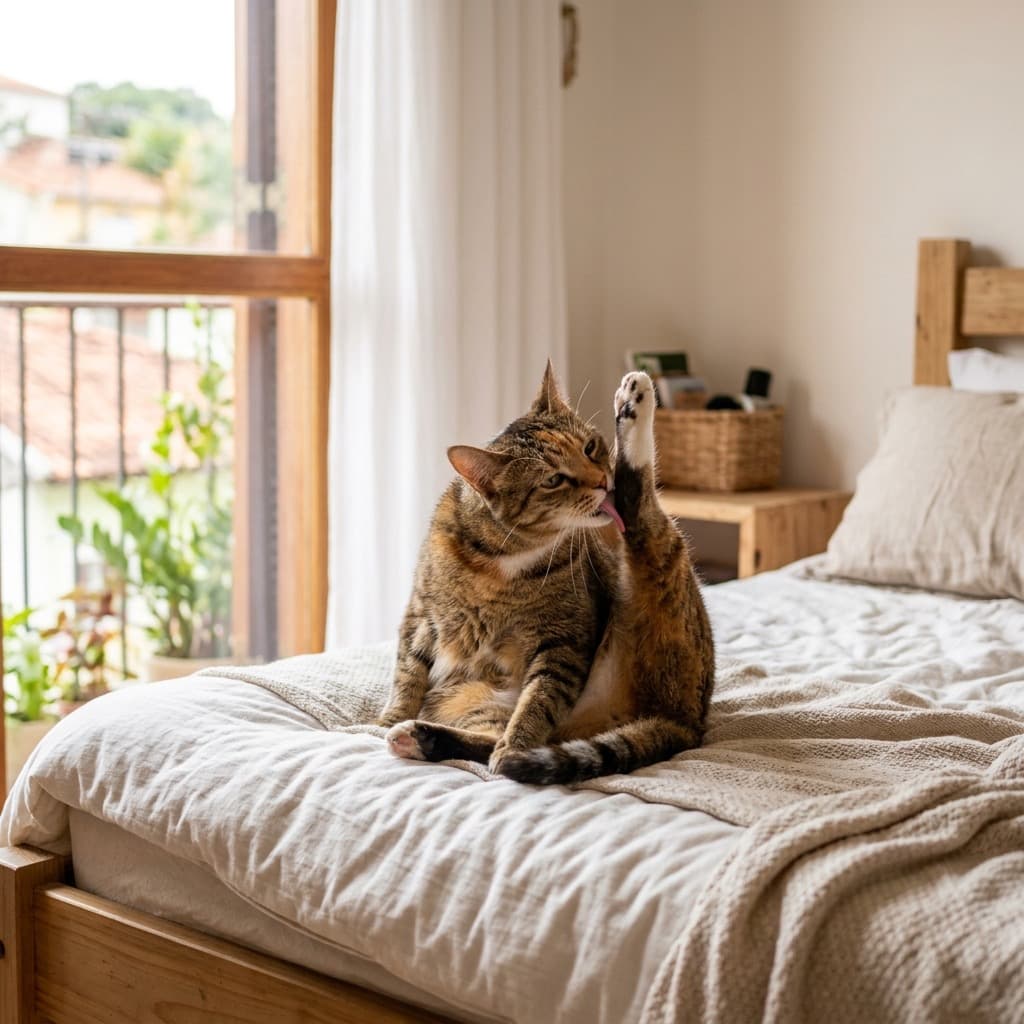
You sit on the couch in dark clothes and get up covered in hair. The cushion, the blanket, your going-out coat — everything has a thin layer of cat hair. The good news is that you can cut loose hair a lot without turning your home into a grooming salon: there are five fronts that, together, solve most of the problem.
Why does a cat shed so much?
Shedding is normal: a cat changes its coat throughout the year, with peaks at the change of season, and sheds even more hair by licking itself many times a day. You cannot bring it to zero — you can control it, by removing dead hair before it falls and picking up what has already fallen.
The 5 strategies, from the foundation to the most important
- Brush often. This is the foundation of everything. A short-haired cat does well with one brushing a week; a long-haired one needs it almost every day. The brush removes dead hair in your hand, before it spreads around the house — and it also reduces the hairballs the cat swallows.
- Keep hydration up. Fresh water, always available, helps keep the skin healthy, and healthy skin holds the hair strand better. Many cats drink little: a running water fountain usually encourages drinking much more than a still bowl.
- Take care of the environment every day. For what has already fallen, routine wins. Offer a dedicated blanket in the two or three spots where the cat already likes to lie down: it comes to prefer that place and the hair concentrates there, away from the couch — wash it every two or three days. On fabrics, an anti-static roller breaks the charge that "calls" the hair before it sticks. And prefer a vacuum cleaner with a HEPA filter (retains particles above 0.3 µm, EN 1822 / ISO 29463 standard): cat hairs are under 10 µm and stay suspended in the air for hours — an ordinary vacuum cleaner puts them back into the room. Vacuum the resting areas two to three times a week.
- Adjust the diet. A quality food with omega-3 fatty acids supports skin and coat — the effect on the skin health of dogs and cats is described by VCA Animal Hospitals, and a study in the journal Animals showed that adequate mineral supplementation reduced hair loss and improved the dandruff score in adult cats. Stronger, well-nourished hair falls less and looks healthier — care starts from the inside. To check whether your current food meets your cat's life stage, see how to read a cat food label.
- See the veterinarian if the shedding is abnormal. This one closes the list because it is the most important. Seasonal shedding is expected; bald patches, itching, redness or excessive hair falling out are not. They can indicate allergy, parasites, stress or a skin problem — and only the veterinarian can confirm the cause.
| Strategy | Frequency | What to do |
|---|---|---|
| Brushing | Weekly (short hair) to almost daily (long hair) | Remove dead hair before it falls into the environment |
| Hydration | Water available at all times | Offer a running water fountain to encourage drinking |
| Environment | Wash the blanket every 2-3 days; vacuum 2-3x a week | Dedicated blanket + anti-static roller + vacuum with HEPA filter |
| Diet | Continuous, in the everyday food | Food with omega-3 to support skin and coat |
| Veterinarian | When an abnormal sign appears | Investigate bald patches, itching, redness or excessive shedding |
How do you tell whether the shedding is normal or not?
Hair that falls evenly, without leaving bald areas, and that increases at the change of season is usually natural shedding. Raise the alarm when visible bald patches, intense itching, sores appear, or when the amount of hair changes suddenly with no relation to the weather. In those cases, brushing more does not solve it — the right step is a visit to the vet.
What NOT to do
- Do not bathe the cat all the time thinking it reduces shedding: too much bathing dries the skin and can worsen hair loss. A healthy cat grooms itself.
- Do not trim the coat on your own without guidance: outside a veterinary indication, clipping does not solve the shedding and can interfere with the skin's natural protection.
- Do not ignore excess hair as "just a cat thing": a sudden change deserves attention, not resignation.
Frequently asked questions
How can I reduce cat hair around the house?
Combine the fronts: regular brushing (weekly for short hair, almost daily for long hair), good hydration and diet to hold the hair strand, and daily cleaning of the environment to pick up what has fallen.
Does brushing a cat reduce loose hair?
Yes. The brush removes dead hair before it falls into the environment and also reduces the hairballs the cat swallows when licking itself.
Does cat food help with shedding?
It does. A quality food with omega-3 supports skin and coat, leaving the hair strand stronger and less prone to falling out.
When is a cat's hair loss a concern?
When bald patches, itching, sores or a sudden increase in hair unrelated to the change of season appear. That is a case for the veterinarian.
In the end, hair on the couch will never reach zero — but with brushing, hydration, environment and diet in order, it stops being a problem. And if something goes beyond normal, the veterinarian will tell you why.
Picked by score from our overall cat ranking, not by the topic of this article. To get it right for your pet — age, weight, spayed or neutered — take the quiz and get a list made for them. A pet with a diagnosed condition needs a diet prescribed by a veterinarian.



