Dull Coat in Cats: Why Their Food May Be the Cause
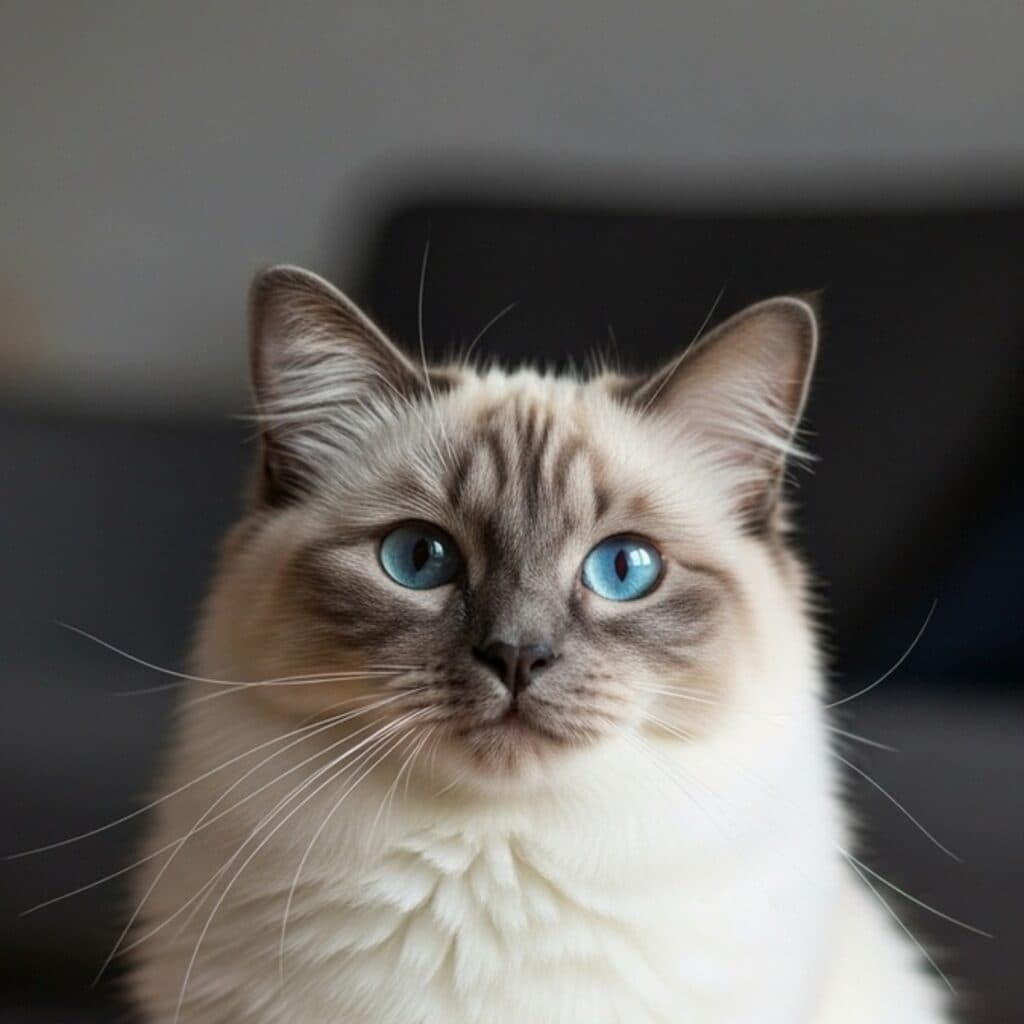
A dull, scaly or brittle coat in a cat with no other apparent illness can point to a nutritional deficiency in the diet, according to a review published in the Journal of Feline Medicine and Surgery (Vogelnest, 2017): essential fatty acid deficiency can cause a dull, scaly coat in cats, and deficiencies in protein, vitamins (A, E, B2, B6, biotin) or minerals (zinc, phosphorus) — although much rarer — can also change skin and coat. In our cat food catalog, fat across the 53 formulations ranges from 6.7% to 23% on a dry matter basis — a difference of more than three-fold that directly affects how much essential fatty acid reaches the cat's skin and coat.
A dull coat is not "just cosmetic." It is one of the most visible and earliest signs that something in the diet is not being absorbed or supplied in sufficient quantity — often before any other symptom appears.
Why does food directly affect coat shine?
A cat's fur is made mostly of keratin, a protein that requires specific amino acids and essential fatty acids (omega-3 and omega-6) to be produced with quality. When the diet does not supply enough of these nutrients, the body prioritizes vital organs — and the coat, not being essential for immediate survival, is one of the first structures to show the deficit.
What to check in the food before suspecting illness
- Declared fat source: fish oil, salmon or flaxseed near the start of the ingredient list indicates omega-3 fatty acids of better origin than generic "animal fat" alone.
- Fat percentage on a dry matter basis: very lean foods (near the 6.7% floor observed in the catalog) provide less substrate for a healthy coat — especially in older cats or those with dry skin.
- Protein source: named animal-origin protein (chicken, fish) has a better amino acid profile for keratin than generic by-product meals.
- Declared zinc and biotin: not every food declares these micronutrients separately, but when they appear, they are a sign of a formulation aimed at skin and coat.
The cat food comparison tool shows the fat percentage on a dry matter basis of two foods side by side, without having to open each label.
When it is NOT the food
A dull coat also appears from non-nutritional causes that a change of food does not solve:
- External parasites (fleas, mites) cause itching that leads the cat to groom less and unevenly, dulling the coat in specific areas.
- Systemic diseases, including chronic kidney disease — a dull, ruffled coat is one of the signs that accompany kidney disease, along with increased thirst and weight loss.
- Stress and pain: cats that reduce self-grooming because of joint pain or anxiety also end up with a disheveled coat, with no direct relation to the diet.
If the dull coat comes with increased thirst, weight loss or vomiting, see the early signs of kidney disease in cats before assuming it is just a food issue.
What to do
| Observed sign | Recommended action |
|---|---|
| Isolated dull coat, active cat eating well | Review the fat and protein source in the current food |
| Dull coat + itching | Investigate external parasites before changing food |
| Dull coat + thirst/weight loss/vomiting | See a veterinarian — it may be a systemic sign, not a nutritional one |
| Dull coat in a senior cat | Consider a food with fat closer to the ceiling (senior profile) |
Frequently asked questions
How long after switching food does the coat improve?
The hair growth cycle is slow — visible improvement usually appears between 4 and 8 weeks after switching to a food with a better fatty acid and protein profile, since the existing coat has to be replaced gradually.
Does an omega-3 supplement replace a better food?
It does not replace it, it complements it. If the base food already has very low fat or poor-quality protein, adding only the supplement partially solves the problem — the ideal is to fix the base first and use the supplement as reinforcement, under veterinary guidance.
Is a dull coat in a kitten a cause for concern?
It can be a sign of an unbalanced diet during growth, when the demand for protein and fatty acids is highest. It is worth checking whether the food used is really formulated for kittens, not an adult food used by mistake.
Picked by score from our overall cat ranking, not by the topic of this article. To get it right for your pet — age, weight, spayed or neutered — take the quiz and get a list made for them. A pet with a diagnosed condition needs a diet prescribed by a veterinarian.



