Do Cats Apologize? What They Do After a Fight With You
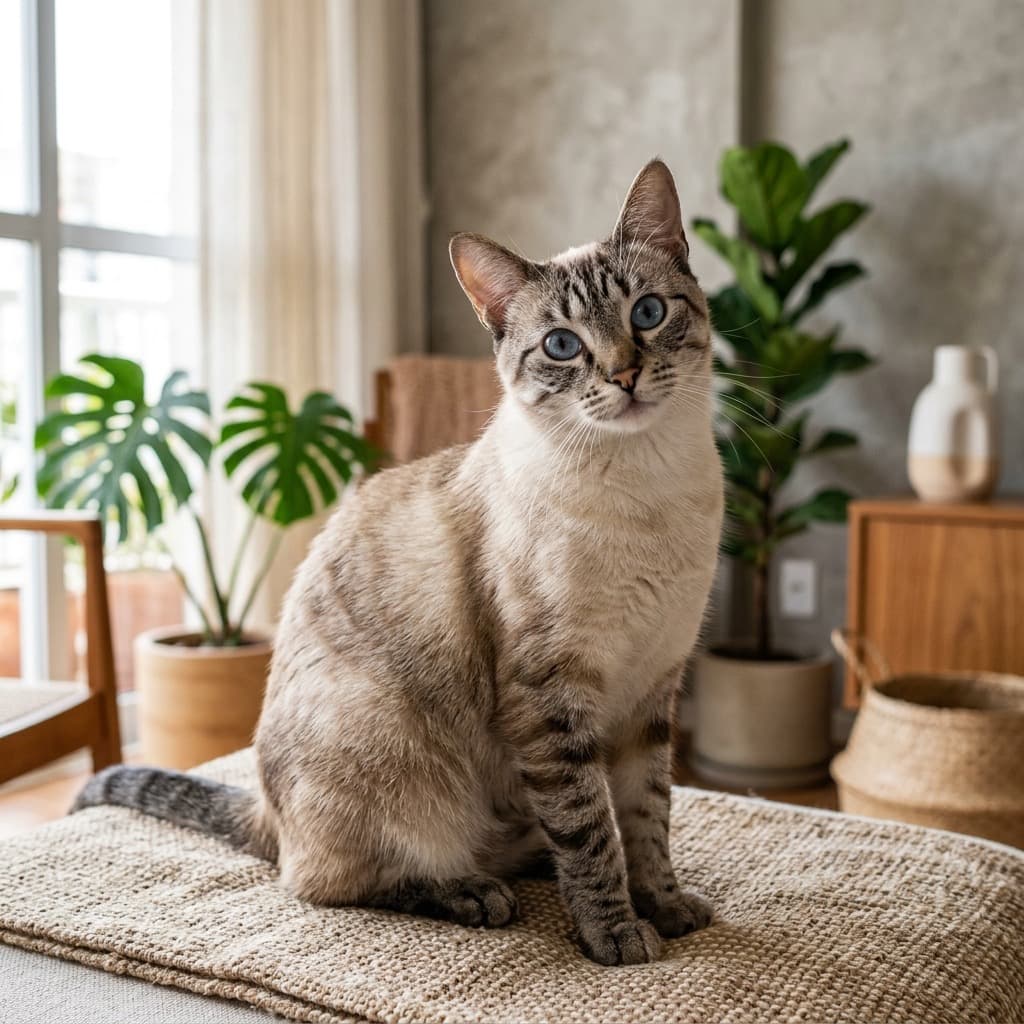
Your cat got into a fight with you, walked away and stayed out of sight for hours. When it came back, it rubbed its head against your leg. It's tempting to read that as an apology — but regret, guilt and grudges are not part of the feline repertoire the way we imagine. What exists, and is much more interesting, is reconnection: a set of gestures that restores the bond after friction. Understanding the difference changes how you respond to your cat in these moments.
Why is "apology" the wrong word?
The idea of apologizing requires the animal to recognize a moral failing and want to make amends — something we have no evidence that cats process. When it moves away after a fuss, it isn't planning punishment or holding a grudge to collect on later. It's doing what makes sense for an animal that avoids conflict: lowering the tension and giving the situation time to cool down.
Swapping "apology" for "reconnection" isn't hair-splitting. It's what lets you stop waiting for a human behavior that never comes — and start seeing the signals the cat actually uses.
The reconnection gestures owners misread
After the tension drops, a cat usually resumes contact in very concrete ways. Recognizing them is half the way to not getting in the way:
| Gesture | What it means |
|---|---|
| Pressing its head against you (the gentle "head bunt") | Affiliative contact, not guilty submission |
| Rubbing its body on your leg or on furniture | Re-mixes your scents and reinforces the shared group odor — how the cat marks "we're from the same home" |
| Tail up, sometimes with the tip curved | One of the most reliable signs of friendly intent in cats |
| Kneading with the paws near you or lying nearby | Resuming physical closeness at its own pace |
None of these gestures is a "forgiveness." They are bond-restoration tools the cat would use with any companion it lives with. Reviews of feline social life show that this mutual rubbing — allorubbing — serves to create a common group scent, the chemical mark of "we're from the same home" (review on cats' social behavior).
The timing is its, not yours
Reconnection rarely happens in the minute after the fight. It comes when the cat feels safe again — and that clock belongs to the cat. If it stayed away for half an hour and only then came back, that doesn't mean it "didn't want peace": it means it needed that time to regulate its own state. Forcing affection, picking it up or insisting before it's time pushes the reconnection back, because it adds pressure to an animal that is still recomposing itself.
What NOT to do
- Don't chase the cat to "make up." Going after it when it moved away is misreading the signal: moving away is its own way of resolving things, not the problem to fix.
- Don't interpret the disappearance as punishment. Treating the cat as if it were "sulking" generates responses from you that it doesn't understand — and that only increase the distance.
- Don't force contact before it offers. Wait for the cat to make the first gesture (head, rubbing, tail up) and respond calmly, without sudden movements.
Reading the cat for what it is
That head bunt after the fight isn't a "forgive me" — it's a "we're in the same group again." When you swap the expectation of an apology for reading reconnection, you stop demanding a human script and start answering the cat in its own language. And part of caring well starts before the conflict, in the base of the routine — including in the food bowl.
Frequently asked questions
Do cats hold grudges after a fight?
There is no evidence that a cat holds a grudge in the human sense. It may be more skittish for a while because it is still tense, but that is a passing emotional state, not a planned resentment.
Why does my cat ignore me after I fight with it?
Moving away is its strategy for reducing conflict. Ignoring and giving space is how the cat "resolves" — it is not retaliation against you.
Is rubbing its head on me an apology?
It's reconnection, not an apology. Rubbing re-mixes your scents and restores the group bond — the cat would do it with any close companion.
How long does it take a cat to reconnect?
It varies a lot from cat to cat and situation to situation, but it normally falls between minutes and a few hours — the more intense the conflict, the longer the cat takes. The gesture comes when it feels safe; the best thing you can do is not rush it.
Picked by score from our overall cat ranking, not by the topic of this article. To get it right for your pet — age, weight, spayed or neutered — take the quiz and get a list made for them. A pet with a diagnosed condition needs a diet prescribed by a veterinarian.



