Cat Myths Debunked: Common Beliefs Science Gets Wrong
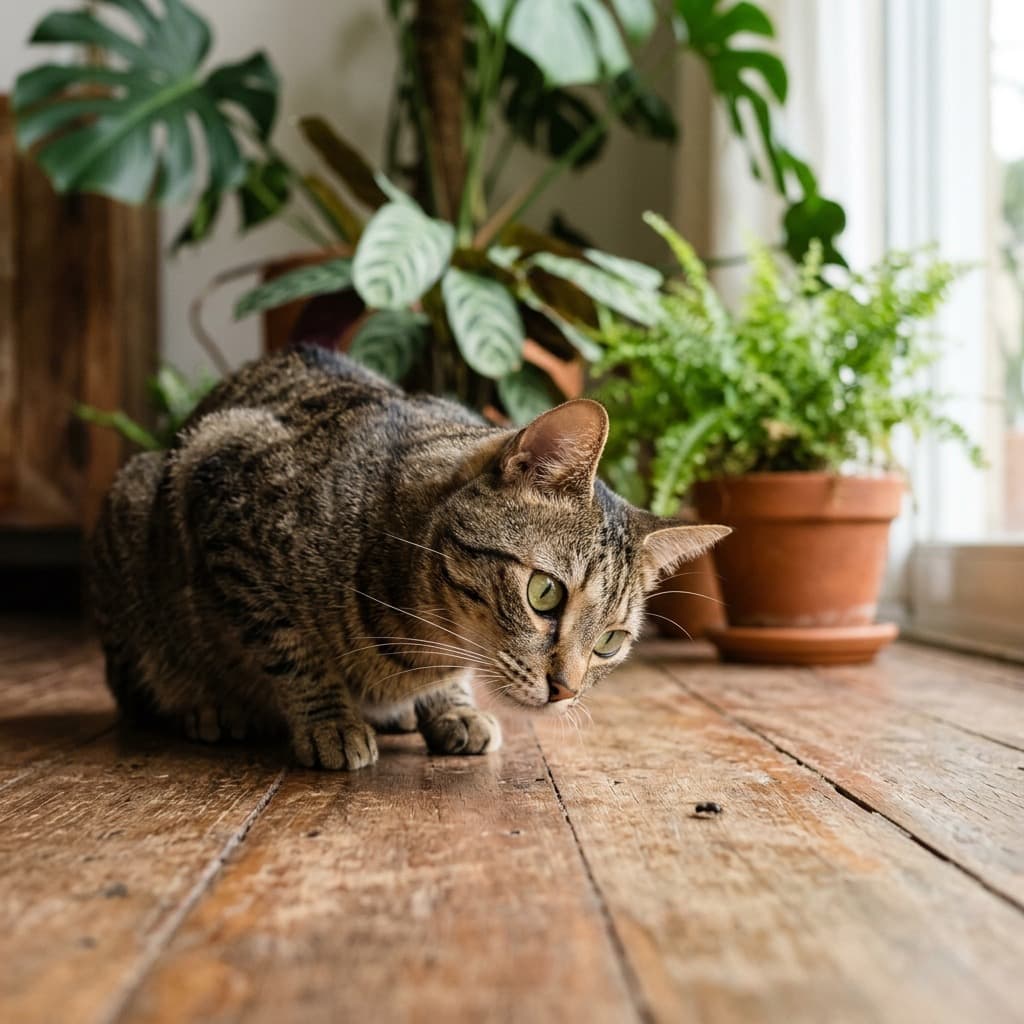
"Cats are independent, they can fend for themselves." Maybe you have heard — or repeated — that phrase. The problem is that it is wrong, and it is not the only idea about cats that passes from mouth to mouth as if it were true. A good part of what is "known" about felines is folklore, and separating myth from fact changes real care decisions.
What makes a belief become a myth
A myth survives because it is simple, repeated and seems to make sense. "Cats are independent" is convenient to believe — it justifies leaving the animal alone without guilt. But the science of feline behavior shows the opposite: the cat forms an attachment bond with its owner and, in prolonged isolation, develops stress, apathy and anxiety behaviors.
The criterion for suspicion is this: if a claim fits in one closed sentence, with no "it depends," it is almost always missing nuance.
Three myths that affect everyday life
Purring is not a synonym for happiness. It is a self-regulation mechanism: the cat purrs in a relaxed lap, but also purrs in pain, afraid or stressed — sometimes to calm itself. Reading every purr as "he is happy" can mask an animal that is suffering in silence.
A cat does not only need a veterinarian when it visibly falls ill. By prey instinct, the feline hides symptoms to the limit — by the time the disease shows, it is usually advanced. That is why the preventive check-up, even for the cat that "looks fine," is what catches problems early (see the 9 signs that a quiet cat may be sick).
And "cats always land on their feet" is a dangerous half-truth. The righting reflex exists, but height and impact cause serious fractures — high-rise syndrome is a real diagnosis in the clinic. A window or balcony without a screen is not safe just because "he balances."
Why this matters when caring for your cat
Believing in myths costs dearly in silent ways. Those who trust "purr = happiness" put off a visit that mattered. Those who think the cat is self-sufficient stop offering environmental enrichment and company — and the animal falls ill from boredom. Those who trust "lands on its feet" do not protect the window.
The common thread: the myth swaps observing your cat for a ready-made rule. Good care does the opposite — it looks at the specific animal, in its context.
Why does my cat get sick after drinking milk?
Many adult cats become lactose intolerant because the activity of the enzyme that digests milk sugar declines after the kitten nursing stage, according to the Merck Veterinary Manual. Without enough lactase, the undigested sugar ferments and retains water in the intestine, causing diarrhea — which is why regular cow's milk is not a safe treat for an adult cat.
More beliefs that do not hold up
| Myth | Reality |
|---|---|
| "Milk is good for cats" | Most adult cats are lactose intolerant; regular milk causes diarrhea and discomfort. |
| "Cats can't be trained" | Cats learn very well through positive reinforcement (clicker, treats). |
| "He ignores me because he's arrogant" | The cat recognizes its own name; responding or not is a choice, not contempt. |
| "Black cats are bad luck" | Pure superstition, with no basis whatsoever; it only gets in the way of adoptions. |
What NOT to do
- Do not leave the cat alone for long periods without enrichment — it gets attached and suffers in your absence.
- Do not use purring as proof that everything is fine. Watch appetite, posture and hiding spots.
- Do not skip the annual check-up thinking that a "healthy cat doesn't need a veterinarian."
- Do not offer cow's milk as a treat — prefer fresh water and, if you like, lactose-free milk made for pets.
Frequently asked questions
Does purring always mean the cat is happy?
No. Purring also appears in moments of pain, fear or stress — it is a self-regulation mechanism, not an exclusive indicator of well-being.
Can cats drink cow's milk?
It is not recommended. Most adult cats are lactose intolerant and regular milk usually causes diarrhea. Prefer fresh water or lactose-free milk formulated for pets.
Is it true that every cat lands on its feet without getting hurt?
No. The righting reflex exists, but falls from a height frequently cause serious fractures — it is the so-called high-rise syndrome, a real diagnosis in veterinary clinics. Protecting windows and balconies is still necessary.
Does an independent cat not need its owner's company?
No. The cat forms an attachment bond and, in prolonged isolation, can develop stress and anxiety behaviors — the opposite of the image of total self-sufficiency.
Back to the "independent cat" from the start: he does not fend for himself as much as his reputation says. What he needs from you is constant — and it starts with the food in the bowl every day, a decision you control.
Picked by score from our overall cat ranking, not by the topic of this article. To get it right for your pet — age, weight, spayed or neutered — take the quiz and get a list made for them. A pet with a diagnosed condition needs a diet prescribed by a veterinarian.



