Cat Ears Turned Back: What It Means and What to Do
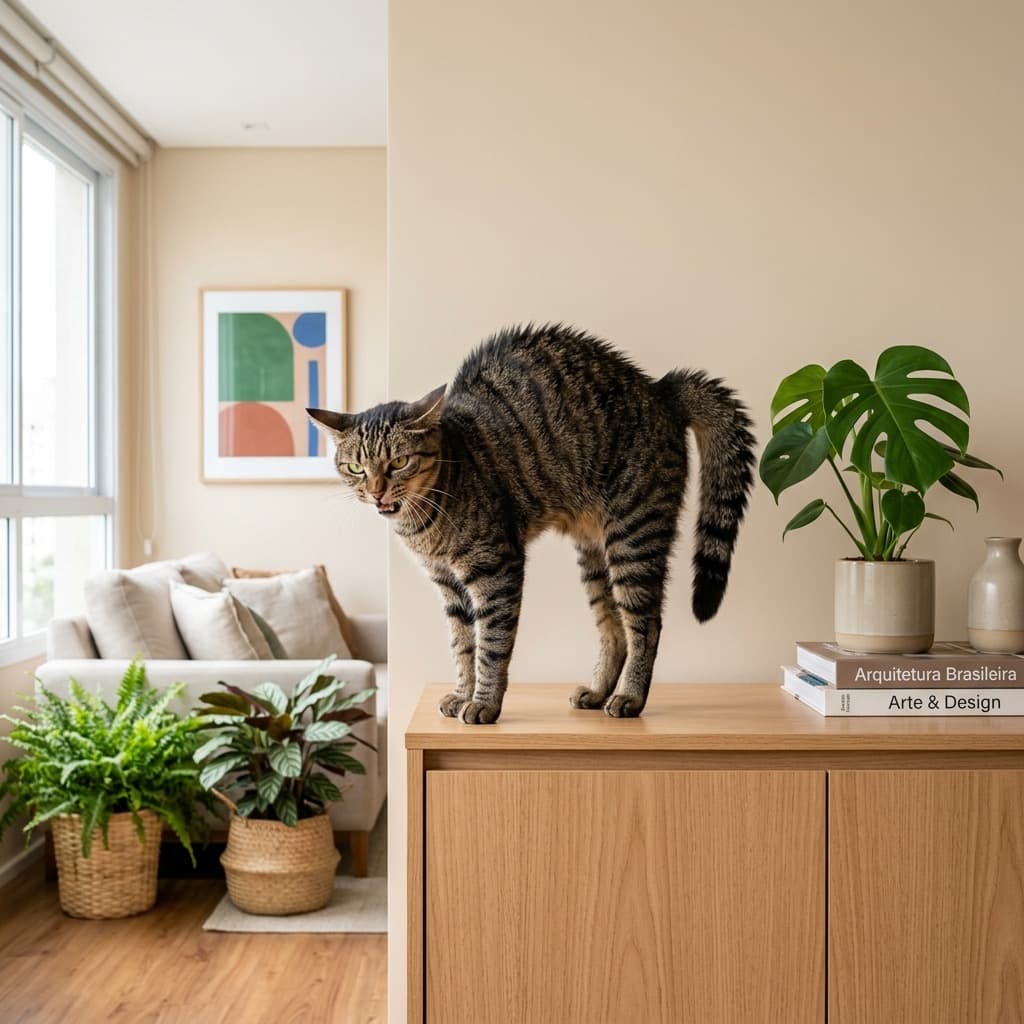
You see your cat's ear turn back and think: it's just curious about some noise. But that ear isn't curiosity — it's one of the first warnings before a strike, and it's the signal most owners ignore.
The ear works like an emotional radar
The position of a cat's ear isn't aesthetic, it's communication. Ears upright and facing forward indicate neutral attention — it's just paying attention to something, with no tension at all. Ears flattened against the head, turned to the sides or turned back, on the other hand, signal fear or defense — the Merck Veterinary Manual lists a lowered, backward-turned ear among the signs of the frightened cat and of defensive aggression. It's one of the first signs before a strike, and the one owners ignore most — because it happens in seconds, in the middle of petting that seemed calm.
What's the difference between sideways ears and ears turned back?
They're not the same thing, and the difference matters in practice. According to PetMD, the ear turned to the sides — what some call "airplane ears" — already works as a warning of irritation or growing fear, even before it becomes fully flattened. The ear flattened against the head is the next stage: alert at its highest point, almost always the step that precedes a close-range strike. Reading this gradation — upright, sideways, flattened — gives you time to act before the bite, not just after it.
| Ear position | What it means | Alert stage |
|---|---|---|
| Upright, facing forward | Neutral attention, no tension | None |
| Turned to the side ("airplane ears") | Irritation or fear starting | Early — there's still time to back off |
| Flattened against the head / turned back | Fear or defense — the cat is protecting itself | Maximum — precedes a close-range strike |
Why owners usually ignore this signal
The reason is simple: the owner's attention goes straight to the obvious signs — growling, hissing, bared teeth. Those show up after, when the tension has already risen. The ear changes before that, subtly, often in the middle of petting that until then was pleasant for both sides. Without knowing that quick twist has meaning, the owner continues the interaction at exactly the moment they should stop.
What to do when a cat's ear turns back?
Stop the movement of your hand and observe, without pulling the hand away abruptly (a sudden movement also frightens). If the ear returns to the neutral position within a few seconds, the petting can continue. If it stays turned, or the tail starts to thump, it's time to give space — the interaction can wait until the cat calms down on its own.
What NOT to do
- Don't keep petting hoping it will "pass" — the turned ear is the moment to pause, not to insist.
- Don't treat a sideways ear as if it were "just inattention" — it's an alert stage, even if milder than the flattened ear.
- Don't wait for the growl or the strike to react — when those appear, the ear's warning has already gone unnoticed.
Frequently asked questions
Does every backward-turned ear mean the cat is going to attack?
It isn't a guarantee, it's a high probability when it shows up along with other signs — dilated pupils, thumping tail, lower body. Isolated and quick, it may just be an adjustment of auditory focus; combined with those other signs, it's a real warning.
My cat sleeps with its ear turned — is that a warning sign?
Not necessarily. At rest, with no tension in the body, no thumping tail and no dilated pupils, the turn is usually just the cat picking up a sound around it — the context of the rest of the body is what decides, not the ear alone.
What's the practical difference between a sideways ear and a flattened one?
Sideways is a warning in the making — there's still time to back off without drama. Flattened against the head is the most intense stage, almost always the final step before a close-range strike.
Can I test this with my cat?
You can, and it's the most reliable way to learn to read yours specifically: notice its ear during petting, especially near the belly or the base of the tail — more sensitive zones. If it turns, pause before continuing.
Build your cat's profile and see what to prioritize in its routine →
Picked by score from our overall cat ranking, not by the topic of this article. To get it right for your pet — age, weight, spayed or neutered — take the quiz and get a list made for them. A pet with a diagnosed condition needs a diet prescribed by a veterinarian.



