Cat Breeds That Act Like Dogs: 5 Dog-Like Personalities
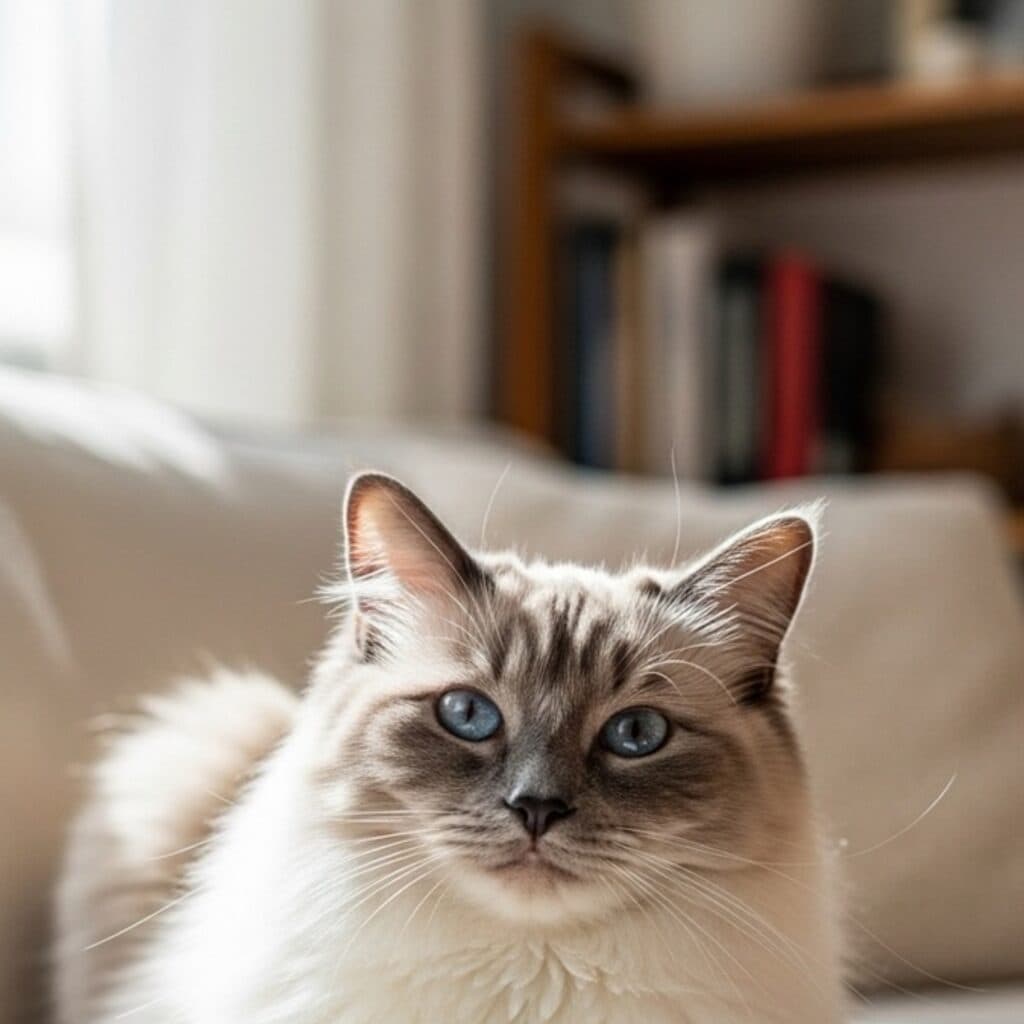
You call your cat by name and it does not so much as twitch an ear. That is the reputation every cat carries: it only answers when it feels like it. But some breeds break that reputation in an embarrassing way — they do what we only expect from dogs. They fetch thrown objects, walk on a leash, follow their owner from room to room.
This is not a litter exception or an owner's luck. It is behavior selected together with the breed's looks, generation after generation. Anyone who picks a cat from these five breeds expecting this needs to know one thing: the same trait that makes the "dog-like" cat demands daily attention. An interactive cat does not raise itself in the backyard.
Ragdoll: fetches objects and answers to its name
The Ragdoll learns to fetch what you throw and bring it back. This is not a cat that merely tolerates the game — it responds to it, repeats the movement, waits for you to throw again. It also comes when called by name, which requires an association between sound and response, something rare to see in an ordinary cat.
This behavior shows up early and lasts if it is reinforced. A cat that learns to fetch keeps doing it for life, as long as the game remains part of the household routine.
Bengal: walks on a leash, pulling its owner along
The Bengal is up for going out on a leash. It walks beside the owner on a leash in an end-of-day stroll — and it is not a cat being dragged along, resisting every step. It is a cat that pulls, curious about what lies ahead.
This is rare among cats because most react to a leash by freezing their body or refusing to walk. The Bengal is a known exception for accepting this kind of outing, which also reveals an animal with above-average energy expenditure — staying indoors only tends to turn into unwanted behavior.
Maine Coon: follows its owner around the house
The Maine Coon does another dog-like thing: it accompanies its owner from room to room. You get up from the couch, it gets up too. You go to the kitchen, it follows. This is not a cat that waits passively in a corner — it monitors where you are and moves to stay close.
This physical attachment to the owner is constant, not occasional. Disappear from view for half an hour and the Maine Coon usually goes looking for you.
Abyssinian: never settles and demands interaction
The Abyssinian makes the list for its energy. It does not settle down and does not stay alone — it is always after interaction, constantly at the heels of whoever is nearby, nudging to keep the game going. It is a cat that starts contact, instead of waiting to be approached.
This constant demand for attention resembles the behavior of a young dog more than the classic cat, which usually rations when it wants company and when it wants distance.
Turkish Van: combines the behaviors in one animal
The Turkish Van closes the list because it combines several of these traits at once. It is described as one of the most dog-like cat breeds in existence — it adds attachment to its owner, willingness to play and high energy in a single animal.
Does every cat of these breeds act this way?
Not necessarily. Breed defines a tendency, not a guarantee. Two kittens from the same Ragdoll litter can have different levels of willingness to fetch or answer to their name — behavioral genetics is not a straight line, and upbringing, handling and how much the kitten is exposed to stimulation early on also weigh in.
What changes from breed to breed is the probability. An ordinary cat can learn to fetch a ball with consistent training; in a Ragdoll or Bengal, this behavior tends to appear with less effort, because the predisposition is already there. The Cornell Feline Health Center says that, in a purebred cat, size, appearance and, "to some extent," personality tend to follow the breed profile — breed tips the scale, it does not decide alone.
| Breed | Dog-like behavior |
|---|---|
| Ragdoll | Fetches thrown objects and brings them back; answers to its name |
| Bengal | Walks on a leash, pulling its owner |
| Maine Coon | Follows its owner from room to room inside the house |
| Abyssinian | Never settles, constantly seeks interaction |
| Turkish Van | Combines attachment, energy and willingness to play |
What NOT to do
- Do not choose the breed thinking the behavior comes ready-made with no effort on your side — the fetch game and leash walking need to be taught and maintained.
- Do not go out on a leash without gradual adaptation: no cat, not even the most willing Bengal, can handle being put outside for the first time without getting used to it indoors first.
- Do not leave an Abyssinian or Maine Coon alone all day expecting their energy to "sort itself out" — lack of interaction in an attention-hungry breed turns into destructive behavior.
- Do not confuse an attached cat with a cat without limits: even the most dog-like one is still a cat, with its own way of asking for space.
- Do not compare your ordinary cat with these five and conclude it is a "problem" — moderate indifference is the species standard, not an individual flaw.
Frequently asked questions
Can a cat learn to fetch even if it is not one of these breeds?
It can, with training and repetition. The difference is that in the breeds mentioned this response tends to appear more easily and without as much prior conditioning.
Does a Bengal need a special harness to walk outside?
The key is adaptation: a comfortable leash and harness, gradual adjustment indoors before going outside, and a short route at first. The cat needs to get used to the contact before heading out.
Is a Maine Coon that follows its owner all the time a sign of anxiety?
Following the owner around the house is a common breed trait, not an isolated sign of a problem. Extra attention only makes sense if it comes with other signs, such as refusing food or sudden withdrawal.
Does an Abyssinian suit an empty house all day?
It is not ideal. The breed asks for frequent interaction — a routine in which no one interacts for many hours in a row tends to leave this cat bored and more prone to unwanted behavior.
Want to know which breed fits your household's routine? Take the our questionnaire and get a personalized recommendation.
Picked by score from our overall cat ranking, not by the topic of this article. To get it right for your pet — age, weight, spayed or neutered — take the quiz and get a list made for them. A pet with a diagnosed condition needs a diet prescribed by a veterinarian.



