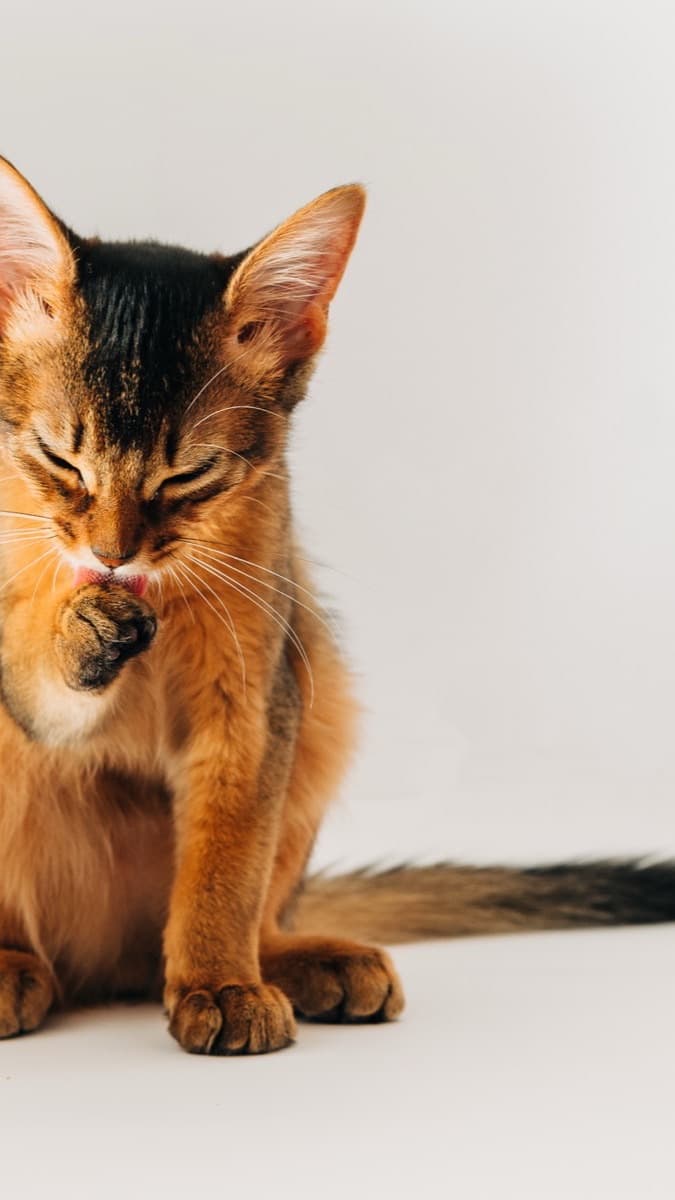
The Somali is the long-haired Abyssinian, at 3.5 kg to 5.5 kg with high energy. Two things weigh in the food: the breed carries the same genetic predisposition to familial renal amyloidosis documented in Abyssinians, and the semi-long coat favors hairballs. Controlled phosphorus and functional fiber answer both care points.
In the current My Pet Magazine analysis, the best food for the Somali is ACANA Indoor Entrée (ACANA), with a technical score of 85.9/100 (🌟 Superior Quality), calculated with the My Pet Magazine IDNM/IPFI methodology across 50 cat foods reviewed in July 2026. See the full ranking ↓
What to weigh in food for the Somali
Two things guide the choice of a Somali's food: kidney management and hairball control.
Kidney. The Somali is genetically the long-haired Abyssinian — the same line, the same genetic load — and therefore carries the same predisposition to familial renal amyloidosis documented in the breed of origin. Food does not treat the condition, which is genetic, but in already diagnosed cats controlled phosphorus and protein come in as kidney management support, always with veterinary follow-up.
Hairballs. Despite the kinship with the short-haired Abyssinian, the Somali has a semi-long coat and grooms himself a great deal to maintain it. That swallowed loose hair can build up in the intestine and form a trichobezoar. Soluble and insoluble fiber in the food help the hair continue on its way through the digestive tract instead of accumulating — care that adds to kidney management without competing with it.
Criteria scored against the My Pet Magazine nutritional targets (protein, fat, calcium and caloric density ranges by size — see our methodology).
Breed profile and predispositions
The Somali carries two predispositions that change what to look for in the food.
The first is familial renal amyloidosis, inherited from the same line as the Abyssinian — the Somali is, genetically, the long-haired Abyssinian. A study published in Veterinary Pathology (Boyce, DiBartola, Chew and Gasper, 1984) — Familial Renal Amyloidosis in Abyssinian Cats documented medullary and glomerular amyloidosis, with papillary necrosis, in eight related Abyssinian cats from two catteries. Food does not reverse the genetic condition — what it does is provide support: controlled phosphorus and protein in the management of already diagnosed cats, always under veterinary guidance.
The second is the formation of trichobezoars, linked to the breed's semi-long coat. According to VCA Animal Hospitals — Trichobezoars in Cats, hair swallowed during grooming can build up in the gastrointestinal tract and form hairballs. Functional fiber in the food helps that hair pass through the intestine instead of accumulating — care independent of kidney management, but one that adds to the choice of the Somali's food.
Recommended foods for the Somali
Ranked by IDNM/IPFI technical score across 50 cat foods — no manual product curation.
- 1
ACANA Indoor Entrée · ACANA
85.9/100 - 2
Purina Pro Plan Sensitive Skin & Stomach · Purina Pro Plan
85/100 - 3
Nulo Freestyle Cat & Kitten · Nulo
84.9/100 - 4
BLUE Wilderness Adult Indoor · Blue Buffalo
84.2/100 - 5
Tiki Cat Born Carnivore Indoor Health · Tiki Cat
84/100
Frequently asked questions about Somali food
- Why is the Somali predisposed to kidney problems?
- Because he is genetically the long-haired Abyssinian — the same line, the same genetic load. A study published in Veterinary Pathology in 1984 (Boyce, DiBartola et al.) documented familial renal amyloidosis in related Abyssinian cats. Food does not treat the genetic condition, but controlled phosphorus and protein support kidney management in affected individuals.
- Does food prevent the Somali's renal amyloidosis?
- No. The cause is genetic and the condition is not reversed by diet. What food can do is provide management support — controlled phosphorus and protein — in already diagnosed cats, always with veterinary follow-up. There is no nutritional treatment that prevents the mutation itself.
- Why does the Somali form hairballs more than a short-haired cat?
- Because, despite being related to the short-haired Abyssinian, the Somali has a semi-long coat and grooms himself a great deal. According to VCA Animal Hospitals, that swallowed loose hair can build up in the intestine and form a trichobezoar. Fiber in the food helps the hair pass through the digestive tract instead of getting stuck.
- Does every Somali develop kidney problems?
- No. The 1984 study documented the condition in related cats from two specific catteries, not in the whole breed — but it is enough documentation to justify veterinary follow-up and a food with controlled phosphorus as part of preventive management, even without a confirmed diagnosis.
- Does the Somali need more calories because of his high energy?
- He does tend to need more caloric density proportional to the expenditure of an active cat, yes. The breed has high energy and an adult weight between 3.5 kg and 5.5 kg — the right portion follows the cat's actual weight and individual activity level, not a fixed amount just because he is considered an active breed.
Methodology
The block of recommended foods on this page is ordered by My Pet Magazine's IDNM/IPFI technical methodology, which evaluates the nutritional density and ingredient purity of each product in the active dataset for the Somali's medium-size profile — with no manual curation or brand influence.
The score takes into account how well the food fits the breed profile: phosphorus control compatible with kidney support and the presence of functional fiber for hairball control are factors that weigh in the ranking, recalculated whenever the product dataset is updated.
The ranking on this page is a projection of the My Pet Magazine IDNM/IPFI scoring engine over the cat dataset, with no manual product curation. See the full methodology →
Want a recommendation tailored to your Somali?