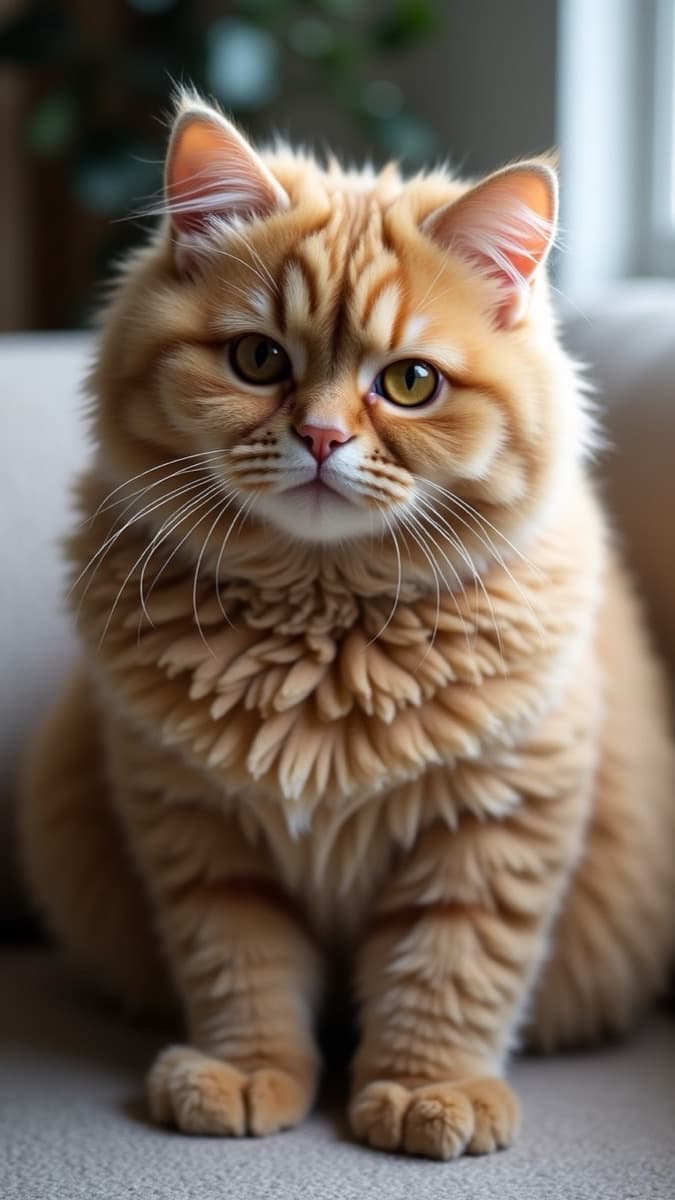
The Selkirk Rex weighs between 3 kg and 5 kg, has moderate energy and the curly coat characteristic of the breed. The cat is predisposed to trichobezoars — hairballs accumulated in the digestive tract until they form an obstruction. Food does not stop hair being ingested while grooming, but functional fiber helps move that hair through the intestine, reducing the risk of build-up.
In the current My Pet Magazine analysis, the best food for the Selkirk Rex is ACANA Indoor Entrée (ACANA), with a technical score of 87.8/100 (🌟 Superior Quality), calculated with the My Pet Magazine IDNM/IPFI methodology across 50 cat foods reviewed in July 2026. See the full ranking ↓
What to weigh in food for the Selkirk Rex
One priority guides the choice of a Selkirk Rex's food: hairball (trichobezoar) control.
Trichobezoars. Every cat ingests hair while grooming, and normally that hair passes through the intestine without a problem. In some cats, however, the hair tangles in the stomach or the intestine and forms a mass too large to come out in the stools — the trichobezoar. Food does not stop hair being ingested, which is normal grooming behavior for a cat, but functional fiber helps the hair move through the digestive tract, reducing the chance of build-up.
Routine. Beyond food, regular brushing removes loose hair before the cat ingests it while grooming — it reduces the amount of hair that enters the digestive system in the first place, which adds to the effect of fiber in the diet.
Criteria scored against the My Pet Magazine nutritional targets (protein, fat, calcium and caloric density ranges by size — see our methodology).
Breed profile and predispositions
The Selkirk Rex has a curly coat, one of the traits that defines the breed, and carries a documented predisposition to trichobezoars — hairballs that form in the digestive tract.
According to VCA Animal Hospitals — Trichobezoars in Cats, hair ingested by the cat while grooming normally passes through the intestine and out in the stools, since the keratin in hair is not digested. In some cases, that hair tangles with itself or with other material in the stomach or intestine, forming a mass — the trichobezoar — too large to be eliminated naturally. The source notes that foods formulated for hairball control usually provide fiber at a higher level, with the aim of moving ingested hair through the digestive tract and reducing the risk of build-up. Obstructive cases, when they occur, usually require endoscopic or surgical removal — always assessed by the veterinarian.
Recommended foods for the Selkirk Rex
Ranked by IDNM/IPFI technical score across 50 cat foods — no manual product curation.
- 1
ACANA Indoor Entrée · ACANA
87.8/100 - 2
Purina Pro Plan Sensitive Skin & Stomach · Purina Pro Plan
86.5/100 - 3
BLUE Wilderness Adult Indoor · Blue Buffalo
86/100 - 4
Nulo Freestyle Cat & Kitten · Nulo
85.8/100 - 5
Tiki Cat Born Carnivore Indoor Health · Tiki Cat
85.8/100
Frequently asked questions about Selkirk Rex food
- Why does the Selkirk Rex have more hairballs (trichobezoars)?
- Every cat ingests hair while grooming, and that hair normally passes through the intestine and out in the stools. According to VCA Animal Hospitals, in some cases the hair tangles in the stomach or intestine and forms a mass too large to pass — the trichobezoar, or hairball. The Selkirk Rex's curly coat is a physical trait of the breed; the documented predisposition is the formation of trichobezoars itself.
- Does food prevent hairballs from forming?
- It does not prevent them entirely — the cat will keep grooming and ingesting hair; that is normal behavior for the species. What food can do is help the ingested hair move through the digestive tract more easily, reducing the chance of it accumulating to the point of forming a trichobezoar.
- How does fiber help with trichobezoars?
- According to VCA Animal Hospitals, foods formulated for hairball control usually have fiber at a higher level, with the aim of moving ingested hair through the digestive tract and reducing the risk of it accumulating in the stomach or intestine until it forms an obstruction.
- Does the Selkirk Rex's curly coat change the care taken with hairballs?
- The curly coat is a physical trait of the breed, but the mechanism of trichobezoar formation is the same as in any cat: hair ingested while grooming that does not come out whole in the stools. The nutritional care — functional fiber in the food — applies to the Selkirk Rex as it does to any cat with a tendency to accumulate hairballs.
- When does a hairball become a reason for concern?
- When the cat vomits frequently, stops eating, becomes listless or has difficulty defecating — signs that the trichobezoar may be obstructing the digestive tract. According to VCA Animal Hospitals, such cases usually require endoscopic or surgical removal, and the veterinarian is the one who assesses the severity.
Methodology
The block of recommended foods on this page is ordered by My Pet Magazine's IDNM/IPFI technical score, which evaluates the nutritional quality and ingredient purity of every product available for the Selkirk Rex's medium-size profile. The order is calculated automatically and updated whenever the catalog changes — no brand pays to appear, and there is no manual product selection.
The ranking on this page is a projection of the My Pet Magazine IDNM/IPFI scoring engine over the cat dataset, with no manual product curation. See the full methodology →
Want a recommendation tailored to your Selkirk Rex?