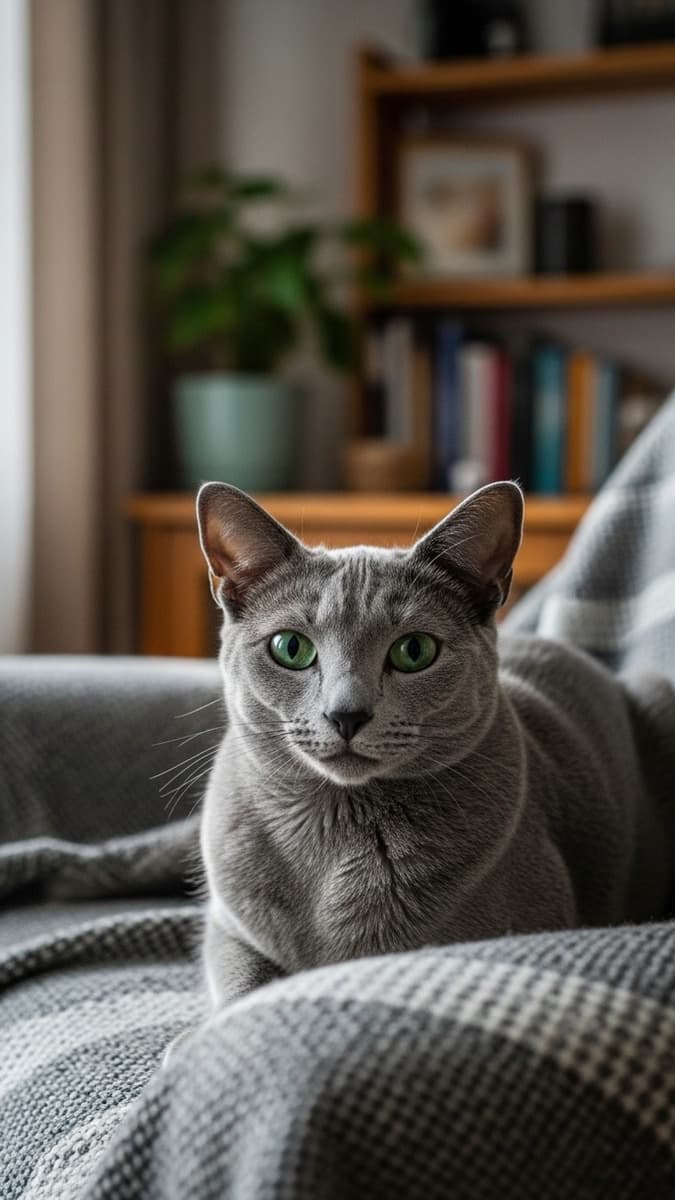
The Russian Blue is a medium-size cat (3 kg to 5.5 kg) with a short coat and middling energy — with a strong appetite and a tendency to gain weight, plus a risk of urinary problems (FLUTD). In the food, what matters most is controlled calories with fiber for satiety, and a push for the cat to drink more water.
In the current My Pet Magazine analysis, the best food for the Russian Blue is Purina Pro Plan Weight Management (Purina Pro Plan), with a technical score of 83.4/100 (⭐ High Standard), calculated with the My Pet Magazine IDNM/IPFI methodology across 50 cat foods reviewed in July 2026. See the full ranking ↓
What to weigh in food for the Russian Blue
Two points weigh most in the choice of a Russian Blue's food: weight and hydration.
Strong appetite, weight under control. The Russian Blue eats eagerly — and combined with a more sedate routine indoors, that puts on weight quickly if the food does not have the right calories for his actual expenditure. AAFCO is clear: the food should follow the animal's activity level, not his appetite. Fiber for satiety and a well-measured portion help hold back that appetite.
Water is medicine. The Russian Blue tends toward urinary tract problems (FLUTD), including feline idiopathic cystitis. According to the Merck Veterinary Manual, increasing water intake — including by replacing part of the dry food with wet — makes the urine less concentrated, which protects against that condition. The food's mineral profile also counts, because excess minerals favor crystal formation in the urine.
The two care points combine well: a food with controlled calories and more moisture looks after weight and hydration at the same time — exactly what this breed needs most.
Criteria scored against the My Pet Magazine nutritional targets (protein, fat, calcium and caloric density ranges by size — see our methodology).
Breed profile and predispositions
The Russian Blue is known for eating with a strong appetite, which increases the risk of excess weight when the food does not adjust calories to the cat's actual expenditure. According to AAFCO — Selecting the Right Pet Food, the ideal food follows the animal's activity level — a formulation designed for a more active cat tends to leave calories to spare for a more sedate cat, and that surplus becomes fat in this breed.
The breed also tends toward feline lower urinary tract disease (FLUTD), including feline idiopathic cystitis. According to the Merck Veterinary Manual — Noninfectious Diseases of the Urinary System of Cats, the recommended care is ensuring plenty of fresh water and considering a switch to wet food — more dilute urine reduces the risk associated with the condition — along with control of the crystal-forming minerals in the diet.
Recommended foods for the Russian Blue
Ranked by IDNM/IPFI technical score across 50 cat foods — no manual product curation.
- 1
Purina Pro Plan Weight Management · Purina Pro Plan
83.4/100 - 2
Blue Buffalo Wilderness Kitten · Blue Buffalo
82.7/100 - 3
Purina ONE +Plus Ideal Weight · Purina ONE
82.3/100 - 4
Instinct Original Raw Coated Cat · Instinct
82.1/100 - 5
Hill's Science Diet Perfect Weight Cat · Hill's Science Diet
81.6/100
Frequently asked questions about Russian Blue food
- Why does the Russian Blue gain weight more easily than other cats?
- Because it is a breed with a strong appetite. AAFCO recommends adjusting the food's caloric density to the cat's actual activity level — not to his appetite. In a cat who eats eagerly and moves little, a food that is too caloric quickly turns into extra weight.
- Is there a relation between the Russian Blue's diet and urinary problems?
- Yes. The breed tends toward feline lower urinary tract disease (FLUTD), including feline idiopathic cystitis — an inflammation of the bladder with no clear infectious cause. According to the Merck Veterinary Manual, the nutritional care that helps here is encouraging the cat to drink more water and controlling the minerals in the food that favor crystal formation in the urine.
- Does wet food help with urinary control in the Russian Blue?
- It can help considerably. The Merck Veterinary Manual indicates replacing part of the dry food with wet food as a way to increase the cat's water intake — that makes the urine less concentrated, which is good for a cat with a tendency toward FLUTD.
- Does every Russian Blue develop a urinary problem?
- No. The cause of feline idiopathic cystitis is considered multifactorial by the Merck Veterinary Manual — stress, genetics and diet all figure in, but none guarantees the problem on its own. Even so, the breed's tendency justifies looking after hydration and the food's mineral profile.
Methodology
The block of recommended foods on this page is ordered by My Pet Magazine's IDNM/IPFI technical methodology, which evaluates the nutritional density and ingredient purity of each product in the active dataset for the Russian Blue's medium-size profile — with no manual curation or brand influence.
The score takes into account how well the food fits the breed's parameters: caloric density compatible with weight control and a mineral profile favorable to urinary health are factors that weigh in the ranking, recalculated whenever the product dataset is updated.
The ranking on this page is a projection of the My Pet Magazine IDNM/IPFI scoring engine over the cat dataset, with no manual product curation. See the full methodology →
Want a recommendation tailored to your Russian Blue?