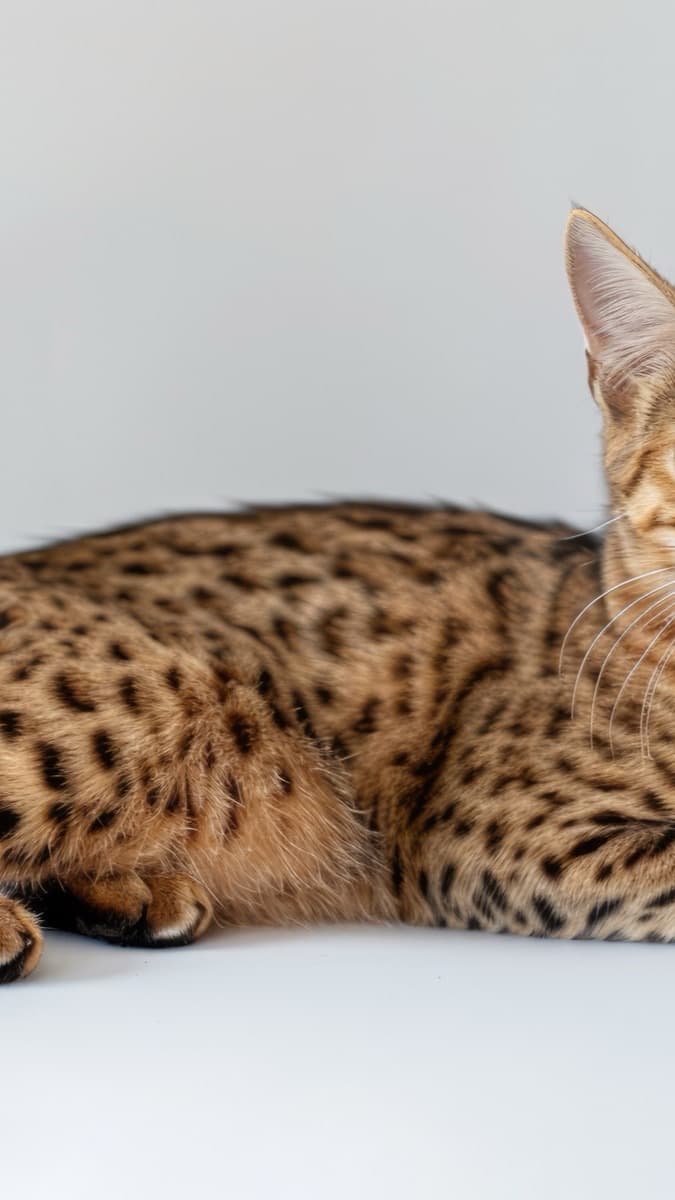
The Ocicat is a medium-size cat, between 3.5 kg and 6.5 kg as an adult, with high energy and a wild appearance — but no documented genetic predisposition. The priority is matching the high energy expenditure with enough protein and calories, as well as looking after the urinary tract and weight, risks common to any cat.
In the current My Pet Magazine analysis, the best food for the Ocicat is ACANA Indoor Entrée (ACANA), with a technical score of 87.8/100 (🌟 Superior Quality), calculated with the My Pet Magazine IDNM/IPFI methodology across 50 cat foods reviewed in July 2026. See the full ranking ↓
What to weigh in food for the Ocicat
The Ocicat does not carry a genetic condition documented in the veterinary literature, so the food is guided by the cat's profile — weight, energy and lifestyle — and by care that applies to any domestic feline.
Energy and protein. The breed has high energy and a muscular, athletic body. That calls for enough caloric density and animal protein to sustain the expenditure — AAFCO's nutrient profiles for adult cats at maintenance serve as the reference for that demand. Lower-quality protein forces the cat to eat more to meet the same requirement, which weighs on weight control.
Urinary tract. Like any cat, the Ocicat is at risk of feline lower urinary tract disease (FLUTD) — an umbrella name for problems in the bladder and urethra. Most cases have no clear cause, but low water intake and concentrated urine increase the risk. Controlled minerals in the food and encouragement to drink more water help reduce the chance.
Weight. High energy reduces the risk of a sedentary life, but it does not remove the need to calibrate the portion by the cat's actual expenditure — always with veterinary follow-up, looking at the animal's body.
Criteria scored against the My Pet Magazine nutritional targets (protein, fat, calcium and caloric density ranges by size — see our methodology).
Breed profile and predispositions
The Ocicat has no documented line predisposition in the veterinary literature — the resemblance to a wild cat is only in the coat pattern, the result of crosses between the Abyssinian, Siamese and American Shorthair, with no connection to any known genetic condition.
What guides the food is the breed's profile. According to the AAFCO Cat Food Nutrient Profiles, which define the maintenance nutritional parameters for adult cats, the Ocicat's high energy calls for enough caloric density and protein to sustain the expenditure of an active cat.
The cat also shares, with any domestic feline, a risk of lower urinary tract disease (FLUTD). According to the Merck Veterinary Manual — Lower Urinary Tract Disease in Cats, the nutritional response is to encourage water intake and control the minerals that form crystals in the urine — care valid for the Ocicat as for any cat.
Recommended foods for the Ocicat
Ranked by IDNM/IPFI technical score across 50 cat foods — no manual product curation.
- 1
ACANA Indoor Entrée · ACANA
87.8/100 - 2
Purina Pro Plan Sensitive Skin & Stomach · Purina Pro Plan
86.5/100 - 3
BLUE Wilderness Adult Indoor · Blue Buffalo
86/100 - 4
Nulo Freestyle Cat & Kitten · Nulo
85.8/100 - 5
Tiki Cat Born Carnivore Indoor Health · Tiki Cat
85.8/100
Frequently asked questions about Ocicat food
- Despite the wild appearance, does the Ocicat have a documented genetic predisposition?
- No. Despite the spotted pattern that recalls a wild cat, the Ocicat is an entirely domestic breed, and the veterinary literature does not document a specific genetic condition linked to the breed. What weighs in the choice of food is the cat's profile — weight, high energy and lifestyle — not a line predisposition.
- Does a high-energy Ocicat need more protein in his food?
- The breed's high energy calls for enough caloric density and protein to sustain the expenditure — in line with what AAFCO's nutrient profiles recommend for adult cats at maintenance. Since every cat is an obligate carnivore, that protein has to come from meat, not from grain.
- Is the Ocicat at risk of urinary problems (FLUTD)?
- The risk of feline lower urinary tract disease (FLUTD) is not specific to the Ocicat — it is a risk common to any domestic cat. According to the Merck Veterinary Manual, most cases have no clear cause, but drinking little water and concentrated urine increase the chance. It deserves attention in any breed, the Ocicat included.
- Is dry or wet food better for the Ocicat?
- What really matters is how much water the cat drinks in total, not the format of the bowl. Wet food already comes with plenty of water. Dry food works too, as long as the cat is encouraged to drink more — with water bowls spread around the house, for example.
- Does the Ocicat gain weight easily?
- There is no evidence of a genetic predisposition to excess weight documented in the breed. The Ocicat's risk of weight gain follows the same pattern as any active domestic cat: it arises when the food's energy does not follow the animal's actual expenditure, which is higher in this breed than in a sedentary cat.
Methodology
The block of recommended foods on this page is ordered by My Pet Magazine's IDNM/IPFI technical score, which evaluates the nutritional quality and ingredient purity of every product available for the Ocicat's medium-size profile. The order is calculated automatically and updated whenever the catalog changes — no brand pays to appear, and there is no manual product selection.
The ranking on this page is a projection of the My Pet Magazine IDNM/IPFI scoring engine over the cat dataset, with no manual product curation. See the full methodology →
Want a recommendation tailored to your Ocicat?