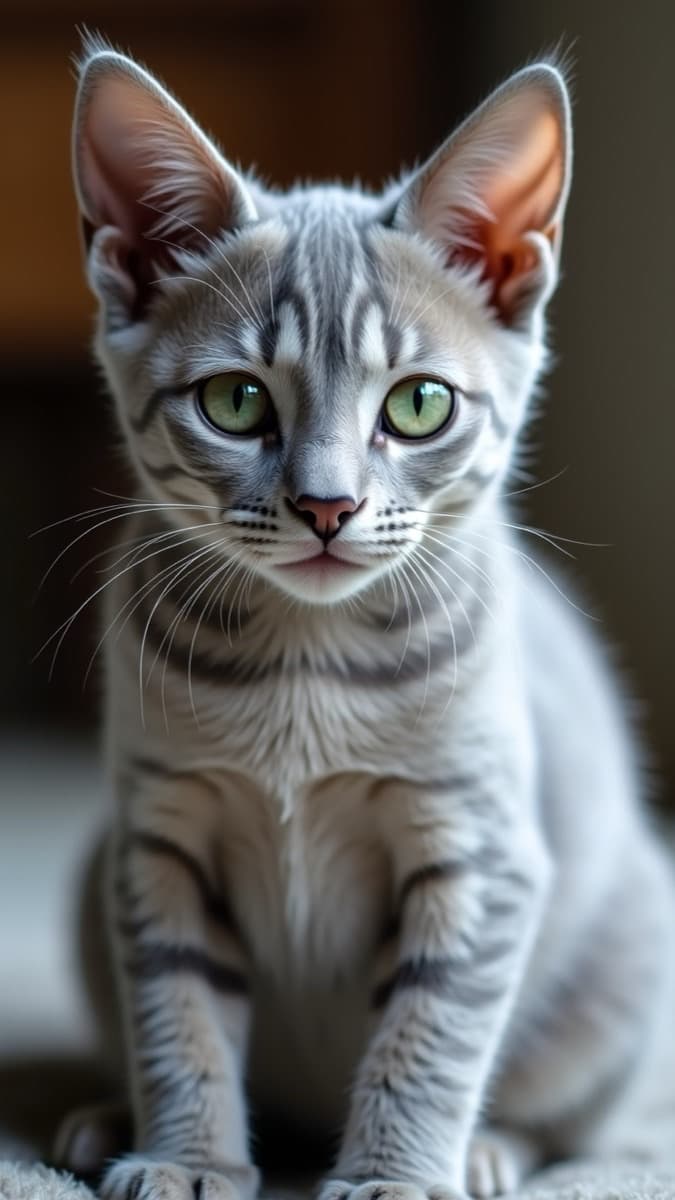
The Korat weighs between 3 kg and 5 kg and has moderate energy. It is one of the oldest documented natural breeds, originating in Thailand, with no specific genetic predisposition requiring differentiated nutritional management. The food's priorities follow the standard for any adult cat: calorie control to avoid excess weight and support for urinary tract health.
In the current My Pet Magazine analysis, the best food for the Korat is ACANA Indoor Entrée (ACANA), with a technical score of 87.8/100 (🌟 Superior Quality), calculated with the My Pet Magazine IDNM/IPFI methodology across 50 cat foods reviewed in July 2026. See the full ranking ↓
What to weigh in food for the Korat
Weight and lifestyle. The Korat is active and curious, but when he lives only indoors, without stimulation, he also moves less and energy expenditure drops. The same amount of food becomes extra weight. A food with caloric density adjusted to the lifestyle, together with fiber that holds back hunger, helps control weight without leaving the cat hungry.
Urinary tract. Like any adult cat, the Korat can develop feline lower urinary tract disease (FLUTD) — most cases have no clearly documented cause. Controlled minerals in the food (magnesium and phosphorus, which form crystals in excess) and encouragement to drink more water help reduce the risk, whether with wet food or water bowls spread around the house.
No documented breed predisposition. Unlike breeds with a history of intense genetic selection, the Korat does not carry a hereditary condition associated with diet in the veterinary literature consulted. That means the ideal food follows the individual cat's profile — weight, activity, environment — and not a requirement tied to the pedigree.
Criteria scored against the My Pet Magazine nutritional targets (protein, fat, calcium and caloric density ranges by size — see our methodology).
Breed profile and predispositions
The Korat is considered one of the oldest and most stable natural cat breeds there is, originating in the Nakhon Ratchasima region of northern Thailand — known locally as "Korat". The breed is cited in old Thai manuscripts as a symbol of good luck, and has kept its short blue-grey coat and body structure practically unchanged across the centuries, without undergoing selective crossing with other breeds.
Because it has no history of genetic selection aimed at extreme conformational traits, the Korat does not carry a documented line predisposition requiring specific nutritional management. That does not exempt the breed from the universal care of any domestic cat: according to the AAFCO Cat Food Nutrient Profiles, the food's caloric density should follow the cat's actual activity level, and the Merck Veterinary Manual — Lower Urinary Tract Disease in Cats recommends dietary adjustments — such as the use of wet food — in the management of feline idiopathic cystitis, one of the most common causes of urinary discomfort in cats in general.
Recommended foods for the Korat
Ranked by IDNM/IPFI technical score across 50 cat foods — no manual product curation.
- 1
ACANA Indoor Entrée · ACANA
87.8/100 - 2
Purina Pro Plan Sensitive Skin & Stomach · Purina Pro Plan
86.5/100 - 3
BLUE Wilderness Adult Indoor · Blue Buffalo
86/100 - 4
Nulo Freestyle Cat & Kitten · Nulo
85.8/100 - 5
Tiki Cat Born Carnivore Indoor Health · Tiki Cat
85.8/100
Frequently asked questions about Korat food
- Does the Korat have any genetic disease that the food needs to control?
- There is no breed predisposition documented in the veterinary literature that requires specific nutritional management for the Korat — it is a natural breed, with no history of intense genetic selection. The food follows the standard recommended for any adult cat: calorie control and urinary tract support.
- Why does the Korat gain weight if he stays only indoors?
- Because he moves less without hunting or exploring, and energy expenditure drops. The same amount of food becomes extra weight. According to AAFCO, the answer is a food with caloric density adjusted to the indoor lifestyle, without cutting the volume of the meal, using functional fiber.
- Is the Korat at risk of urinary problems like other cats?
- Yes, the same general risk as any cat — it is not a breed-specific predisposition. According to the Merck Veterinary Manual, a good share of feline lower urinary tract disease (FLUTD) cases have an idiopathic cause, but wet food comes in as recommended management to encourage water intake.
- Is the Korat a very old breed?
- Yes. It is one of the oldest documented natural cat breeds, originating in the Nakhon Ratchasima region of Thailand, with records going back centuries. Unlike breeds created by recent selective crossing, the Korat has kept its appearance practically unchanged over time.
- Is dry or wet food better for the Korat?
- What really matters is how much water the cat drinks in total, not the format of the bowl. Wet food already comes with plenty of water. Dry food works too, as long as the cat is encouraged to drink — water spread across several points in the house helps.
Methodology
The block of recommended foods on this page is ordered by My Pet Magazine's IDNM/IPFI technical score, which evaluates the nutritional quality and ingredient purity of every product available for the Korat's medium-size profile. The order is calculated automatically and updated whenever the catalog changes — no brand pays to appear, and there is no manual product selection.
The ranking on this page is a projection of the My Pet Magazine IDNM/IPFI scoring engine over the cat dataset, with no manual product curation. See the full methodology →
Want a recommendation tailored to your Korat?