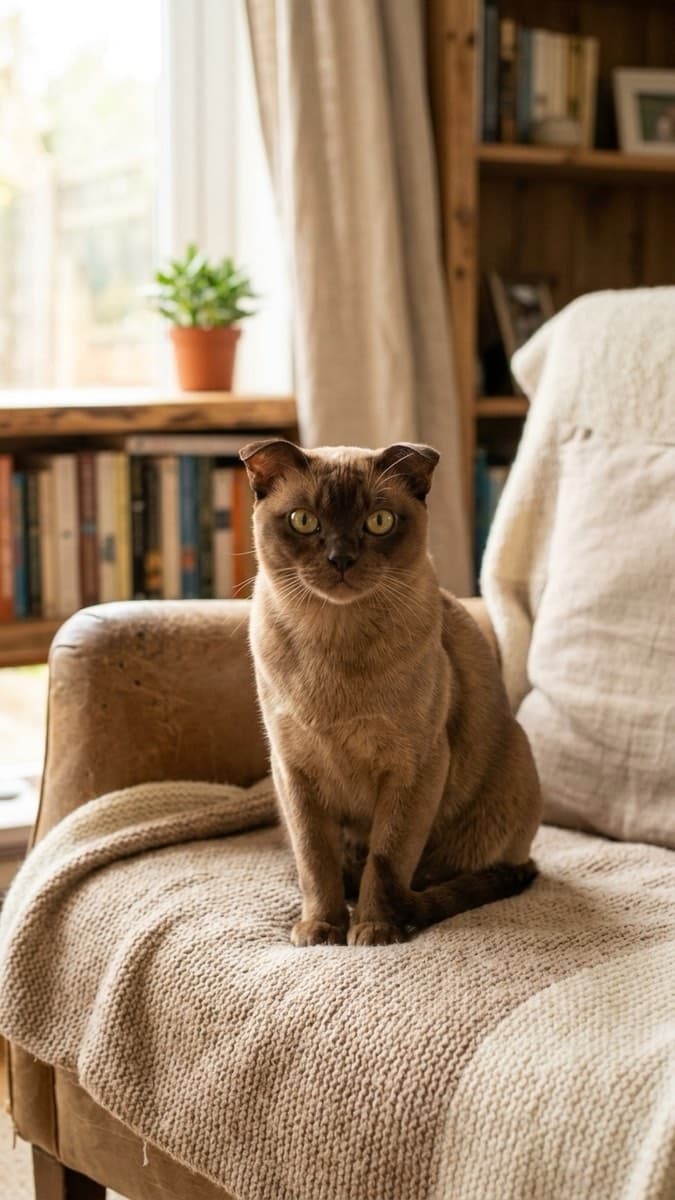
The Burmese weighs between 3.5 kg and 6 kg and has medium energy. The breed is among those most associated with diabetes mellitus in cats: a 1997 study found Burmese cats in 20% of the diabetic cats analyzed, against 7% in the healthy population. The nutritional response is weight control and a diet low in carbohydrate and high in protein.
In the current My Pet Magazine analysis, the best food for the Burmese is Hill's Science Diet Perfect Weight Cat (Hill's Science Diet), with a technical score of 85.9/100 (🌟 Superior Quality), calculated with the My Pet Magazine IDNM/IPFI methodology across 50 cat foods reviewed in July 2026. See the full ranking ↓
What to weigh in food for the Burmese
Diabetes and weight. The Burmese carries one of the most studied predispositions among feline breeds: an elevated risk of diabetes mellitus. A 1997 study in Australia, published in the Australian Veterinary Journal, found Burmese cats in 20% of 45 diabetic cats of known breed, against 7% Burmese in a reference population of 2,203 cats with normal blood glucose — a statistically significant difference (p < 0.001). The Merck Veterinary Manual also lists the Burmese among the breeds predisposed to the disease, alongside the Tonkinese, Norwegian Forest Cat, Russian Blue and Abyssinian. Obesity is an additional risk factor for insulin resistance in any cat — which makes weight control even more relevant in this breed.
A low-carbohydrate diet. Food does not prevent the genetic predisposition, but it has a real role in management. According to the Merck Veterinary Manual, cats with diabetes mellitus benefit from a diet high in protein and low in carbohydrate, with wet food preferred over dry — the combination, along with insulin when prescribed, is associated with diabetes remission in some treated cats. A healthy Burmese cat does not need a therapeutic diet, but keeping weight controlled and avoiding excess carbohydrate across life is a reasonable preventive measure given the breed's history.
Criteria scored against the My Pet Magazine nutritional targets (protein, fat, calcium and caloric density ranges by size — see our methodology).
Breed profile and predispositions
The Burmese carries a well-documented predisposition: an elevated risk of feline diabetes mellitus, a condition that prevents the body from regulating blood glucose properly. According to the study Rand et al. — Over-representation of Burmese cats with diabetes mellitus (Australian Veterinary Journal, 1997), which analyzed 4,402 cats seen at a veterinary clinical laboratory in Australia over 22 months, Burmese cats accounted for 20% of the 45 diabetic cats of known breed in the study, against only 7% Burmese in the reference population without diabetes — a statistically significant difference (p < 0.001).
Food neither treats nor prevents the genetic predisposition — what it does is support management. According to the Merck Veterinary Manual — Diabetes Mellitus in Dogs and Cats, which lists the Burmese among the breeds predisposed to the disease along with the Tonkinese, Norwegian Forest Cat, Russian Blue and Abyssinian, the nutritional protocol in diagnosed cats combines a diet high in protein and low in carbohydrate — with wet food preferred over dry — and insulin when prescribed; obesity enters as an additional risk factor for insulin resistance, which reinforces weight control as preventive care across the Burmese's life.
Recommended foods for the Burmese
Ranked by IDNM/IPFI technical score across 50 cat foods — no manual product curation.
- 1
Hill's Science Diet Perfect Weight Cat · Hill's Science Diet
85.9/100 - 2
Purina Pro Plan Weight Management · Purina Pro Plan
85.7/100 - 3
Purina ONE +Plus Ideal Weight · Purina ONE
84.6/100 - 4
Blue Buffalo Wilderness Kitten · Blue Buffalo
82.9/100 - 5
Purina Pro Plan Indoor Care · Purina Pro Plan
82.1/100
Frequently asked questions about Burmese food
- Why is the Burmese at higher risk of diabetes than other cat breeds?
- A 1997 study published in the Australian Veterinary Journal found Burmese cats in 20% of the diabetic cats analyzed in Australia, against 7% Burmese in the healthy reference population — a statistically significant difference. The Merck Veterinary Manual also lists the breed among those predisposed to the disease. The exact cause is not fully clarified, but the predisposition is well documented.
- Does food prevent or treat diabetes in the Burmese?
- It does not prevent the genetic predisposition. What food does is provide support: according to the Merck Veterinary Manual, cats diagnosed with diabetes benefit from a diet high in protein and low in carbohydrate, usually combined with insulin. A healthy Burmese cat does not need a therapeutic diet, but controlling weight and carbohydrate across life is reasonable prevention given the breed's history.
- Does every Burmese develop diabetes?
- No. The breed has a documented elevated risk in a population study, but that does not mean every individual will develop the disease. Keeping weight controlled, avoiding excess carbohydrate and having regular veterinary follow-up are the preventive measures recommended for the breed.
- Is diabetes in cats curable?
- In some cases, yes — the Merck Veterinary Manual describes how the combination of a high-protein, low-carbohydrate diet with insulin leads some cats to remission, when the pancreas again produces enough insulin without needing daily injections. It is not guaranteed for every cat, and follow-up is always veterinary.
- Why is obesity an extra risk for the Burmese?
- Because obesity favors insulin resistance in any cat, a mechanism that adds to the genetic predisposition documented in the breed. According to the Merck Veterinary Manual, that is an additional risk factor — which makes weight control especially relevant care in the Burmese, even in cats not yet diagnosed with diabetes.
Methodology
The block of recommended foods on this page is ordered by My Pet Magazine's IDNM/IPFI technical methodology, which evaluates the nutritional density and ingredient purity of each product in the active dataset for the Burmese's small-size profile — with no manual curation or brand influence.
The score takes into account how well the food fits the breed profile: carbohydrate control and caloric density are factors that weigh in the ranking, recalculated whenever the product dataset is updated.
The ranking on this page is a projection of the My Pet Magazine IDNM/IPFI scoring engine over the cat dataset, with no manual product curation. See the full methodology →
Want a recommendation tailored to your Burmese?