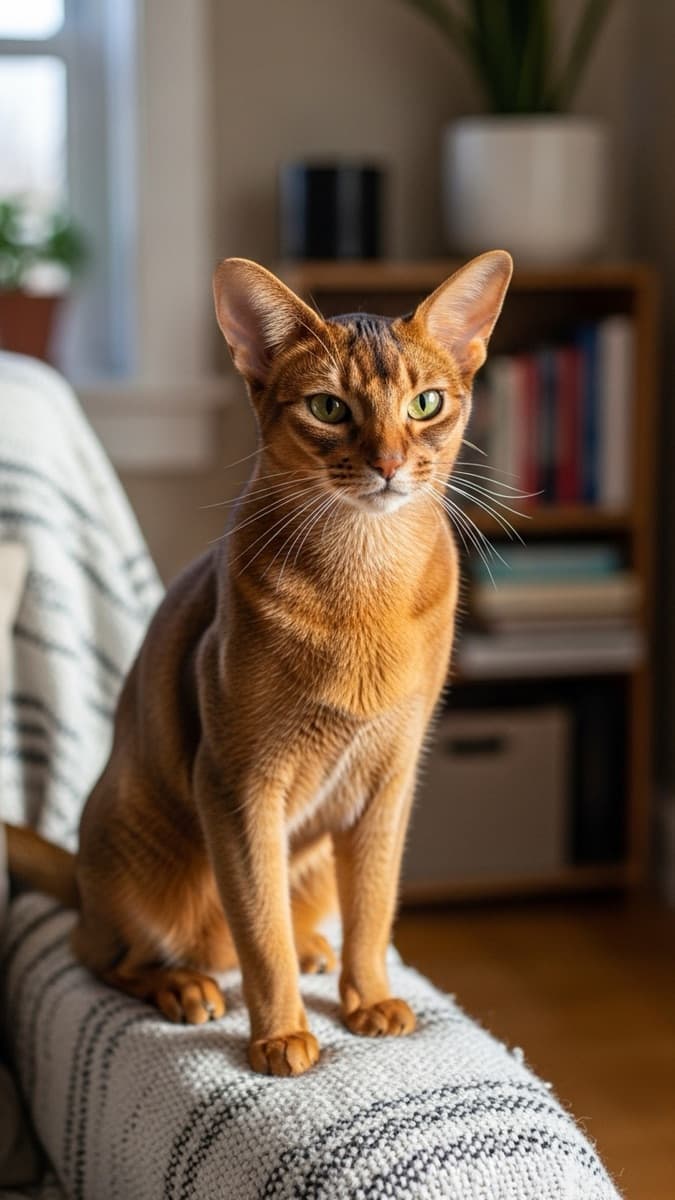
The Abyssinian weighs between 3 kg and 5 kg and has high energy, one of the most active cats among the domestic breeds. The breed carries familial renal amyloidosis documented since 1984, a hereditary condition that gradually compromises the kidneys. Food does not treat the genetic cause, but controlled phosphorus and quality protein support kidney management.
In the current My Pet Magazine analysis, the best food for the Abyssinian is ACANA Indoor Entrée (ACANA), with a technical score of 85.9/100 (🌟 Superior Quality), calculated with the My Pet Magazine IDNM/IPFI methodology across 50 cat foods reviewed in July 2026. See the full ranking ↓
What to weigh in food for the Abyssinian
One thing dominates the choice of an Abyssinian's food: supporting the kidneys in the face of a hereditary condition documented in the breed.
Kidneys. The Abyssinian carries familial renal amyloidosis, first described in 1984 in a group of related cats from two catteries. It is a condition in which a misfolded protein (amyloid) deposits in kidney tissue, mainly in the medulla, and gradually compromises kidney function — onset usually occurs between 1 and 5 years of age. Food neither prevents nor treats the genetic cause, but it helps with management: controlled phosphorus reduces the load on already compromised kidneys, and high-quality, highly digestible protein sustains lean mass without overloading kidney function. That care matters most in cats already diagnosed or with a family history, but it holds as general attention in the breed.
Criteria scored against the My Pet Magazine nutritional targets (protein, fat, calcium and caloric density ranges by size — see our methodology).
Breed profile and predispositions
The Abyssinian carries one predisposition that is well documented in the veterinary literature: familial renal amyloidosis.
According to Boyce, DiBartola et al. (Veterinary Pathology, 1984), eight related Abyssinian cats from two catteries were diagnosed with renal and glomerular amyloidosis, papillary necrosis and secondary interstitial disease — the first record of the condition as familial in the breed. A more recent multi-omic study (Genova et al., Scientific Reports, 2021) confirms that this remains the renal predisposition most associated with the breed and shows that the inheritance is polygenic — several low-penetrance genes, not a single simple trait.
Food does not treat the genetic cause, but the nutritional management of affected cats follows the same principle as other feline kidney diseases: according to a review on dietary phosphorus and kidney disease in cats, reducing dietary phosphorus is one of the most relevant nutritional factors for slowing the progression of kidney disease — along with protein control and water intake.
Recommended foods for the Abyssinian
Ranked by IDNM/IPFI technical score across 50 cat foods — no manual product curation.
- 1
ACANA Indoor Entrée · ACANA
85.9/100 - 2
Purina Pro Plan Sensitive Skin & Stomach · Purina Pro Plan
85/100 - 3
Nulo Freestyle Cat & Kitten · Nulo
84.9/100 - 4
BLUE Wilderness Adult Indoor · Blue Buffalo
84.2/100 - 5
Tiki Cat Born Carnivore Indoor Health · Tiki Cat
84/100
Frequently asked questions about Abyssinian food
- Why is the Abyssinian predisposed to kidney disease?
- Because the breed carries familial renal amyloidosis, described since 1984 (Boyce, DiBartola et al., Veterinary Pathology) in related cats from two catteries. It is a hereditary condition in which a misfolded protein deposits in the kidneys, mainly in the medulla, gradually compromising function.
- Does food cure or prevent the Abyssinian's renal amyloidosis?
- No. The cause is genetic — a recent multi-omic study showed that the inheritance is polygenic, with several low-penetrance genes involved. Food does not change that. What it does is provide support: controlled phosphorus and high-quality protein help manage already affected cats, under veterinary guidance.
- Does every Abyssinian develop renal amyloidosis?
- No. The condition is hereditary and documented in the breed since 1984, but not every Abyssinian develops it — the inheritance pattern is still not fully clarified, and factors such as infections and inflammatory processes also appear to contribute. Even so, it is reason for regular veterinary follow-up, especially in cats with a family history.
- At what age does renal amyloidosis usually appear in the Abyssinian?
- Onset usually occurs between 1 and 5 years of age, according to records of the condition in the breed, with quite variable progression — some cats remain stable for years, others worsen quickly within twelve months. That reinforces the importance of periodic kidney testing, not only when symptoms appear.
- Why does controlled phosphorus matter so much in the food of a cat at renal risk?
- Because, according to a review on dietary phosphorus and kidney disease in cats, reducing dietary phosphorus is one of the most relevant nutritional factors for slowing the progression of kidney disease — alongside protein control and encouraging water intake in the management of those patients.
Methodology
The block of recommended foods on this page is ordered by My Pet Magazine's IDNM/IPFI technical methodology, which evaluates the nutritional density and ingredient purity of each product in the active dataset for the Abyssinian's medium-size profile — with no manual curation or brand influence.
The score takes into account how well the food fits the breed profile: controlled phosphorus and high-quality protein are factors that weigh in the ranking, recalculated whenever the product dataset is updated.
The ranking on this page is a projection of the My Pet Magazine IDNM/IPFI scoring engine over the cat dataset, with no manual product curation. See the full methodology →
Want a recommendation tailored to your Abyssinian?